



| IN A NUTSHELL |
|
In recent years, the debate over the ethics of farming intelligent animals has intensified, with the proposed commercial octopus farm by Nueva Pescanova at the center of controversy. This Spanish seafood giant aims to transition from wild to farmed octopus to mitigate declining wild populations. However, the ethical implications of farming such cognitively advanced creatures have sparked a global debate. Scientists, legislators, and the public grapple with the moral and environmental consequences of this venture. This article explores the complex issues surrounding octopus farming, from ethical concerns and scientific insights to the legislative responses and environmental impact.
The Cognitive Complexity of Octopuses
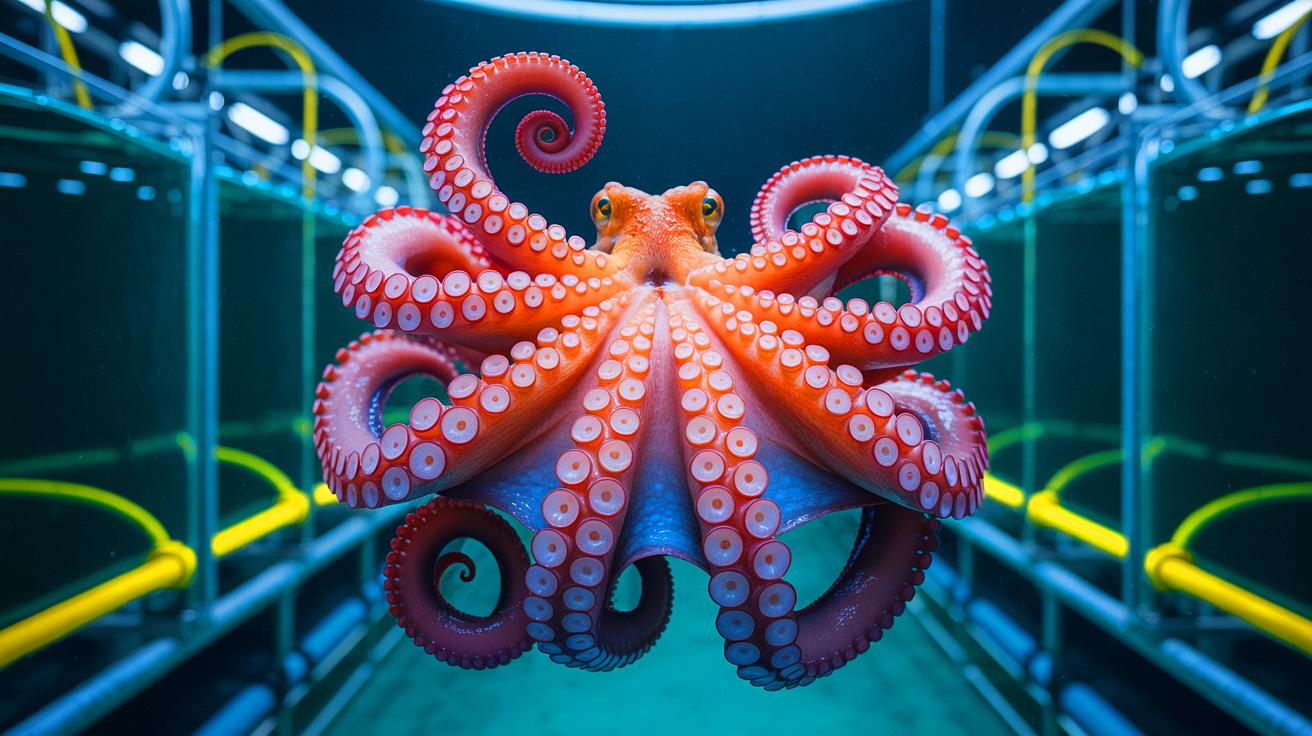
Octopuses are renowned for their extraordinary intelligence, often compared to that of higher mammals. These cephalopods possess approximately 500 million neurons, enabling them to exhibit behaviors that suggest a high degree of cognitive sophistication. Remarkably, only a third of these neurons are located in their brains, with the rest distributed across their arms. This unique neural architecture allows each arm to function autonomously, equipping octopuses with the ability to solve puzzles, use tools, and learn through observation.
Instances of octopus intelligence abound. In one notable case, an octopus named Otto at Germany’s Sea Star Aquarium was observed squirting water at a spotlight to short out the facility’s power, showcasing problem-solving abilities. Such feats, alongside behaviors like stacking rocks to build dens and unscrewing jar lids from the inside, highlight the profound intelligence of these creatures. This intrinsic intelligence is a key reason why the prospect of farming octopuses has sparked ethical concerns.
Ethical Concerns and Animal Welfare
The ethical debate surrounding octopus farming is deeply rooted in the creature’s demonstrated sentience. A review by the London School of Economics found that octopuses can experience pleasure and pain, leading the UK government to include them in the Animal Welfare (Sentience) Act. This act recognizes octopuses as the only invertebrates with such protection, underscoring the need for ethical treatment.
Nueva Pescanova’s proposed farming conditions have alarmed animal welfare advocates. The plan to house 10 to 15 octopuses per cubic meter contradicts their solitary nature, potentially provoking aggression and cannibalism. Moreover, the killing method using ice slurry is considered inhumane, as it causes prolonged suffering. Dr. Peter Tse, a neuroscientist, condemns this practice, arguing that such slow, painful deaths are unacceptable for creatures of advanced cognition.
Global Backlash and Legislative Actions
The response to Nueva Pescanova’s plans has been swift and widespread. In Washington state, legislators have banned octopus farming, citing ethical and economic concerns. U.S. Senators Lisa Murkowski and Sheldon Whitehouse have introduced the OCTOPUS Act to prohibit octopus farming nationwide and block imports of farmed octopus. This legislation highlights a growing recognition of octopuses as intelligent, sentient beings that do not belong in commercial farms.
Internationally, the backlash is gaining momentum. The European Union faces pressure to halt the Spanish facility, acknowledging the sentience of octopuses. Protests in Madrid reflect public opposition to what many view as a new frontier in animal cruelty. As awareness of octopus intelligence and suffering spreads, calls for ethical treatment and conservation resonate globally.
Environmental Implications and Scientific Insights
Nueva Pescanova argues that octopus farming could alleviate pressure on wild populations, but environmental and scientific concerns persist. As carnivores, octopuses require substantial amounts of fish to produce octopus meat, raising sustainability issues. Critics argue that farming predatory species exacerbates pressures on depleted fish stocks, contradicting conservation efforts.
The scientific community also grapples with the moral dilemma of farming such intelligent beings. The documentary “My Octopus Teacher” highlighted the emotional depth and trust-building capabilities of octopuses, challenging perceptions of these creatures. As we uncover the genetic markers of intelligence shared between humans and octopuses, we must consider whether to exploit this knowledge for industrial gains or foster a deeper understanding and appreciation.
The controversy over the world’s first octopus farm highlights a pivotal moment in our relationship with intelligent marine life. As scientific insights reveal the cognitive abilities of octopuses, the ethical and environmental implications of farming them become increasingly apparent. Legislative actions and public protests gain momentum, placing the future of octopus farming in the balance. Will humanity prioritize ethical treatment and conservation, or will commercial gains prevail? This question may shape our relationship with the natural world for generations to come.

This is so upsetting! How can we justify farming such intelligent creatures? 😢
Why is the ice slurry method still being considered? Isn’t there a more humane alternative?
More reasons to go vegetarian, I guess! 🥦🌱
Why hasn’t the EU stepped up to ban this already?
Ice slurry? That sounds terrifying and cruel.
So far octopus have defied all attempts to farm them, and there have been many attempts world wide. They simply won’t mate in captivity(or something, running on memory here). Can’t see this getting off the ground either.
Are there any successful ethical octopus farms anywhere in the world?
Great article! We need more awareness about the intelligence of octopuses.
Can someone explain to me why it’s specifically octopuses that are being targeted?
So heartless to farm creatures capable of emotions and complex thoughts! 😤
Thank you for shedding light on this issue. It’s important to have these discussions.
How did Nueva Pescanova think this was a good idea? Profit over ethics?
Legislative action can’t come soon enough. Stop this madness!
It’s like we’re trying to play God with these intelligent beings.
I love octopuses! 🐙 They deserve better than this.
Is there any chance this farm could be stopped before it starts?
I wonder how the octopuses would feel about this if they could protest.
Just another example of humans not respecting nature. When will we learn?
Did the scientists consider the long-term effects on the marine ecosystem?
Why do we keep repeating the same mistakes with intelligent species?
Maybe we should let octopuses run the world; they seem smarter than us sometimes.
I hope this article reaches more people. It’s such an important issue.
Is there a petition or something that we can sign to stop this farm?
I’m skeptical about the environmental impact claims. Is there real evidence?
How are they going to ensure humane treatment in such cramped conditions?
Octopus Teacher was such a beautiful film; this feels like a betrayal of those insights.
Octopuses are like the geniuses of the sea, and we’re planning to farm them?!?
Sounds like a scene from a dystopian novel. 😳
I’m curious, how does this compare to other forms of aquaculture in terms of ethics?
As I walk around my town, there are thousands of octopus/i/es either hanging from rope or thrown over benches, baking in 40/110 degree heat. This is a common sight all over the Med. Maybe we should simply ban the sale of octopus, as death by ice slurring or being hanged (using this verb intentionally) is in my book, equally inhumane. That said, it would take a generation for any Mediterranean country to take this seriously as my friends laugh at me when I suggest such action. The Bible (particularly Catholicism) is of course largely to blame for this attitude and the further south you go in Europe the less anybody cares about anything. Ironically, this is probably why Mediterraneans live so long!