


| IN A NUTSHELL |
|
In a groundbreaking study, scientists have uncovered an unexpected ally in the fight against climate change deep beneath the ocean floor. Rock samples from the South Atlantic Ocean, dating back 60 million years, reveal that layers of volcanic rubble act as massive carbon dioxide (CO2) reservoirs. These findings highlight how Earth’s natural processes manage carbon over geological timescales. Scientists from the University of Southampton have demonstrated that these underwater structures, formed by the natural erosion of seafloor mountains, have the potential to trap large amounts of CO2. This discovery opens new doors for understanding the long-term carbon cycle and offers hope in addressing climate challenges.
Lava Rubble as Nature’s CO2 Reservoir
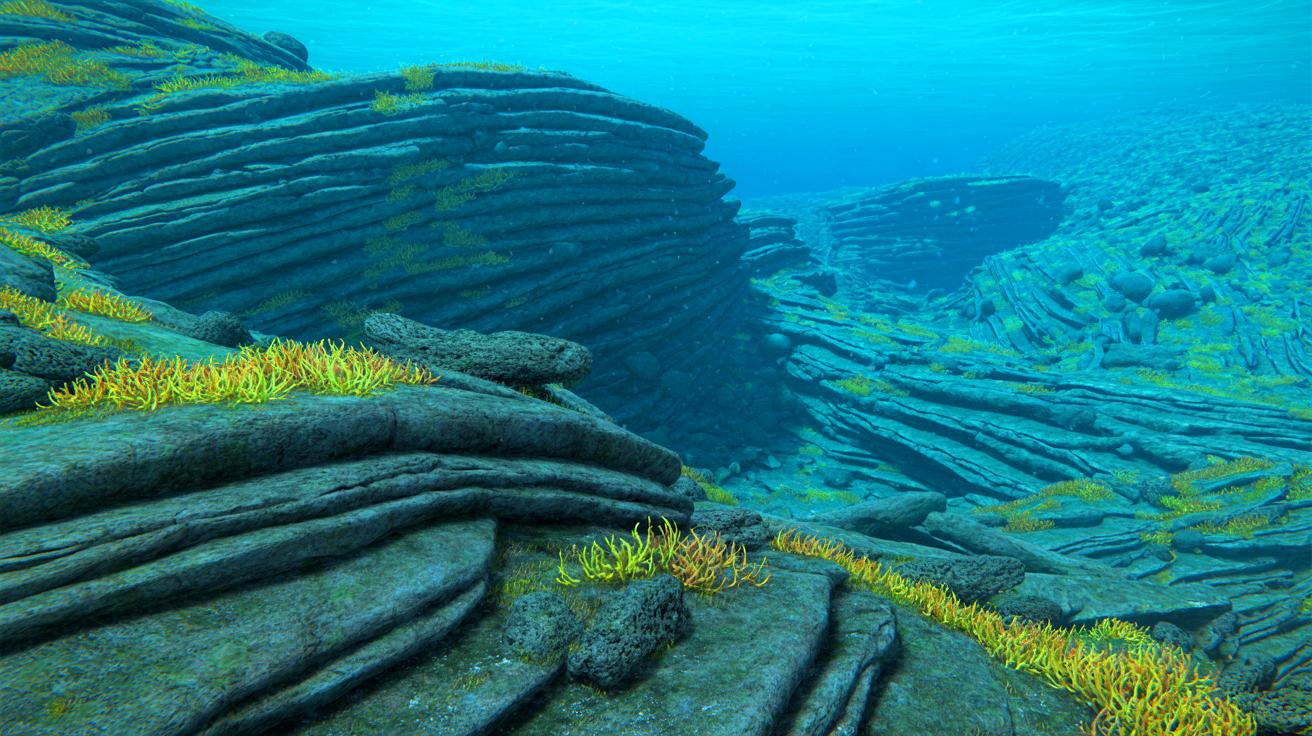
Researchers have long speculated about the role of underwater volcanic rubble in carbon sequestration. Now, evidence suggests that these formations serve as a significant CO2 reservoir. The study focuses on lava rubble, or breccia, found on the seafloor. These formations result from the erosion of underwater mountains, similar to scree slopes on land. As tectonic plates spread, lava cools and breaks apart, creating porous structures that can trap CO2.
Dr. Rosalind Coggon, the study’s lead author, highlights the importance of this discovery. She explains that the breccia cores, recovered from deep-sea drilling, show how CO2 is stored over millions of years. As seawater flows through the rubble, it reacts with volcanic minerals, forming calcium carbonate that locks away CO2. This natural process demonstrates Earth’s ability to manage carbon long before human intervention.
This discovery marks a pivotal moment in understanding Earth’s carbon cycle, revealing the hidden potential of underwater geology to mitigate atmospheric CO2 levels over geological timescales.
The Geological Dance of Carbon
Carbon moves through Earth in a complex, slow exchange among the planet’s interior, oceans, and atmosphere. This process, known as the carbon cycle, is crucial for maintaining climate balance. Volcanic activity at mid-ocean ridges releases CO2 from deep within Earth, where it enters the ocean and atmosphere. However, this is only one part of the journey.
Dr. Coggon emphasizes that ocean basins are more than just water containers. They are dynamic environments where seawater interacts with volcanic rocks, facilitating chemical reactions that transfer elements like carbon. These interactions remove CO2 from seawater, storing it in minerals such as calcium carbonate.
This discovery is vital for understanding the long-term carbon cycle and its impact on climate. By examining how carbon is added or removed from different parts of the planet, scientists can gain insights into how Earth’s natural processes regulate atmospheric CO2 levels over millions of years.
New Insights Into CO2 Storage Potential
During an expedition in the South Atlantic, scientists uncovered something unexpected: lava rubble containing significantly more CO2 than previously known. These findings come from Expedition 390/393 of the International Ocean Discovery Program, which aimed to explore the ocean’s geological mysteries.
The research team discovered that breccia, formed by the erosion of seafloor mountains, contains up to 40 times more CO2 than previously sampled lava rocks. This revelation underscores the importance of these formations in the carbon cycle. By acting as long-term carbon sponges, breccia plays a crucial role in Earth’s ability to manage carbon naturally.
These findings challenge previous assumptions about the ocean’s capacity to store CO2 and highlight the need for further research into underwater geological formations. Understanding these processes is essential for developing strategies to address climate change and its impact on the planet.
Implications for Climate Change Mitigation
The discovery of CO2 storage in underwater volcanic rubble has far-reaching implications for climate change mitigation. By recognizing the ocean floor’s role in sequestering carbon, scientists can explore new avenues for addressing global warming. This natural process, which has been occurring for millions of years, offers a model for potential human interventions.
Understanding how breccia traps CO2 could inform future strategies for carbon capture and storage. By replicating these natural processes, we may find innovative ways to reduce atmospheric CO2 levels. This research underscores the importance of studying Earth’s geological history to guide contemporary climate solutions.
While the discovery is promising, it also highlights the need for ongoing research and collaboration. By continuing to explore the ocean’s hidden potential, scientists can unlock new pathways for combating climate change and ensuring a sustainable future.
This study offers a glimpse into the vast and complex processes that regulate Earth’s climate. By uncovering the ocean floor’s hidden role in carbon sequestration, scientists have opened new doors for understanding and addressing climate change. As research continues, what other natural processes might we discover that hold the key to a more sustainable future?

Wow, this is a game-changer! 🌍 How soon can we start utilizing this discovery?
Wow, this is amazing news! 🌍 Could this mean we can reduce our reliance on technological solutions for CO2 capture?
How long will it take before we can implement strategies based on these findings?
Are there any environmental risks associated with tapping into these CO2 reservoirs?
This sounds promising, but how sustainable is it in the long term?
Is this discovery applicable to other ocean regions, or is it unique to the South Atlantic?
Sounds too good to be true. What’s the catch? 🤔
Thank you for shedding light on such an important topic! 😊
What are the potential risks of disturbing these natural CO2 reservoirs?
Thank you for sharing this groundbreaking discovery! Truly inspiring!
Finally, some good news in the climate change battle! Let’s hope we can make the most of it.
How much CO2 can we realistically hope to store using this method?
Why did it take so long to discover this? Seems like something we should have known earlier.
Wait, so the ocean floor is basically like a giant sponge for CO2? That’s wild!