




| IN A NUTSHELL |
|
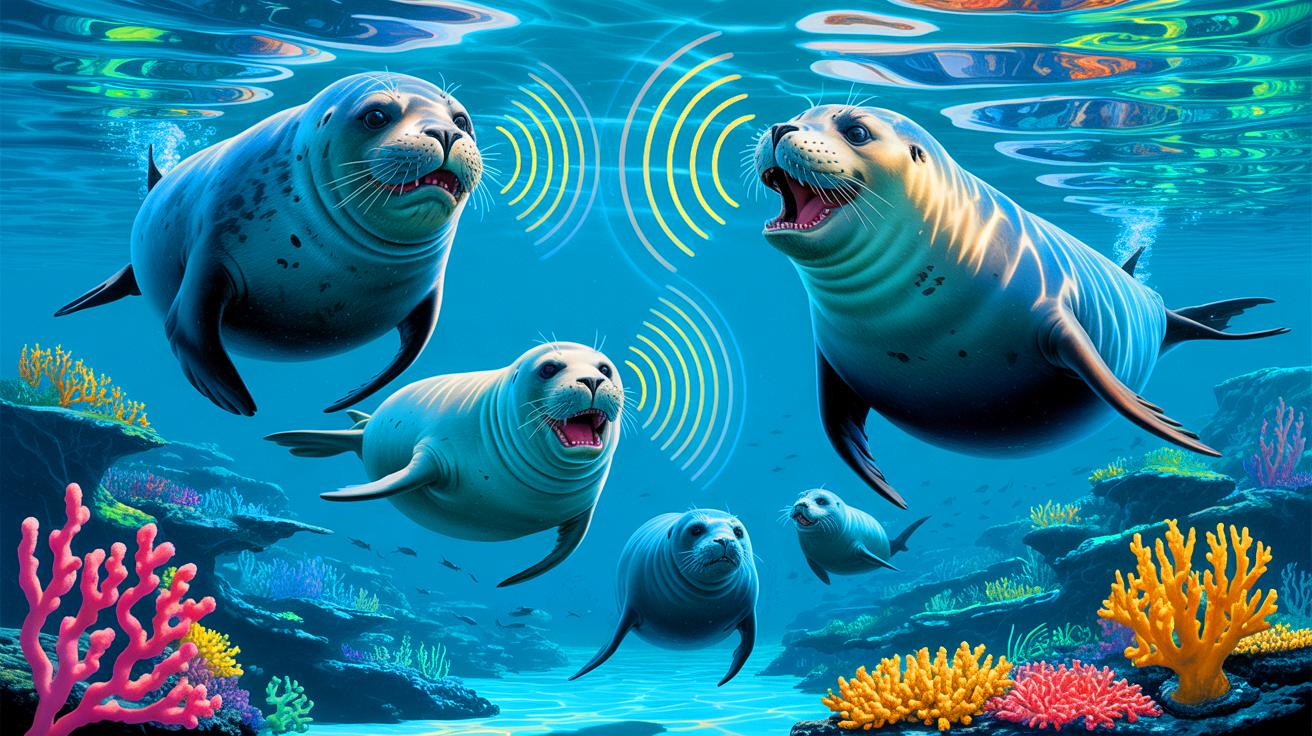
The Hawaiian monk seal, one of the world’s most endangered marine mammals, is revealing its secrets in unexpected ways. Recent research by the University of Hawaiʻi’s Marine Mammal Research Program has uncovered a fascinating underwater vocal world of these seals, previously unknown to science. By analyzing thousands of hours of acoustic recordings, researchers identified 25 unique vocalizations, a significant increase from the six known call types. This discovery not only expands our understanding of monk seal communication but also holds critical implications for conservation efforts in the face of increasing ocean noise.
Unveiling a Rich Acoustic Repertoire
Hawaiian monk seals have long intrigued scientists due to their elusive nature and endangered status. The recent study conducted by the Marine Mammal Research Program has significantly expanded our understanding by revealing a rich and complex vocal repertoire. Lead author Kirby Parnell, a PhD candidate, and her team meticulously analyzed over 4,500 hours of recordings. They discovered more than 23,000 vocalizations, representing at least 25 distinct call types. This leap from the previously known six calls broadens the horizon for pinniped acoustic research.
The research team employed passive acoustic recorders across five key habitats, from Molokaʻi to the remote Northwestern Hawaiian Islands. These efforts led to three major breakthroughs: an expanded vocal repertoire, evidence of combinational calls, and the identification of a new foraging-related call. The combinational calls, where seals link multiple call types, indicate a previously unrecognized level of communication complexity. The new call, termed the Whine, used during foraging, suggests that monk seals might employ vocalization not only for social or mating purposes but also as a strategic tool in hunting.
Implications for Conservation Efforts
The discoveries have profound implications for the conservation of the Hawaiian monk seal. As the only marine mammal endemic to Hawaiʻi, the monk seal holds significant cultural importance. Understanding its acoustic behavior is crucial, particularly as human-induced ocean noise continues to rise. The seals’ vocalizations overlap with low-frequency sounds from various human activities, such as shipping, potentially affecting their communication and behavior.
According to Lars Bejder, Director of MMRP and co-author of the study, this research lays the groundwork for using passive acoustic monitoring as a conservation tool. By linking specific vocalizations to behaviors like foraging and social interactions, researchers can better understand the seals’ life-history events. This understanding is vital for developing strategies to mitigate the impact of ocean noise. Moreover, the development of automated detection systems promises a less intrusive and more efficient way to monitor seal populations, aiding long-term conservation and ecological research.
F-Sync Wins 2025 Red Dot Design Award in Brands & Communication Category
The Collaborative Effort
The project was a collaborative effort, involving graduate and undergraduate students, recent alumni from the University of Hawaiʻi, and international partners. The study was also supported by NOAA Fisheries, emphasizing the importance of interdisciplinary and international collaboration in marine research. Parnell expressed gratitude for the team of interns who manually annotated over 23,000 calls, underscoring the project’s labor-intensive nature.
This joint effort highlights the critical role of teamwork and support from programs such as the Hawaiian Monk Seal Research Program. Their involvement in deploying and retrieving acoustic recorders was essential for the study’s success. The research, funded through a Cooperative Ecosystem Studies Unit award, exemplifies the power of collaboration in addressing complex environmental challenges.
Future Research and Challenges
This groundbreaking study sets the stage for future research and presents new challenges. While the discovery of the monk seals’ vocal diversity is a significant milestone, it also opens up numerous questions. Researchers are keen to further explore the connection between vocal patterns and specific behaviors. Understanding these links could provide deeper insights into how monk seals navigate their environment and interact with each other.
Moreover, developing automated systems to monitor the seals’ vocalizations remains a priority. Such technology could revolutionize how scientists track and study this endangered species. As ocean noise continues to escalate, understanding and mitigating its impact on marine life becomes increasingly urgent. The research on Hawaiian monk seals not only enriches our knowledge of this unique species but also serves as a crucial component in the broader effort to preserve marine biodiversity.
The findings from this research invite us to ponder the future of marine conservation in a rapidly changing world. How will these insights into monk seal communication shape efforts to protect them and other marine species threatened by human activity and environmental change?




Wow, 25 new calls? That’s amazing! What’s next, monk seals hosting podcasts? 😂
Wow, 25 new calls? That’s more than I have in my entire vocabulary! 😂
Amazing discovery! How long did it take to record and analyze all those sounds? 🤔
Really fascinating study! How do you differentiate between each call?
Incredible! But how can we be sure the new calls are used for communication and not just random noises?
Fascinating study! How do these new vocalizations impact the monk seals’ survival chances?
Thanks for this insightful article. Protecting these seals is crucial. 🙏
Thank you for sharing this fascinating research. It’s hopeful to see science making a difference. 😊
Are there any plans to use this research to help other endangered marine species?
Are there any plans to use this research to help other endangered species with similar communication challenges?
Does the increase in ocean noise affect the seals’ ability to communicate effectively?
25 new calls? That’s a lot! Can’t wait to hear what they sound like.
Great research! What does a “combinational call” sound like?
So cool! Do they have a “seal song” like whales have whale songs? 🎶
I wonder if the seals’ “Whine” call sounds like my dog’s! 🐶
The monk seal has a secret language? Just when I thought they couldn’t get cooler. 🦭
This is great, but I wonder how climate change might affect these seals’ communication in the future.
Thank you for this important update. Conservation efforts need all the help they can get. 🌊
This is amazing! Thanks to all the researchers involved for your hard work and dedication.
Why hasn’t this been discovered sooner? Seems like a major gap in research until now.
Why didn’t we know about these calls before? Were the seals just being secretive? 🤔
Is there any video or audio available of these new vocalizations?
How exactly do they record these calls underwater? Do the seals mind the recorders?
Fantastic work! Are these findings applicable to other marine mammals?
Such a cool discovery! I wonder what those “combinational calls” are used for.