

| IN A NUTSHELL |
|
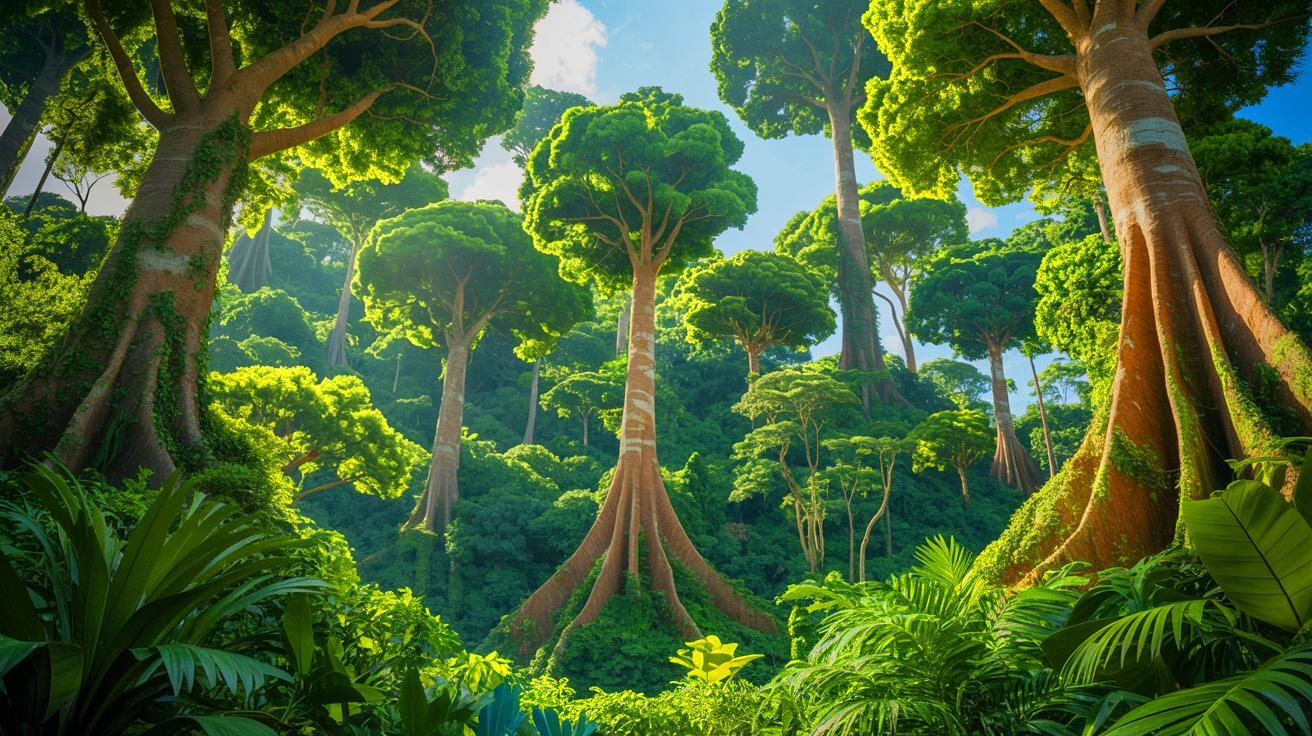
The Amazon rainforest is one of the most vital ecosystems on the planet, playing a crucial role in mitigating climate change by absorbing carbon dioxide (CO2) from the atmosphere. Recent research shows that trees in the Amazon are becoming larger due to the increased availability of CO2. This phenomenon, known as “tree fattening,” indicates a significant shift in the forest’s dynamics. Researchers have been monitoring these changes over several decades, providing valuable insights into the resilience of the Amazon rainforest. As climate change continues to pose challenges, understanding these dynamics is crucial for effective conservation efforts.
Amazon Trees Thrive Amid Rising CO2 Levels
Recent studies have unveiled an intriguing development in the Amazon rainforest: trees of various sizes are experiencing an increase in girth, attributed to rising atmospheric CO2 levels. This transformation has been observed over the past few decades, with an average increase in tree circumference of 3.3% per decade since the 1970s. This phenomenon suggests that the Amazonian trees are adapting to the changing environment by utilizing the surplus CO2 to enhance their growth.
According to Tim Baker, a professor of tropical ecology and conservation, this adaptation is evident across trees of all sizes, indicating a comprehensive shift in the forest structure. The research highlights that the Amazon’s intact forests are storing more carbon, which is a promising sign of resilience in the face of global warming. This development offers hope that these forests may withstand some of the adverse impacts of climate change, at least temporarily.
Understanding the "Benefits Shared" Response
The study explored several potential outcomes of increased CO2 levels on Amazonian trees. Researchers considered scenarios where only large trees would benefit significantly or where smaller trees would experience more pronounced growth. The findings, however, reveal a "benefits shared" response, where trees of all sizes gain from the increased CO2, allowing for widespread growth throughout the forest.
This result suggests a balanced response mechanism that benefits the entire forest ecosystem. The research team, comprising nearly 100 tropical plant scientists, meticulously collected data from 188 plots across the Amazon. They measured the basal area of trees, which reflects the space tree trunks occupy on the forest floor. This comprehensive data collection provides robust evidence supporting the "benefits shared" hypothesis, emphasizing the forest's adaptability.
The Role of Large Trees in Carbon Absorption
Large trees play a pivotal role in absorbing CO2 from the atmosphere, acting as significant carbon sinks. The study confirms that these trees are thriving in undisturbed areas of the Amazon, demonstrating remarkable resilience. Despite concerns about climate change's potential negative impact, the effect of CO2 in stimulating tree growth remains evident.
Adriane Esquivel Muelbert, an associate professor of tropical plant ecology, highlights the importance of these findings in understanding the Amazon's resilience. However, she also warns that this growth may not be sustainable indefinitely. As climate change intensifies, factors such as heat stress, water scarcity, and extreme weather events could impede this growth, necessitating proactive conservation measures to preserve the forest's integrity.
Challenges and Future Implications
While the current growth patterns of Amazonian trees appear promising, researchers caution that this trend may not persist. The anticipated slowing of tree growth and increased mortality rates in the coming decades are concerns that need to be addressed. The impact of rising temperatures, droughts, and other climate-related factors could threaten the forest's ability to continue acting as a carbon sink.
To mitigate these risks, researchers advocate for strategies that focus on maintaining the forest's integrity. Protecting the Amazon from deforestation and other human-induced disturbances is essential for sustaining its role in combating climate change. As we face an uncertain future, understanding the complexities of Amazonian ecosystems becomes increasingly crucial.
The Amazon rainforest's transformation amidst rising CO2 levels offers a glimpse into the adaptive capabilities of nature. Yet, as climate change continues to present formidable challenges, the question remains: Can we effectively safeguard this vital ecosystem to ensure its continued contribution to global carbon sequestration?



Wow, trees getting fat! Does this mean we’ll have giant treehouses in the future? 🌳🏡
Wow, trees are bulking up! Do they need a new gym membership? 😄
Is increased tree growth due to CO2 levels really a good thing in the long run?
Interesting article! Thanks for the enlightening read.
If CO2 is making trees bigger, why are climate scientists hiding this info from environmental groups? 🤔
Does this mean we should stop worrying about deforestation? 🤔
Why are climate scientists allegedly hiding this information?
Thanks for the article! It’s refreshing to hear some positive news about the environment. 😊
Great insights, but what about the impact on biodiversity within the Amazon?
More fat trees, more shade? I like it! 🌳😎
This is fascinating! But what happens when CO2 levels become too high for even these “fattened” trees?
How accurately can we measure tree circumference changes over decades?
Tree fattening sounds like a natural response. Should we intervene?
Are there any downsides to trees getting bigger due to CO2? Or is it all positive?
What are the implications of this growth for local communities?