




| IN A NUTSHELL |
|
The cancellation of DARPA’s Liberty Lifter project marks another chapter in the complex narrative of military and aerospace innovation. While hopes were high for this ambitious endeavor, the decision to terminate the project underscores the inherent challenges in developing revolutionary technologies. From the outset, Liberty Lifter was envisioned as a game-changer, a seaplane capable of performing heavy-lift operations using the Wing-In-Ground effect. Despite the project’s promise, DARPA’s recent announcement serves as a reminder of the unpredictable path of innovation, marked by both breakthroughs and setbacks.
The Grand Vision of the Liberty Lifter
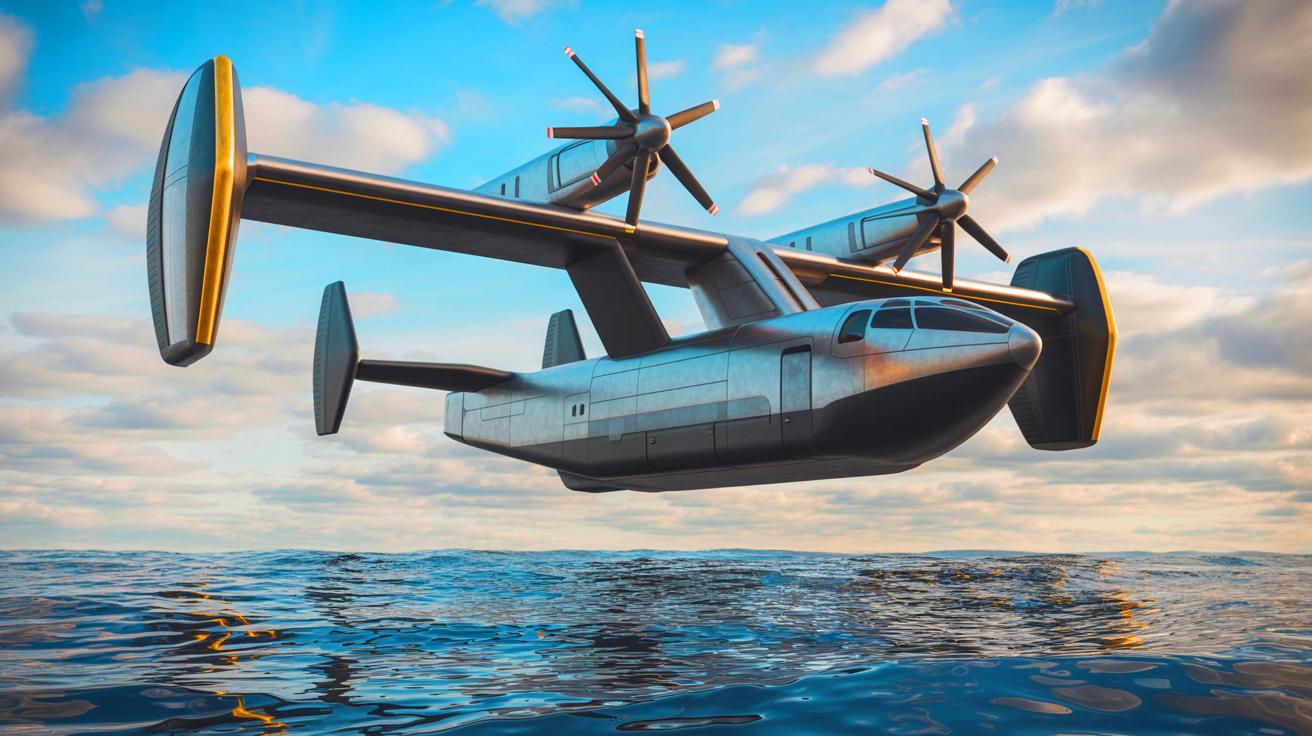
The Liberty Lifter was not just any seaplane; it was a bold attempt to redefine logistics and disaster response capabilities. Drawing inspiration from Howard Hughes’s iconic Spruce Goose, this modern rendition aimed to harness advanced composite materials to build a seaplane with unparalleled range and payload capacity. The project was contracted to General Atomics Aeronautical Systems and Boeing’s Aurora Flight Sciences, promising a demonstrator aircraft comparable in size to the C-130 Hercules.
The ultimate goal was to construct an eight-engine, full-size version with a payload rivaling the Boeing C-17 Globemaster III, capable of carrying 170,000 lbs. Its envisioned range of 12,000 nautical miles underscored the ambitious nature of the project. Furthermore, the Liberty Lifter was designed to operate in challenging sea conditions, making it viable for both military and humanitarian missions. The project’s cancellation, however, highlights the difficulties in translating such grand visions into reality.
Innovative Features and Technical Challenges
The Liberty Lifter stood out for its innovative use of the Wing-In-Ground (WIG) effect, which significantly enhances lift at low altitudes by creating a cushion of air under the wings. This unique feature promised to revolutionize seaplane design, offering unprecedented cargo capacity and operational flexibility. Moreover, the Liberty Lifter was to be a showcase for novel materials and manufacturing techniques, aiming to reduce costs and speed up production.
However, such groundbreaking features are often accompanied by substantial technical challenges. The complexity of developing a seaplane capable of operating in State 4 and State 5 sea conditions was formidable. Furthermore, using shipbuilding rather than traditional aircraft manufacturing techniques presented its own set of hurdles. Despite the challenges, the Liberty Lifter project generated valuable insights and data that DARPA believes will benefit future aerospace endeavors.
The Economics Behind the Cancellation
The decision to cancel the Liberty Lifter project was not solely due to technical challenges but also economic considerations. With the project’s cost nearing $100 million, financial constraints likely played a significant role. The US government, known for its budget-conscious approach, might have deemed the project’s expenses unjustifiable, particularly in the current economic climate.
DARPA’s official stance highlights the project’s contribution to advancing manufacturing techniques and aerospace technologies. However, this narrative is reminiscent of past projects, such as the Anglo-French Concorde, where the official reasons for cancellation masked deeper financial and strategic issues. The Liberty Lifter, while not reaching fruition, has contributed to a broader understanding of seaplane capabilities and technological innovations.
Legacy and Future Implications
Although the Liberty Lifter will not take to the skies, its legacy lies in the knowledge and technological advancements gained throughout its development. The project’s insights into the WIG effect, materials science, and non-traditional manufacturing techniques are invaluable to future aerospace projects. DARPA emphasizes that the data collected will inform and expedite future innovations in the field.
The cancellation of the Liberty Lifter also serves as a reminder of the unpredictable nature of technological advancement. While the project faced insurmountable challenges, its ambitious vision continues to inspire future endeavors. As the aerospace industry evolves, the lessons from the Liberty Lifter project will undoubtedly influence new designs, pushing the boundaries of what is possible.
The story of the Liberty Lifter project is a testament to the complexities and unpredictabilities inherent in pioneering aerospace technologies. While the project did not achieve its ultimate goals, the knowledge and innovations it spawned will continue to impact future endeavors. As we look to the skies and the future of aerospace innovation, how will the lessons from the Liberty Lifter shape the next generation of seaplanes and beyond?




Wow, $100 million gone and not a single flight? That’s a tough pill to swallow. 💸
So, what exactly is the Wing-In-Ground effect? Sounds fancy! ✈️
Thank you for the detailed article! It’s a shame the project was canceled, but I guess that’s innovation for you.
Did anyone see this coming? I thought it was going to be the next big thing! 🤔
Is there a chance they might revive the project in the future?
Looks like military projects are just as unpredictable as stock markets. 📉
How do you even begin to justify a $100 million cost before anything flies?
This is why I have trust issues with government projects. 😂
Innovative features are great, but do they mean anything if they never see the light of day?
Technical challenges aside, was the Liberty Lifter really a viable concept?
Sometimes, you win some; sometimes, you lose $100 million. 😅
Could the insights from this project really influence future designs, or is that just optimistic PR talk?
The legacy of the Liberty Lifter might just be paving the way for something even better!
Maybe they should have consulted Elon Musk before canceling. 🚀
I wonder how the people who worked on this project feel about its cancellation.
The Spruce Goose was a flop too, but at least it flew once!
Is it just me, or do these kind of projects always end up as cautionary tales?
Well, I guess we can all learn from this, even if it’s just learning how not to spend $100 million.
Why not use drones instead of building a massive seaplane? Seems more practical. 🤷♂️
Perhaps the real win here is the new technologies developed, not the plane itself.
Could this project have succeeded with more funding, or were the challenges too great?
I love reading about ambitious projects like this, even if they don’t always work out. Keep them coming!
Seems like every big project has a story of ‘what could have been.’
Imagine how many smaller, successful projects could have been funded with that $100 million!
At least now we have more data on what not to do in aerospace innovation.
What were they thinking using shipbuilding techniques for an aircraft? 🤦♀️