



| IN A NUTSHELL |
|
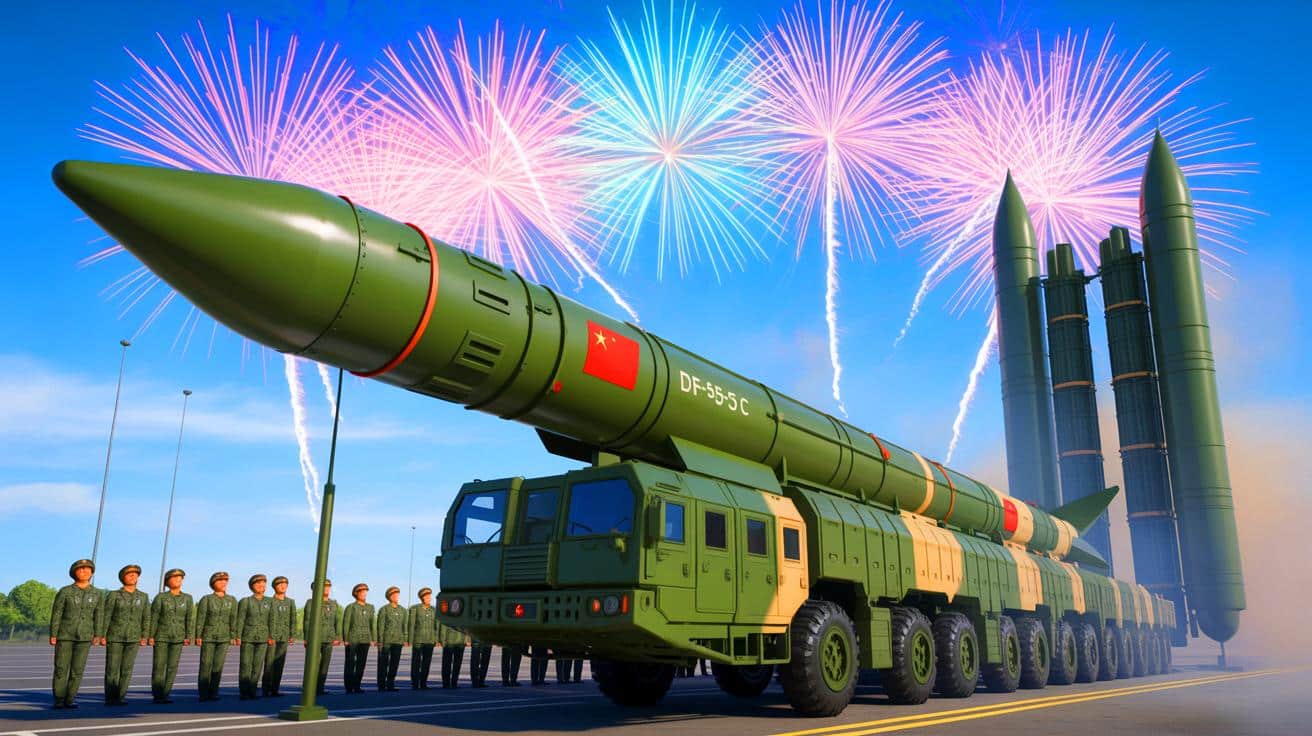
China’s recent unveiling of the DF-5C intercontinental ballistic missile (ICBM) at a military parade in Beijing has brought attention to its advancements in nuclear deterrence capabilities. Dubbed the “anywhere missile,” the DF-5C boasts a range of over 12,400 miles, highlighting its potential global reach. Unlike its predecessors, this missile claims to maintain constant launch readiness, a significant feat for liquid-fuel technology. As geopolitical tensions rise, the DF-5C represents not just a technological advancement but also a strategic shift in China’s approach to nuclear deterrence. Its capabilities and readiness could potentially alter the balance of power on the global stage.
Liquid-Fuel Challenges and Advances
Liquid-fuel ICBMs like the DF-5C are known for their ability to carry heavy payloads and achieve extended ranges. However, maintaining them in a constant state of readiness poses significant challenges. The fuels used, such as nitrogen tetroxide and unsymmetrical dimethylhydrazine, are both toxic and corrosive. Additionally, components like liquid hydrogen and oxygen must be stored at extremely low temperatures, which can lead to problems like leakage or metal brittleness.
Traditionally, liquid-fuel missiles have been stored un-fueled, requiring a complex and hazardous fueling process before launch. This not only delays response times but also increases the risk of detection by surveillance technologies. However, the DF-5C seems to address some of these issues. During the parade, observers noted materials like silicone or composite rubber around its engine nozzles, suggesting potential advancements in fuel storage or rapid-fueling technology.
Such developments could allow the DF-5C to stay launch-ready for extended periods, marking a shift in China’s strategic posture. While liquid-fuel missiles have their risks, their ability to carry heavier warheads or more multiple independently targetable re-entry vehicles (MIRVs) makes them valuable. In hardened silos, they form a crucial component of a second-strike capability, ensuring retaliation even after a first strike.
Technological Leap and Strategic Implications
The DF-5C represents a significant technological leap from its predecessor, the DF-5B. Although details remain closely guarded, analysts suggest that its unveiling was intended to showcase China’s nuclear readiness. The missile’s ability to remain “ready at all times” suggests a shift towards a real-time deterrence model, where immediate retaliation is possible against any global target.
This development places the DF-5C alongside other modern heavy ICBMs like Russia’s Sarmat. While solid-fuel missiles are preferred for their mobility and rapid launch capabilities, the DF-5C’s range and payload reinforce China’s position in the nuclear balance of power. The advancements in the DF-5C highlight China’s progress in overcoming the limitations of liquid-fuel technology, potentially reshaping perceptions of its nuclear deterrent strategy.
China’s “no first use” nuclear policy, which it shares with India, positions its arsenal as a deterrent rather than a first-strike weapon. However, the DF-5C’s capabilities suggest a more assertive stance, potentially increasing global tensions and strategic recalibrations among other nuclear powers.
Global Context and Strategic Dynamics
The DF-5C’s development and unveiling have significant implications for global nuclear dynamics. It comes at a time when the balance of power among nuclear states is under scrutiny. The missile’s extended range and heavy payload capability position it as a formidable component in China’s military arsenal, potentially influencing strategic calculations among other nations.
While solid-fuel missiles remain favored for their rapid deployment and mobility, the DF-5C’s attributes underscore the strategic value of liquid-fuel technology. The advancements in fuel storage and readiness could lead to a reassessment of missile technology preferences. As geopolitical tensions persist, the DF-5C’s capabilities and constant readiness could serve as both a deterrent and a catalyst for further advancements in missile technology worldwide.
The missile’s unveiling signals Beijing’s progress in overcoming liquid-fuel technology’s long-standing challenges, potentially reshaping global perceptions of China’s nuclear strategy. As nations navigate this evolving landscape, the implications of the DF-5C’s capabilities will likely influence future diplomatic and military strategies.
Potential Impacts on Global Security
The introduction of the DF-5C into China’s military arsenal has the potential to impact global security dynamics. Its capabilities and readiness may prompt other nations to reconsider their own military strategies and missile technologies. The missile’s range and payload capacity reinforce China’s strategic deterrent posture, potentially leading to shifts in alliances and defense policies.
As countries assess the implications of the DF-5C’s advancements, questions arise regarding the future of arms control agreements and nuclear non-proliferation efforts. The missile’s unveiling highlights the need for continued dialogue and engagement among nuclear powers to ensure stability and prevent escalation.
Ultimately, the DF-5C represents both a technological achievement and a strategic challenge. As nations grapple with its implications, the path forward will require careful consideration of military capabilities, diplomatic initiatives, and the broader goals of global security.
The unveiling of China’s DF-5C missile marks a significant moment in the ongoing evolution of global nuclear capabilities. As nations assess its implications, questions remain about the future of international arms control and the balance of power. How will countries adapt their strategies in response to this technological advancement, and what steps will be taken to ensure continued global security?




Wow, this is like something out of a spy movie! Should we be worried? 🤔
Is this really a technological leap or just more of the same with a new name? 🤔
Can the U.S. develop a similar missile to match China’s DF-5C capabilities?
Thank you for the detailed analysis! The implications for global security are indeed concerning.
I feel like we’re back in the Cold War era. Anyone else? 😅
Could the DF-5C potentially bypass current missile defense systems?
Great article! The technical details were fascinating.
Wasn’t this just a parade show-off? I doubt it’s as ready as they claim.
Is this really a breakthrough, or just a rehash of old tech?
Great article! But how does this compare to the missiles from other nuclear powers? 🔍
How does this affect China’s “no first use” policy?
Thank you for the insightful analysis on the DF-5C. Very informative!
With this development, are we looking at a new arms race?
How reliable is the information about the DF-5C’s capabilities?
This sounds like a game-changer for global security. Should the world be on high alert? 🚨
What are the environmental impacts of using liquid-fuel technology like this?
Is China the only country making such advancements in missile technology?
The Pentagon must be having sleepless nights over this! 😬
Why aren’t more countries adopting solid-fuel technology if it’s better?
How long until we see a diplomatic response from the U.S. or NATO?
Shouldn’t we focus on disarmament rather than developing more advanced weapons?
How does this compare to Russia’s missile capabilities?
Thanks for the write-up! I learned a lot about missile tech today.
DF-5C sounds impressive, but how practical is it in real conflict scenarios?
Anyone else think this is just a distraction from other geopolitical issues? 🤨
Could this lead to a reevaluation of existing arms control treaties?
Why is the DF-5C considered a “breakthrough” if it’s still liquid-fuel based?
Thanks for the detailed explanation! Helped me understand the strategic implications.
What are the odds of this leading to an actual conflict? Should we be worried?
Have other countries responded to this development yet?
Is this just a show of power, or does China intend to actually use it?