



| IN A NUTSHELL |
|
In the quest for sustainable building materials, researchers in Germany are breaking new ground with an innovative approach: using fungi to create insulation boards. This project, known as Mycobuild, is being spearheaded by the Institute for Circular Economy of Bio:Polymers at Hof University of Applied Sciences. By 2026, the goal is to transition from small-scale laboratory production to full industrial manufacturing. The mushroom-based insulation offers a greener alternative to traditional materials, promising to reduce environmental impact, store carbon dioxide, and utilize less energy during production.
Mushroom-Based Insulation: A Greener Alternative
The Mycobuild project aims to revolutionize the insulation industry by employing fungal mycelium to create sustainable boards. Traditional insulation materials often rely on synthetic or mineral components, which are energy-intensive to produce and have a negative environmental footprint. In contrast, the mushroom-based panels use fungal networks, which are not only compostable but also capture CO2 from the atmosphere. According to Professor Robert Honke, the project leader, these materials require significantly less energy to produce than fossil-based alternatives.
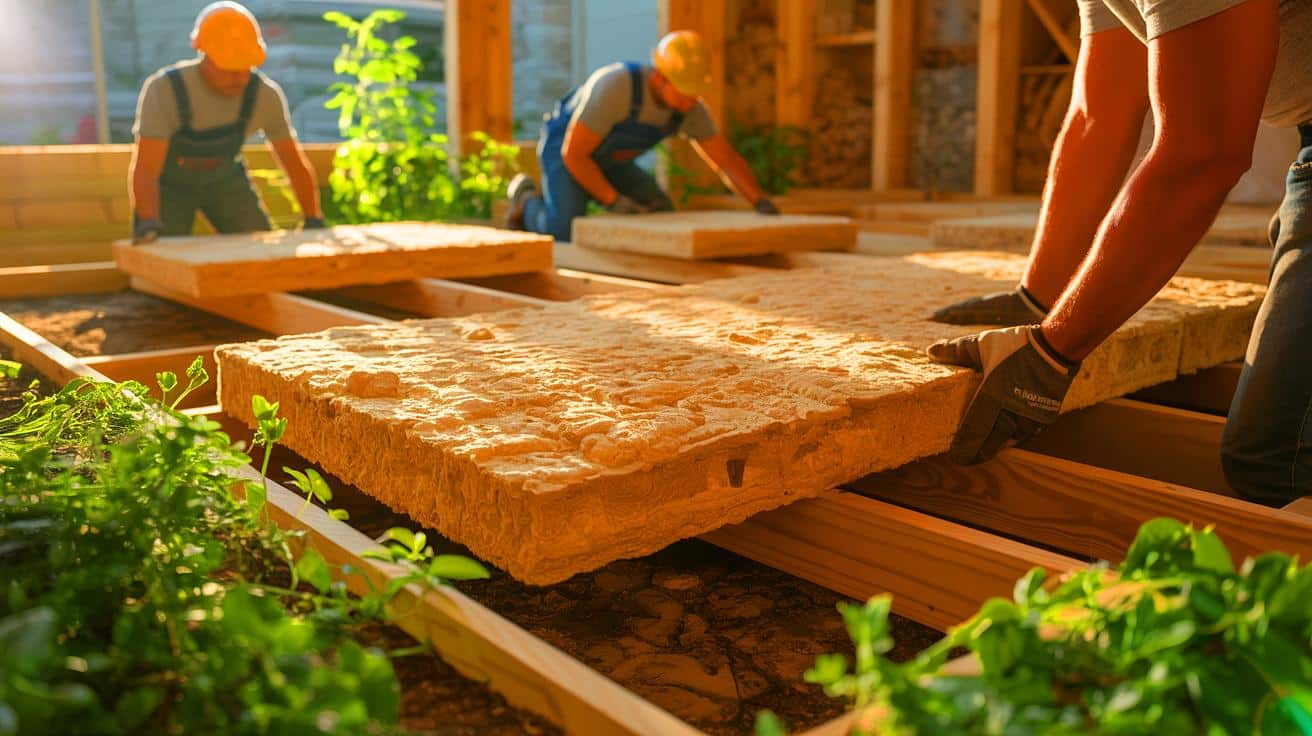
The process begins with preparing a substrate from locally sourced plant residues, such as straw. This substrate serves as a nutrient-rich base for the fungi to grow. Researchers introduce mycelium to this substrate, which then grows into a solid composite within days. The fungal networks bind the substrate components together, resulting in a durable material that can be shaped flexibly and scaled for industrial production. The boards are then dried and heated to stabilize the structure and inactivate the fungi.
Challenges in Cultivating Fungal Insulation
One of the major challenges in producing mycelium-based insulation is maintaining a sterile environment. The cultivation process is highly sensitive to contamination, which can jeopardize the entire batch. Researchers must carefully control conditions and select the optimal substrate to support fungal growth while preventing mold. Katharina Wellmanns, a research associate, emphasizes the need to balance nutrient levels in the substrate to ensure optimal mycelium growth without promoting unwanted germ growth.
To address concerns about moisture penetration, a key barrier to commercial adoption, the team has developed a mineral top layer for the boards. Created in collaboration with Johann Bergmann GmbH & Co. KG, this layer enhances the material's strength and protects it from moisture. The researchers are working to optimize this coating to achieve complete waterproofing, which would further eliminate mold risks.
Local Mushrooms: The Key to Sustainable Insulation
In selecting the right types of mushrooms, researchers have focused on native species like oyster, honeydew, and giant mushrooms. These varieties can thrive at room temperature, eliminating the need for additional heating or cooling, which reduces energy consumption further. Wellmanns points out that the oyster mushroom is particularly promising due to its rapid growth and ability to form dense networks.
The choice of mushroom impacts not only the speed of production but also the stability of the final product. Different mushrooms offer varied benefits, with some growing faster and others forming more robust structures. As the project progresses, the team continues to refine their selection to optimize both the efficiency and durability of the insulation boards.
Potential and Future of Mushroom Insulation
Despite its promising environmental benefits, the concept of fungi-based insulation faces skepticism. Concerns about potential mold growth in homes remain a hurdle for consumer acceptance. However, the researchers are hopeful that continued testing and optimization will address these issues. Supported by Germany’s DATIpilot program, the team is working to scale production and meet industrial standards. If successful, this innovation could significantly reduce emissions and waste, offering a sustainable alternative for home insulation.
The potential impact of Mycobuild extends beyond environmental benefits. It represents a shift in how building materials are conceived, highlighting the importance of sustainable practices in construction. As the project moves toward industrial production, the question remains: Can mushroom-based insulation gain widespread acceptance and truly transform the building industry?


Wow, living walls that breathe? That’s both fascinating and a little creepy! 😅
Wait, so my house could literally grow mushrooms? 🍄 That’s both cool and creepy!
How do they prevent mold from becoming a problem in these living walls?
This sounds like an eco-friendly dream, but how do they guarantee no mold issues?
Thank you for the article! It’s amazing to see how science is being used to combat climate change. 🌍
This sounds like a horror movie waiting to happen! 🍄🏠
Does anyone know if these mushroom walls smell like, well, mushrooms?
I’m curious about the cost. Is mushroom insulation more expensive than traditional materials?
I’m skeptical. How can they ensure these fungi won’t take over my house?
Thank you for the in-depth article. It’s great to see sustainable alternatives being explored!
Wow, this is a game-changer for sustainable building materials. Kudos to the researchers!
Wait, so the walls are alive? How do you clean them? 😂
Are there any health risks associated with having fungal insulation in your home?
Can these mushroom walls be used in all climates, or are they limited to certain regions?
Love the idea of eco-friendly insulation, but I’m a bit worried about the smell. Does it have any? 🤔
How durable are these fungal walls compared to traditional insulation materials?
Thanks for sharing! I never thought mushrooms could be used in construction. 🍄
So, if the insulation is compostable, does it mean it will break down over time?
This is a game-changer for the construction industry! Can’t wait to see how it evolves. 🌍
Sounds interesting, but I’m skeptical about its long-term durability. Any data on that?
Wouldn’t the walls attract insects if they’re made from organic materials?
I’m all for sustainability, but does this really solve the mold issue or just add to it?
Can these mushroom boards be painted or customized easily? 🎨
What happens if the walls get wet? Do they start growing mushrooms inside your house?
Thanks for the article! It’s amazing to see the innovative ways we’re tackling climate change. 🌱
Why not just use traditional insulation and avoid the risk of fungi altogether?
When will this be available in the US? I’m really interested in trying it out! 🇺🇸
How do you ensure the fungi are completely inactivated and safe?
This is so cool! Imagine living in a house that literally breathes and grows! 😄
Is there a risk of the insulation decomposing faster than expected?
Thanks for the insights! Hope this becomes mainstream soon for a greener future.
Would love to hear from someone who’s actually living with these walls. Any testimonials?