


| IN A NUTSHELL |
|
In a groundbreaking development for space exploration, SpinLaunch, a startup based in California, is on the cusp of revolutionizing satellite launches. Utilizing a massive centrifugal cannon, the company plans to deploy hundreds of microsatellites into low-Earth orbit. This innovative approach promises to significantly reduce costs while minimizing the environmental impact traditionally associated with space missions. With robust financial backing and the potential to rival industry giants like SpaceX, SpinLaunch is poised to set new records in satellite deployment. Could this technology mark the dawn of more efficient and sustainable space missions?
A New Era of Satellite Launches
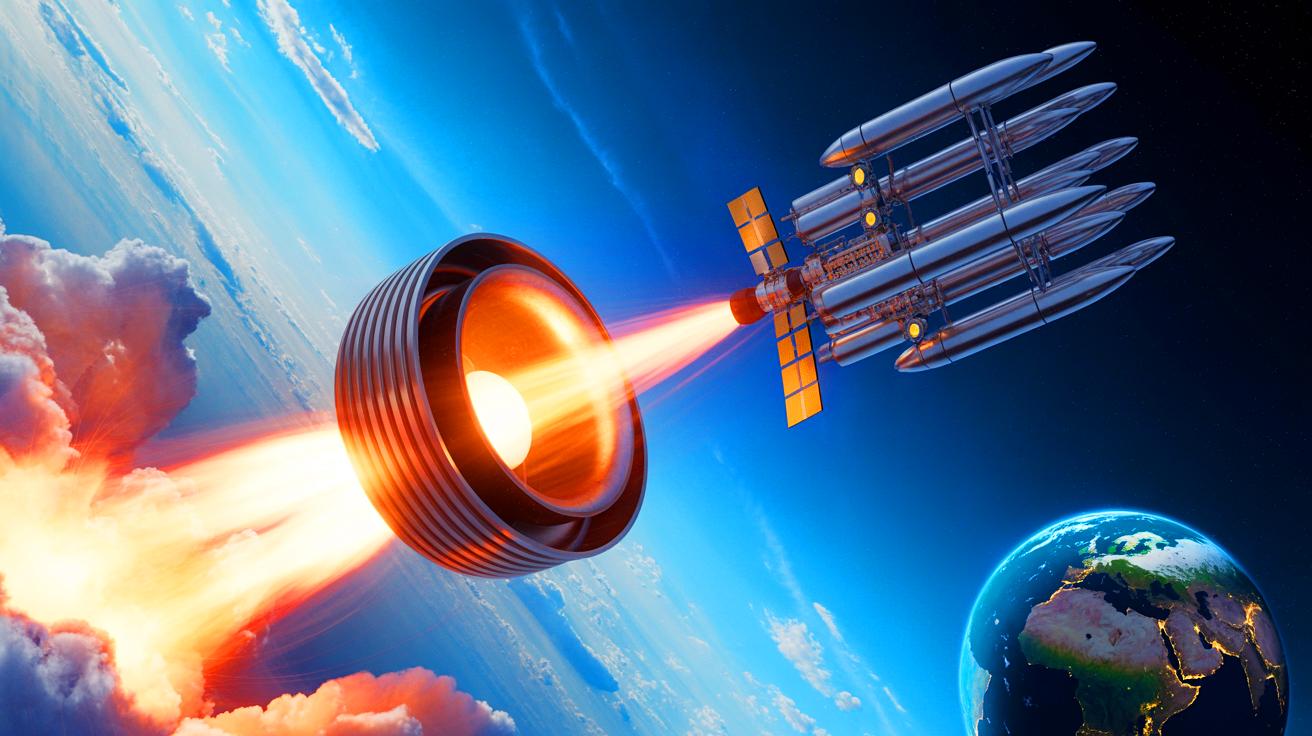
SpinLaunch is introducing a novel technique for deploying satellites that could redefine industry standards. The centerpiece of this innovation is a gigantic centrifugal cannon, designed to accelerate and launch spacecraft at unprecedented speeds. This method aims to dramatically cut financial costs and lessen the environmental impact of traditional rocket launches. The company’s groundbreaking Meridian Space constellation is poised to become a pivotal player, with the initial batch of pancake-like satellites set for deployment as early as next year.
The microsatellites, each measuring 7.5 feet in diameter and weighing about 154 pounds, are ingeniously stacked like pancakes in a “launch bus.” This design significantly reduces weight compared to traditional methods. This unique approach could enable SpinLaunch to break the current record for the most spacecraft launched simultaneously, a title currently held by SpaceX. With substantial financial backing and a proven track record of technological achievements, SpinLaunch stands ready to not only compete but potentially dominate a market traditionally led by established entities.
The Revolutionary Launch System
SpinLaunch’s unique satellite deployment strategy revolves around a cutting-edge launch system utilizing a vacuum-sealed chamber and spinning arms for payload acceleration. The Suborbital Accelerator has already showcased its capabilities, successfully launching ten rockets into suborbital flight from New Mexico. During this process, objects are spun at speeds reaching up to 5,000 mph, enduring forces as high as 10,000 Gs before being propelled into the upper atmosphere. The success of these test launches, including the most recent in September 2022, provides a solid foundation for the upcoming orbital demonstration.
The primary advantage of this system is its cost-efficiency. SpinLaunch anticipates that future commercial launches could cost between $1,250 and $2,500 per kilogram, significantly lower than the costs associated with SpaceX’s Falcon 9 rockets. Furthermore, the absence of greenhouse gas emissions during the launch and the elimination of booster rockets contribute to a more sustainable approach to space travel, addressing both environmental concerns and the issue of space debris.
Implications for the Satellite Industry
The introduction of SpinLaunch’s technology has the potential to revolutionize the satellite industry. By offering a more affordable and environmentally friendly launch option, SpinLaunch is set to challenge the status quo, reshaping the competitive landscape. Their Meridian Space constellation aims to deliver high-speed communication services at a fraction of the cost of its rivals, potentially democratizing access to space-based services.
The company’s ambition extends beyond current capabilities. Plans to expand their capabilities with a larger Orbital Accelerator could enable them to launch up to five commercial payloads into space every day. If realized, this ambitious goal would dramatically increase the frequency and accessibility of satellite launches, creating new opportunities for industries that depend on satellite technology. However, this surge of activity in low-Earth orbit also raises concerns about potential issues like spacecraft collisions, light pollution, and interference with astronomical observations. As the industry moves forward, these challenges will need to be carefully managed.
Looking Ahead: Challenges and Opportunities
While SpinLaunch’s innovations present exciting possibilities, they also introduce challenges that must be addressed. The potential increase in satellite activity in low-Earth orbit could exacerbate existing problems such as space debris and atmospheric pollution from re-entering spacecraft. As the company progresses with its ambitious plans, it will be essential to tackle these issues and work towards sustainable solutions that balance growth with responsibility.
The success of SpinLaunch’s upcoming launches could set a new benchmark for satellite deployment, offering a glimpse into a future where space is more accessible and sustainable. However, the question remains: how will the industry adapt to these changes, and what measures will be taken to mitigate the potential risks associated with increased activity in low-Earth orbit?

Wow, shooting satellites with a cannon? Sounds like something out of a sci-fi movie! 🚀
Wow, this sounds like something out of a sci-fi movie! 🚀 How do they ensure the satellites survive such intense G-forces?
How do they ensure the satellites don’t get damaged during the launch process?
SpinLaunch vs SpaceX – this is getting exciting! Can’t wait to see how this rivalry unfolds. ⚔️
SpinLaunch vs SpaceX: Who do you think will win the satellite launch race?
Is it just me, or does a giant space cannon sound a bit dangerous? 🤔
This is amazing technology, but how do they plan to address space debris? 🤔
Can’t wait to see this in action! The future of space travel is here. 🌌
Great article! Thanks for shedding light on such an innovative technology. 👍
Isn’t 5,000 mph a bit too fast for a satellite launch?
How will SpinLaunch address the issue of space debris with increased satellite launches?
Does SpinLaunch have any plans to collaborate with NASA or other space agencies?
5,000 MPH centrifuge? That’s insane! But what if it misses the target? 😅
The environmental benefits are impressive, but what about the cost to develop this technology?
Are they seriously spinning satellites at 10,000 Gs? That sounds insane! 😮
How do they steer the satellites once they are launched?
Seems like a great idea, but what about the noise pollution from such a powerful launch?
SpinLaunch is going to change everything. Can’t believe it’s real! 🚀🚀
What happens if something goes wrong during the spinning process?
How much does it cost to build one of these centrifuges?
SpinLaunch sounds like a game-changer, but how reliable is this method compared to traditional rockets?
Can they launch larger satellites with this technology or is it only for microsatellites?
This is the coolest thing I’ve read all week! 🌍
How do they ensure the satellites exit the centrifuge at the right angle and speed?
Will SpaceX have to lower their prices to compete with SpinLaunch?
Is there a risk of the satellite spinning out of control once it’s released?
SpinLaunch seems promising, but how will they handle international regulations? 🌐
Why haven’t we heard more about this until now? Sounds revolutionary!
How do they plan to deal with the potential increase in space traffic?
The concept is fascinating, but what about the wear and tear on the centrifuge itself?
SpinLaunch might be the future, but I’m skeptical about its scalability. 🤨
Can this technology be adapted for other space missions beyond satellite launches?
Do they plan to launch from multiple locations around the world?
How long does it take to prep a satellite for launch with this method?
Will this technology make access to space cheaper for smaller companies?
Is the launch site in New Mexico the only one planned? 🌵
How does SpinLaunch’s cost compare to traditional rocket launches? 💸
How environmentally friendly is the construction of these centrifuges?
What kind of testing has been done to ensure the safety of this technology?
Do they offer any advantages for launching satellites into higher orbits?
Can they launch multiple satellites at once with the same spin? 🤖
I wonder how this tech will evolve in the next few years. Exciting times! 🚀
How does the launch method affect the satellite’s initial velocity in orbit?
SpinLaunch is ambitious, but will it be profitable? 🤑