


| IN A NUTSHELL |
|
The quest for sustainable energy has taken a monumental leap with the exploration of nuclear fusion. As the world grapples with climate change and depleting fossil resources, nuclear fusion emerges as a potential game-changer. This innovation promises an abundant, clean energy source, captivating the scientific community’s imagination. The Dalton Nuclear Institute at The University of Manchester stands at the forefront of this revolution, exploring the vast landscape of nuclear materials and their applications in various fields, including medical advancements and national security.
The Dalton Nuclear Institute: Pioneering Nuclear Research
The Dalton Nuclear Institute serves as a beacon of innovation in the field of nuclear research. As part of The University of Manchester, it boasts the UK’s most comprehensive academic nuclear research capability. The Institute’s work spans a wide array of disciplines, from nuclear fission and fusion to medical applications and social sciences. By fostering groundbreaking discoveries, the Institute is reshaping the future of energy production. The collaborative efforts of experts like Aneeqa Khan and Patrick Hackett have positioned the Institute as a leader in the nuclear landscape, driving forward the understanding and application of nuclear technologies.
Nuclear Materials: The Backbone of Modern Technology
Nuclear materials lie at the heart of today’s scientific and technological advancements. These materials are crucial for building reactors capable of withstanding the extreme conditions found in both fission and fusion processes. The ability to create reactors that provide energy to the grid, as well as experimental reactors that pave the way for future operational fusion reactors, hinges on the development of durable materials. Beyond energy, nuclear materials play a vital role in the medical sector, enabling precise diagnoses and innovative treatments. Additionally, they bolster national security by contributing to the safe and efficient operation of nuclear facilities.
The Complexities and Potential of Nuclear Fusion
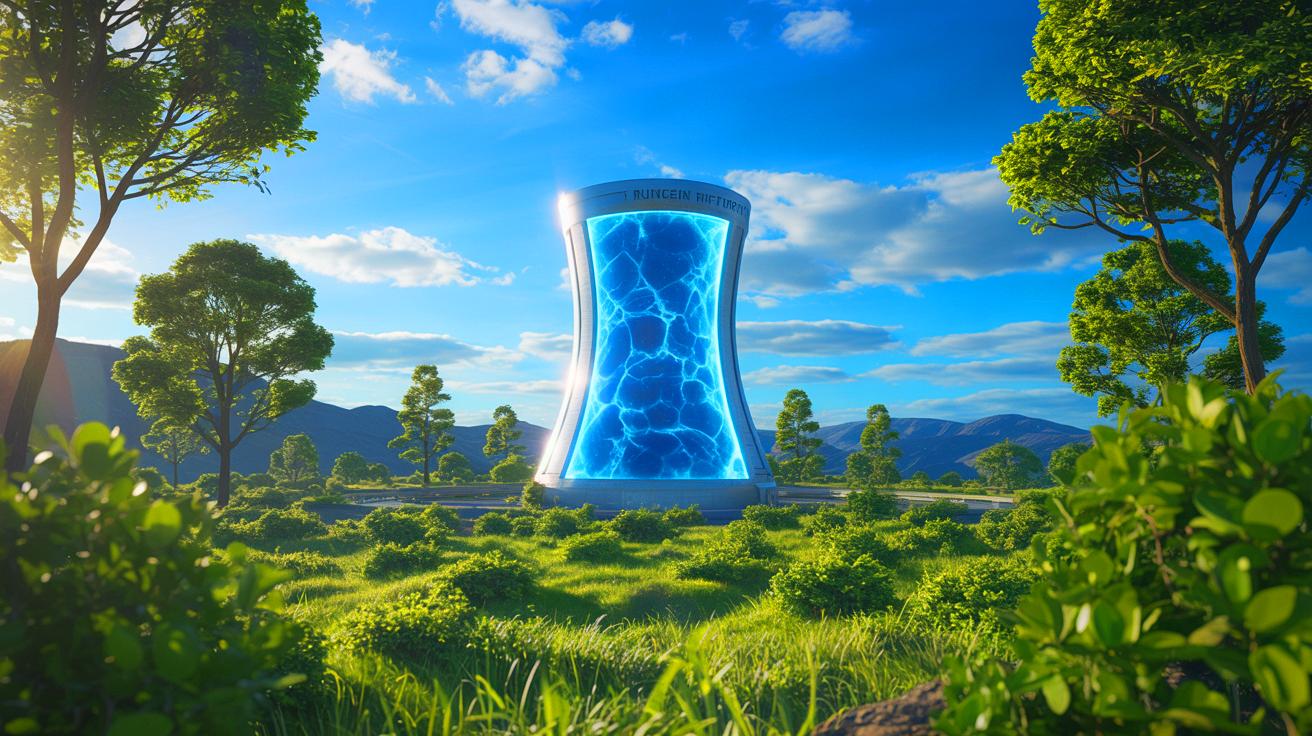
Nuclear fusion, the process that powers the Sun, involves fusing atoms to release immense energy. Unlike fission, which splits atoms, fusion requires recreating solar conditions on Earth. This entails heating hydrogen isotopes to form plasma, reaching temperatures of 180 million degrees Fahrenheit (100 million degrees Celsius). Fusion is heralded as a green energy source since it produces no carbon emissions. Although it is still in its developmental stages, fusion holds the promise of providing a stable baseload of electricity. With its potential for secondary applications like hydrogen production, fusion is poised to be a cornerstone of a diverse, low-carbon energy mix in the future.
Overcoming Challenges in Nuclear Fusion Research
The journey to achieving commercial nuclear fusion is fraught with challenges. Among the primary objectives are demonstrating net engineering energy gain and developing materials that can endure the extreme conditions of fusion reactions. Researchers are also focused on breeding and handling tritium, a key fuel for fusion, and advancing techniques for remote handling and robotic maintenance. Despite these hurdles, investment in fusion is on the rise, and significant progress is being made. The field requires a skilled workforce, underscoring the importance of training programs. Global collaboration remains essential to harnessing fusion’s potential and integrating it into the energy grid.
Addressing Nuclear Waste: A Global Imperative
Managing nuclear waste is a pressing concern that demands innovative solutions. Institutions like the Dalton Nuclear Institute are at the forefront of research aimed at safe, secure, and environmentally responsible storage of radioactive materials. Collaborating with industry and academic partners, the Institute leads initiatives such as the Nuclear Waste Services Research Support Office and the Sellafield Effluent and Decontamination Centre of Expertise. These efforts focus on addressing the challenges of decommissioning and remediation, ensuring that nuclear technologies can be utilized responsibly and sustainably.
As we advance in the realm of nuclear fusion, the possibilities extend beyond energy production. The technologies developed for fusion, such as high-temperature superconducting magnets and advanced robotics, have applications across various industries. From transportation to industrial processes, these innovations could revolutionize sectors reliant on large amounts of heat. As the timeline for achieving successful nuclear fusion extends into the latter half of the century, what steps should we take today to ensure this groundbreaking technology becomes a reliable energy source for future generations?

Wow, if this actually works, it could be the end of our energy problems! 🌍🔋
Can these advancements be used to reduce nuclear waste too?
This seems like an episode from a sci-fi show. Are we sure it’s real? 🛸
I’d like to see more information on the environmental impacts, if any.
Does this mean fossil fuels are finally on their way out? 🌱
Is it just me, or does this sound too good to be true? 🤷♀️
Fusion energy is the future. Can’t wait to see it become a reality!
What are the main hurdles remaining before fusion becomes viable?
Thank you to all the scientists working on this. You’re heroes! 🦸♂️🦸♀️
How do we ensure this technology doesn’t fall into the wrong hands?
Will fusion power be safer than current nuclear power plants?
I’ve heard about ITER and other projects. How is this different?
Can this technology be used in space exploration missions? 🚀
As a student, where can I learn more about nuclear fusion?
Finally, a solution that doesn’t involve burning more coal! 🔥
Hope this doesn’t end up like the cold fusion debacle. 😬
When and where was this breakthrough achieved?
Is this the beginning of the end for oil companies? 🛢️
How long until we can actually use this fusion power in our homes? 🚀
How reliable is the source of this information? 👀
Are there any health risks associated with fusion energy?
I’ve been hearing about fusion since I was a kid. Make it happen already!
Can fusion energy be used to power electric vehicles? 🚗⚡
What role does AI play in advancing fusion technology?
I’m cautiously optimistic, but I’ll believe it when I see it. 🤞
This is amazing news! The future is looking bright. Thanks for sharing! 😊
What about the cost? Is this going to be affordable for everyone?
I’m skeptical. They’ve been promising fusion energy for decades. 🤔
Great, another energy breakthrough that’s “just around the corner.” 😒