




| IN A NUTSHELL |
|
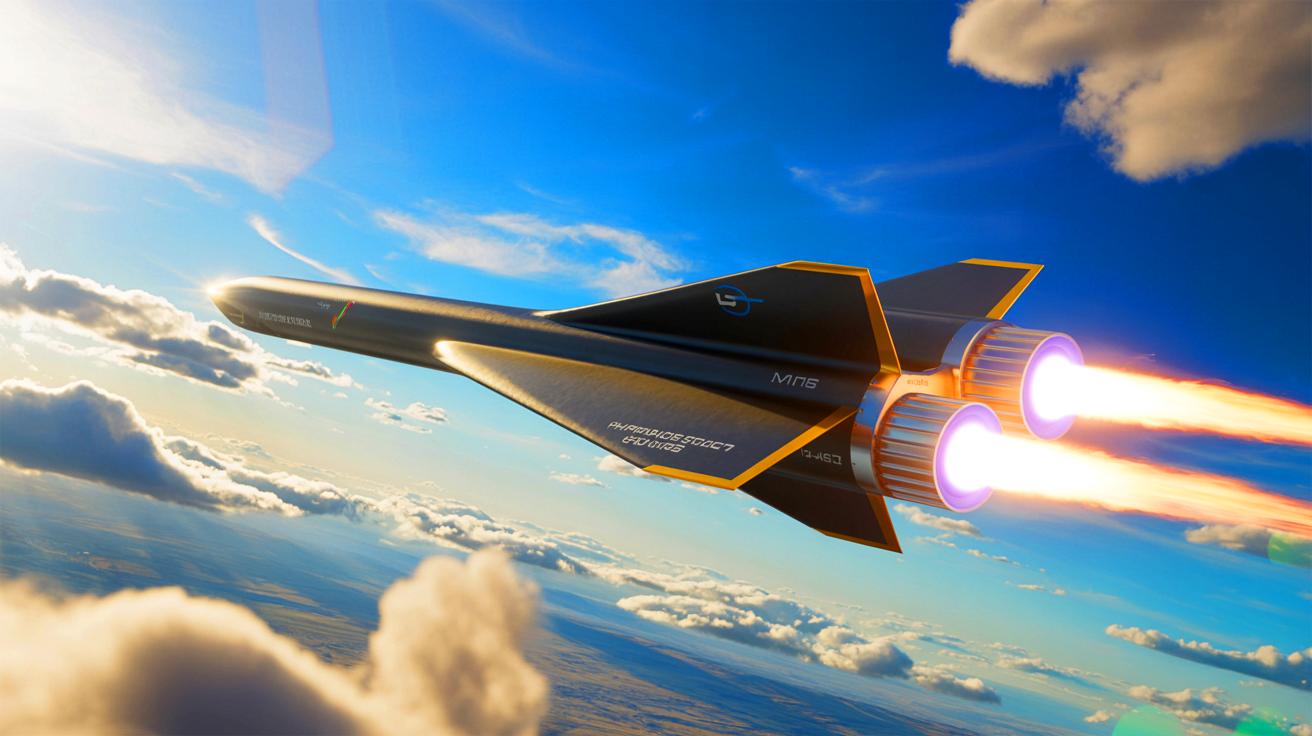
Recent advancements in hypersonic technology have captured the attention of the aerospace industry, with significant implications for national defense and technological innovation. Ursa Major, a U.S.-based aerospace company, recently secured a $32.9 million contract to supply advanced H13 rocket engines for Stratolaunch’s Talon-A hypersonic test vehicle. This collaboration signifies a strategic effort to improve the U.S.’s capabilities in hypersonic testing, an area of growing importance given global competition. The upgraded H13 engines are designed to extend the Talon-A’s reusability and efficiency, enhancing its role in future aerospace developments.
Talon-A’s Enhanced Capabilities
The Talon-A hypersonic vehicle is a pioneering example of modern aerospace technology. It is designed to achieve speeds exceeding Mach 5, making it a crucial asset for testing military hypersonic technologies. The vehicle is launched from Stratolaunch’s carrier aircraft, which boasts the largest wingspan in the world, underscoring the ambitious scale of this project. The recent contract with Ursa Major aims to incorporate upgraded H13 engines into the Talon-A, enhancing its propulsion and overall performance.
During a recent test in May, the Talon-A successfully completed its second flight exceeding Mach 5. This achievement not only represents a technical milestone but also provides valuable data to improve future designs. Dr. Zachary Krevor, President and CEO of Stratolaunch, emphasized the importance of this data in refining the Talon-A’s capabilities. As China and Russia continue to advance their hypersonic technologies, the U.S. is keen to maintain its edge through projects like the Talon-A.
Technological Leap with H13 Engines
The development of reusable hypersonic platforms like the Talon-A is crucial due to the technical challenges and costs associated with hypersonic testing. The upgraded H13 engines, capable of producing 5,000 lbf of thrust, are designed to enhance the vehicle’s performance and longevity. These engines employ an oxygen-rich staged combustion cycle, a sophisticated method typically used in large space launchers. This advancement reduces operating costs and increases the frequency of tests, facilitating quicker progress in hypersonic technology.
The partnership between Ursa Major and Stratolaunch represents a strategic effort to strengthen the U.S.’s hypersonic testing infrastructure. By providing cost-effective engines, this collaboration aims to accelerate the development of both offensive and defensive hypersonic systems. In a global landscape where speed and technological superiority are critical, this partnership seeks to position the U.S. as a leader in hypersonic innovations.
Global Implications of Hypersonic Testing
The significance of hypersonic testing goes beyond technological advancements. It is a strategic priority for national security, as countries like China and Russia continue to make strides in this field. The Talon-A, with its enhanced propulsion system, is a key component in maintaining the U.S.’s technological superiority. Dan Jablonsky, CEO of Ursa Major, highlighted the strategic importance of this contract, emphasizing its role in supporting U.S. hypersonic test infrastructure.
The collaboration between Ursa Major and Stratolaunch is focused on delivering real capabilities in hypersonic testing, prioritizing speed and efficiency. This emphasis reflects the broader imperative to accelerate high-speed flight programs that are essential for national defense. As the U.S. continues to invest in hypersonic technologies, the Talon-A project stands as a testament to the nation’s commitment to maintaining its competitive edge.
Looking Ahead: Future Prospects
The advancements in hypersonic technology, as demonstrated by the Talon-A and H13 engines, are poised to redefine aerospace innovation. The collaboration between Ursa Major and Stratolaunch exemplifies the potential of public-private partnerships in advancing national defense capabilities. The focus on reusability and cost-effectiveness is crucial as the U.S. seeks to lead in the global hypersonic race.
As these technologies evolve, the potential applications of hypersonic vehicles extend beyond military use, possibly influencing civilian sectors as well. The progress achieved through the Talon-A project marks the beginning of a new era in aerospace technology. This endeavor not only addresses current defense needs but also opens the door to future innovations that could transform the industry.
The strides made in hypersonic technology with the Talon-A and H13 engines represent a significant milestone in aerospace advancements. As the U.S. prioritizes hypersonic testing, the collaboration between Ursa Major and Stratolaunch sets the stage for future progress. What impact will these developments have on global defense and the future of aerospace technology?


Wow, Mach 5+ speeds sound insane! How do they manage to control such fast aircrafts?
What are the potential civilian applications for hypersonic technology?
Mach 5? That’s like going from zero to hero in seconds! 🦸♂️
How does the H13 engine’s oxygen-rich staged combustion cycle work?
Is there any environmental impact from developing these hypersonic technologies?
Sounds like a scene straight out of a sci-fi movie! 🌌
Can we take a moment to appreciate the engineering marvels behind this? Incredible! 👏
What are the costs associated with testing hypersonic aircraft?
Hope this doesn’t lead to an arms race. 😬
Is hypersonic technology the future of air travel?
Does China have anything that can compete with the Talon-A?
How long will it take before these technologies are fully operational?
Anyone else worried about the implications of faster military aircraft? 😳
So, when can I book a Mach 5 flight? Asking for a friend. 😜
How can these advancements influence other industries?
The Talon-A sounds like something from a superhero comic!
Seems like the US is really stepping up its game in the hypersonic race! 👏
Thank you for this insightful article! Very informative.
What are the chances of these technologies being used for space exploration?
Are there any safety concerns with hypersonic flight?
Is it just me, or does this sound like a very expensive competition? 💸
How does the US plan to maintain its edge in hypersonic technology?
Incredible to see how far technology has come! 🚀
What role does Stratolaunch’s carrier aircraft play in this project?
Does anyone else think this is just the beginning of something huge? 🤯
I’m excited to see where these advancements will lead us in the next decade.
How are these technologies tested for reliability and safety?
Why haven’t we heard more about this in mainstream news?
Is the focus solely on military applications, or are there other uses in mind?
Imagine a world where hypersonic travel is the norm. Mind-blowing! 🌍
Hope they prioritize safety as much as speed! 🙏
How does the Talon-A compare to China’s hypersonic technology? Curious about the competition! 🤔
Great article! Thanks for breaking down the technical details. 🙌
Reusable hypersonic vehicles? The future is now! 🚀
Why are hypersonic speeds so important for military testing?
Does anyone else find it ironic that we’re spending millions on faster aircraft while still waiting forever for our internet to load? 😂