




| IN A NUTSHELL |
|
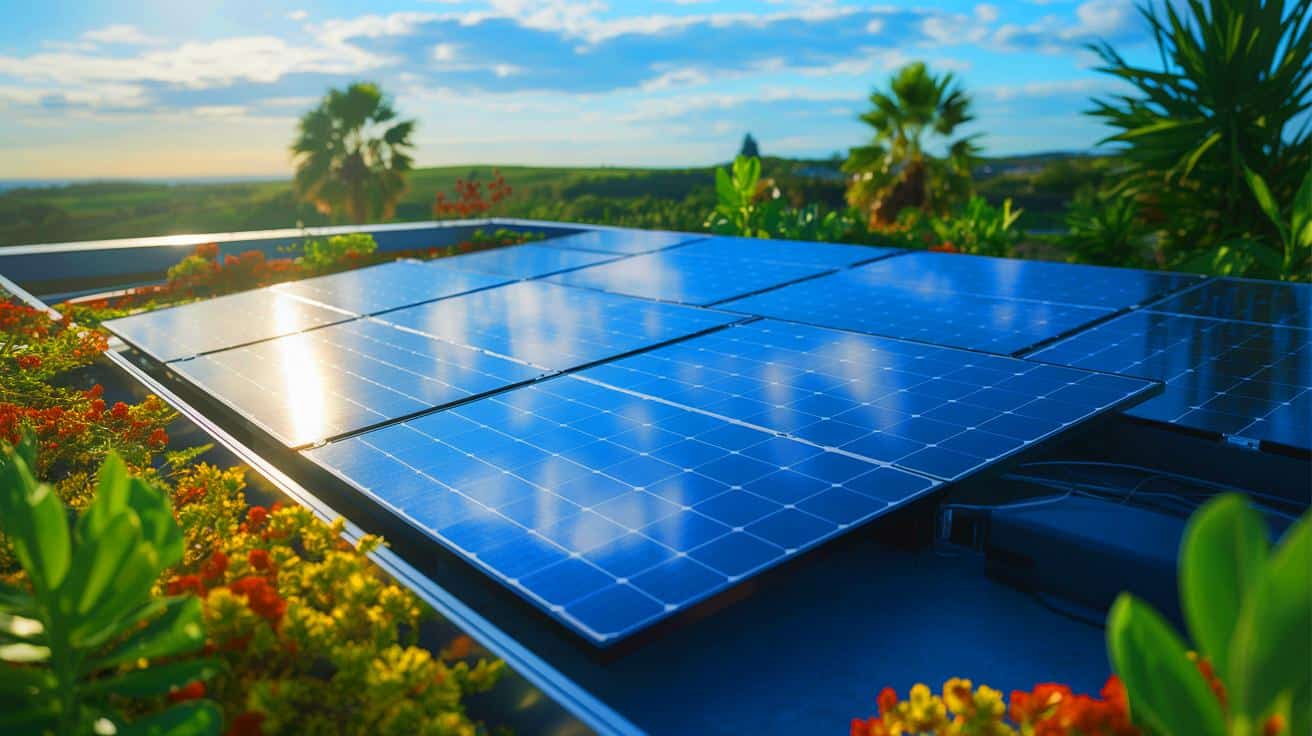
A groundbreaking development in solar technology has emerged, promising a significant leap in efficiency and cost-effectiveness. A new type of solar panel, which is 200% more powerful than traditional silicon-based panels, is set to revolutionize the industry. This advancement is attributed to a unique material that, despite being difficult to pronounce, has proven to be a game-changer. The collaboration between King Abdullah University of Science and Technology (KAUST), the University of Freiburg, and the Fraunhofer Institute for Solar Energy Systems ISE has led to this innovative solution that could reshape the future of solar energy.
The Impact of Perovskite-Silicon Solar Cells
The latest breakthrough in solar technology involves perovskite-silicon solar cells, which have achieved a remarkable efficiency of 33.1%. This represents a significant improvement over traditional silicon solar cells, which typically have an efficiency of around 29.4%. The goal in solar technology has always been to maximize electricity production, and this advancement brings the industry closer than ever to that objective.
The collaboration between KAUST, the University of Freiburg, and the Fraunhofer Institute has resulted in a low-cost yet highly efficient solution, made possible by a specific molecule that enhances solar panel performance. This molecule ensures that the solar efficiency is significantly higher than that of conventional cells, setting a new standard in the industry.
The Role of the Unpronounceable Material
The key to this solar innovation lies in a substance that facilitates surface passivation, a process that enhances solar cell performance by reducing energy loss. Traditionally, applying perovskite layers on textured silicon has been challenging due to uneven surfaces that hinder passivation and, consequently, electrical efficiency.
By incorporating this unpronounceable material into the perovskite layer, researchers have achieved a field effect across all layers, resulting in improved surface stability, electrical conductivity, and voltage output. As Dr. Oussama Er-Raji, the study's lead author, noted, the molecule enabled successful passivation, thus significantly enhancing solar efficiency beyond that of conventional cells.
The Timeliness of This Solar Breakthrough
This innovation comes at a crucial time as silicon cells dominate the solar market due to their lower cost and efficiency. The integration of perovskite-silicon cells has the potential to elevate solar technology to new heights by overcoming existing barriers.
Many solar innovations have utilized perovskite-silicon cells, but the ability to ensure effective passivation marks a new era in solar research. This technology not only leads to better solar panels but also redefines the future of energy. The surface passivation achieved with this novel material demonstrates the sustainability and longevity of solar panels. Rather than breaking photovoltaic laws, this innovation refines and enhances them, maximizing the effectiveness of photovoltaic cells.
A Promising Solar Future
In light of global climate changes, the demand for efficient power generation solutions has become increasingly urgent. The introduction of the chemical 1,3-diaminopropane dihydroiodide has led to substantial improvements in solar efficiency, achieving over 200% gains compared to older panels.
Powered by this chemical compound, perovskite-silicon tandem cells are setting a new standard for solar power. As the industry continues to evolve, 1,3-diaminopropane dihydroiodide may become a prominent material in solar panel discussions. With photovoltaic technology already achieving record energy outputs, the future of solar power with this material remains promising and full of potential.
As the world continues to grapple with the effects of climate change, the development of more efficient and cost-effective solar technology is crucial. The advancements achieved through the integration of perovskite-silicon cells and innovative materials point towards a more sustainable future. How might these breakthroughs influence global energy policies and the adoption of renewable energy sources in the coming years?


Wow, this sounds like a game-changer! How soon can we expect these panels to hit the market? 🌞
Wow, doubling the energy output sounds like a game-changer! How soon can we expect these panels to hit the market? 🌞
Is the new material environmentally friendly? I hope we’re not trading one problem for another. 🤔
Is anyone else concerned about the “terrifying” aspect mentioned in the title? What’s so scary about it?
200% more efficient? That’s incredible! What does this mean for the cost of solar energy?
This sounds almost too good to be true. Can someone explain the science behind it in simpler terms?
I’m curious about the long-term durability of these new panels. Anyone have insights?
Finally, some good news in the energy sector. Thanks for sharing. 😊
Finally, a breakthrough that might actually help us fight climate change more effectively. Thank you for the article! 🌍
This molecule with the long name sounds like magic. Hope it’s not too expensive to produce! 🧪
I’m curious if this new molecule is safe for mass production and use. 🤔
How does this new technology compare to other renewable energy sources in terms of efficiency?