


Close Menu
  • Last News
    • Cities
    • Climate
    • Energy
    • Impact
    • Markets
    • Opinions
    • Policy
    • Reports
    • Research
  • About Us
  • Advertise
  • Contact Us

Subscribe to Our Newsletter

News, investigations, and analysis — our top stories every morning to start your day right.

Trending
learn effective methods to measure your personal sustainability impact and make mindful choices for a greener future.
How to measure your personal sustainability impact
explore the growth of sustainable investments and green finance, highlighting their impact on the global economy and the shift towards environmentally responsible financial practices.
The rise of sustainable investments and green finance
Region Trade Bank Strengthens Governance as Sustainable Finance Places Greater Emphasis on Institutional Integrity
Facebook X (Twitter) LinkedIn YouTube TikTok
Sustainability Times
Facebook X (Twitter) LinkedIn YouTube TikTok
Subscribe
  • Featured
  • Cities

    The Hidden Carbon Cost of Construction Projects (And Why Better Planning Matters More Than You Think)

    05/13/2026
    explore the future of sustainability in urban development, focusing on innovative strategies and technologies shaping eco-friendly and resilient cities.

    The future of sustainability in urban development

    02/24/2026
    Illustration of a vertical farm in Beijing showcasing sustainable urban agriculture practices.

    “China Just Built Farm Skyscraper”: Beijing Greenhouse Grows Food In 37,673 Square Feet While Solar Panels Power Vertical Agriculture Revolution

    09/30/2025
    Illustration of Trojena Ski Resort's futuristic design in the Saudi Arabian desert.

    “We’re Building Winter Olympics in Pure Desert”: Saudi Arabia’s Trojena Ski Resort Hosts 2029 Asian Games Without Natural Snow

    09/09/2025
    Illustration of the historic Kiruna Church being relocated on self-propelled transporters to its new site in Sweden.

    “Sweden Moved a 700-Ton Church”: Historic Kiruna Building Traveled 3.1 Miles on Robot Transporters While King Watched the Journey

    09/03/2025
  • Climate

    The Hidden Carbon Cost of Construction Projects (And Why Better Planning Matters More Than You Think)

    05/13/2026
    explore the vital link between sustainability and climate change, understanding how sustainable practices can help mitigate environmental impact and promote a healthier planet.

    The connection between sustainability and climate change

    04/07/2026

    How to Turn ESG Commitments into Real Results in Oil & Gas: Mikhail Zubkov on Implementing Practical Solutions

    02/24/2026

    Sustainability in Action—How Straight Six Auto Parts Is Revolutionising Automotive Recycling

    01/05/2026
    Illustration of glaciers retreating due to rising global temperatures.

    New Forecast Reveals When Thousands of Glaciers Will Disappear, Highlighting Urgent Need for Climate Action

    12/20/2025
  • Energy

    How bio-LNG is transforming the maritime sector

    06/29/2026
    explore how technology is accelerating sustainability innovations, driving eco-friendly solutions and creating a greener future for our planet.

    How technology is driving sustainability innovations

    03/24/2026

    How to Turn ESG Commitments into Real Results in Oil & Gas: Mikhail Zubkov on Implementing Practical Solutions

    02/24/2026
    explore the vital role of renewable energy in promoting sustainability and reducing environmental impact for a greener future.

    The role of renewable energy in achieving sustainability

    01/27/2026

    How Ilnar Iakhin’s Practical Field Innovations Are Reducing the Environmental Footprint of Gas Production

    12/19/2025
  • Impact
    learn effective methods to measure your personal sustainability impact and make mindful choices for a greener future.

    How to measure your personal sustainability impact

    07/14/2026

    Region Trade Bank Strengthens Governance as Sustainable Finance Places Greater Emphasis on Institutional Integrity

    06/30/2026
    explore sustainable packaging options designed to reduce environmental impact and promote eco-friendly practices for a greener future.

    Sustainable packaging options to reduce environmental impact

    06/30/2026
    explore how circular economy models promote sustainability by reducing waste, conserving resources, and fostering eco-friendly innovation.

    How circular economy models support sustainability

    06/23/2026
    discover practical tips and actions individuals can take at home to support sustainability and contribute to a greener planet.

    What individuals can do to support sustainability at home

    06/09/2026
  • Markets
    explore the growth of sustainable investments and green finance, highlighting their impact on the global economy and the shift towards environmentally responsible financial practices.

    The rise of sustainable investments and green finance

    07/07/2026
    Switzerland’s regulated online gambling ecosystem is built on strict licensing rules, ensuring that only ESBK-approved casinos tied to land-based establishments can legally operate.

    Are Online Casinos Legal in Switzerland? Understanding the Current Regulatory Framework

    11/21/2025
    Illustration of the abrupt halt of a major lithium mine in China impacting global markets.

    “One Mine Shut Down and Prices Exploded”: CATL Halts Major Chinese Lithium Operation Sending Global Markets Into Chaos

    09/11/2025
    Illustration of the massive iron ore deposit discovered in the Pilbara region of Western Australia.

    Geologists Iron Find Worth $6 Trillion Sparks Geopolitical Firestorm As US-China Trade Rivalry Reaches Unprecedented Flashpoint

    08/24/2025
    Illustration of a colossal 55 billion-ton iron ore deposit discovery in Western Australia. Image generated by AI.

    Worldwide Panic as Monumental Geological Find Disrupts Global Trade and Triggers Market Turmoil on Every Continent

    06/04/2025
  • Opinions
    discover the essentials of sustainability and corporate social responsibility, exploring their impact on businesses and society for a better future.

    Sustainability and corporate social responsibility explained

    04/21/2026

    The Hidden Risks of Nepotism and Conflicts of Interest in Corporate Governance

    03/19/2026

    Sustainability, Family Offices, and Private Equity: A Powerful Alignment for Long-Term Impact

    08/05/2025

    Preserving Heritage While Innovating: How AI is Reshaping Design for a Sustainable Future

    07/23/2025

    Factories Without Real-Time Carbon Data Are Flying Blind: Why MES Must Become the Carbon Control Tower

    07/23/2025
  • Policy
    explore the crucial role of governments in advancing sustainability policies to protect the environment, promote social equity, and ensure economic growth for future generations.

    Role of governments in promoting sustainability policies

    06/16/2026
    explore effective strategies to promote sustainability through education, empowering communities to adopt eco-friendly practices and foster environmental awareness.

    Ways to promote sustainability through education

    03/10/2026
    Illustration of the NUMO Ground Robot Deployed by Ukraine for Military Operations.

    “It’s Doing the Dangerous Work for Us”: This Ukrainian Combat Robot Redefines the Battlefield (and It’s Already Saving Soldiers’ Lives)

    10/15/2025
    Illustration of NATO aircraft participating in the Steadfast Noon nuclear deterrence exercise.

    “You Can Feel the Tension in the Air”: This NATO Nuclear Exercise Sparks Unease Across Europe (and Leaders Call It ‘Routine’)

    10/15/2025
    Illustration of China's newly constructed underground military command center near Beijing.

    “Analysts Warn of Escalation”: Satellite Images Expose China Building World’s Largest Underground Military Command Hub To Counter US Power And Regional Rivals

    10/03/2025
  • Reports
    explore the latest trends and innovative solutions driving sustainability in the food industry, from eco-friendly practices to cutting-edge technologies reshaping the future of food production.

    Sustainability in the food industry: trends and solutions

    06/02/2026

    New Study Finds Drip Irrigation Can Cut Coffee’s Carbon Footprint by Nearly 60%

    05/13/2026
    explore the top sustainable development goals to prioritize in 2026 and learn how to make a meaningful impact towards a greener, more equitable future.

    Top sustainable development goals to focus on in 2026

    04/28/2026

    MFC Asset Management Steps Up Its ESG Agenda

    09/24/2025
    Illustration of naval aviators in training during the Top Gun program.

    “We Push Them Until They Break”: Top Gun Training Forces Pilots Through 7.5 Gs While National Geographic Films

    09/21/2025
  • Research
    Illustration of ancient marine super predators dominating the complex food chains of the Cretaceous period.

    Ancient Super Predators Ruled Oceans: New Discoveries Challenge Our Understanding of Marine Life’s Evolutionary Past

    12/20/2025

    How Ilnar Iakhin’s Practical Field Innovations Are Reducing the Environmental Footprint of Gas Production

    12/19/2025
    Illustration of the body's distinct molecular systems for detecting cold on the skin and internally.

    Your Body’s Cold Sensations: Revealing the Dual Ways Temperature Affects Us and What It Means for Comfort

    12/19/2025
    Illustration of the digital reconstruction of a 1.5-million-year-old Homo erectus face from the DAN5 fossil.

    Scientists Reveal 1.5-Million-Year-Old Human Face, Unveiling New Clues to Our Ancient Ancestry

    12/18/2025
    Illustration of ancient pottery featuring plant motifs reflecting early mathematical thinking.

    Ancient Art Reveals How Early Humans Used Math Concepts 8,000 Years Ago Without Numbers

    12/18/2025
Sustainability Times
Home - Energy - All G20 nations are ‘badly behind’ in cutting their emissions

All G20 nations are ‘badly behind’ in cutting their emissions

Eirwen WilliamsEirwen Williams12/06/20180
Share Twitter Facebook LinkedIn Telegram WhatsApp Email Copy Link
Follow Us
Google News
(photo: Max Pixel)
Share
Twitter Facebook LinkedIn WhatsApp Email Copy Link

The world’s economic powerhouses have all pledged to cut down on their carbon emissions in order to help meet CO2 reduction targets to mitigate climate change. Yet such pledges tend to be just so much hot air, according to a new report by Climate Transparency, an NGO that monitors the compliance of G20 nations with climate targets.

What the authors of the report, Brown to Green, have found isn’t encouraging: more than four-fifths, or 82%, of G20 nations’ energy supply still comes from fossil fuel. That means these industrialized countries are far from being on course to ensure that their CO2 reductions would help keep global warming within a manageable 1.5˚C rise. Unless G20 nations manage to halve their emissions by 2030, the authors warn, global temperatures are expected to rise by 3.2˚C, more than double the set target of 1.5°C.

“The G20 countries have hardly made any progress with transitioning towards low-carbon energy: like back in the 1990s, today fossil fuels still make up 82% of the energy mix,” explains Lena Donat, a policy adviser at Germanwatch, an NGO based in Bonn.

“G20 countries still show a strong bias towards keeping the status quo – which is a dominance of fossil fuels in the energy mix. To some part, this can be attributed to the power of the fossil fuel industry, and its close connection to policy makers and the media,” Donat, who contributed to the report, tells Sustainability Times. “Our report shows that all G20 countries still subsidize fossil fuels. Together they spent $147 billion in 2016. For emerging economies, it unfortunately often looks like the easiest option to follow the bad example of the largest economies; namely to invest in fossil energy projects rather than in green alternatives.”

Rather than step up their efforts to respond to the urgency of climate change, many G20 countries carry on in the manner of business as usual. They continue to invest heavily in major sources of greenhouse gas emissions. In Saudi Arabia, Australia and Japan, for example, fossil fuels still account for more than 90% of local energy supplies. These same countries continue to provide large amounts of subsidies to industries that rely heavily on fossil fuels.

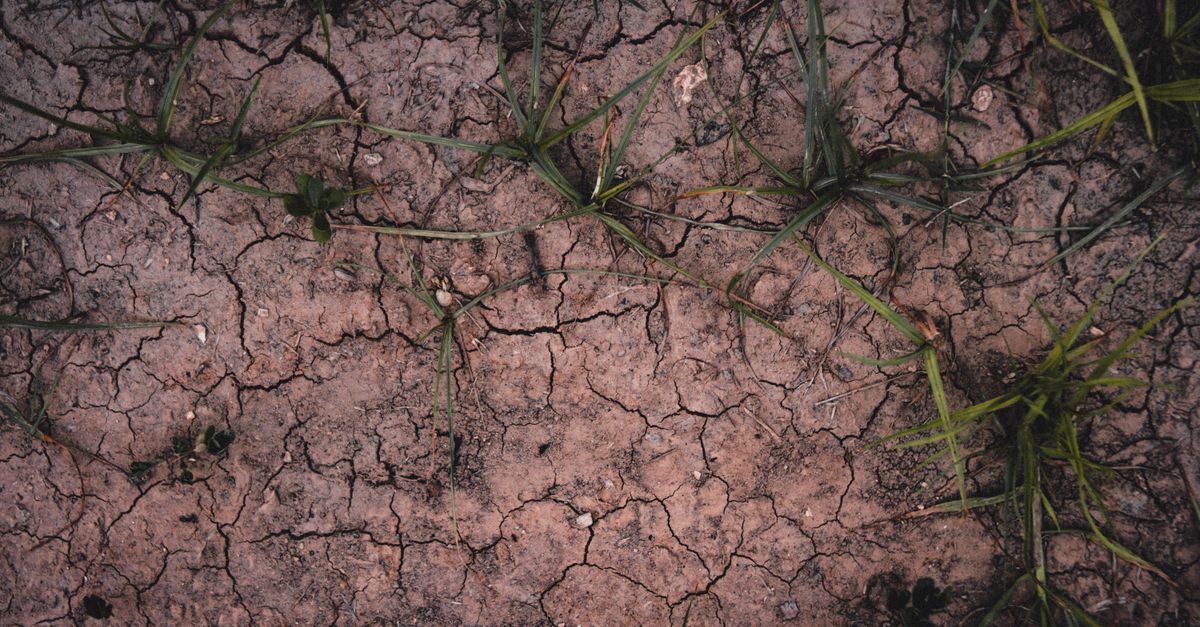
Unless we reduce our CO2 emissions drastically, the planet is in for climate catastrophe with heatwaves and prolonged droughts. (photo: Max Pixel)

In their power sectors, South Africa, Australia and Indonesia have the G20’s highest emissions intensity because of their dependence on a very large share for fossil fuels. None of these countries have effective policies in place to phase out the use of coal-fired plants. In all, the report says, 14 countries in the G20 countries need to have comprehensive plans to phase out coal.

Canada, France, Italy and the United Kingdom do have such plans, but they do not use much coal to begin with. French President Emmanuel Macron has just announced brand-new energy policies, which will include plans to close down the country’s last four coal-fired power plants by 2022. France is also seeking to shut down 14 of the country’s ageing 900 MW first-generation nuclear reactors by 2035.

Yet despite some progress in some nations none of the G20 economies’ climate pledges are on a 1.5˚C-compatible pathway, the report’s authors stress. Only India comes close with a 2˚C-compatible pathway. In other words, the planet remains on course to a warming of 3.2°C, which would have catastrophic consequences for life on Earth as we know it. To avoid that fate, G20 countries must halve their greenhouse gas emissions by 2030, yet few have longer-term reduction strategies to achieve this goal.

“India’s climate target is the closest to doing its fair share to bring us to below 2°C, while all the other G20 countries would bring global warming to 3°C, 4°C or even more,” Donat explains. “Mexico, Italy, the UK and France already have, in comparison with other G20 countries, low levels of CO2 emissions per capita and have managed to decrease these levels further in the last five years. Mexico, for instance, has made major progress in reducing emissions in the transport and building sector,” she adds. “Yet major coal users such as Australia, South Africa and Indonesia are showing no or only little sign to reduce coal use.”

Yet without serious concerted efforts from all the world’s leading economies, achieving the Paris targets will be impossible. “To keep global warming below 1.5°C, the G20 need to get emissions from the energy sector down to net zero by around 2050. This means that fossil fuels need to be out of the game within the next 30 years,” Donat stresses.

For that to happen, two steps are necessary: G20 countries need to cut their energy demands drastically and they also need to adopt renewable energy sources on a much wider scale. “There are enough studies that show that 100% renewable is possible, and would even have positive implications on jobs and GDP,” Donat notes. “The earlier the G20 governments understand this, the easier the transition will be. They can avoid pouring their money into stranded assets.”

Large parts of overall greenhouse gas emissions result from transportation and energy consumption by buildings. Among G20 nations, France, Japan and the UK lead the way with concrete plans to decrease the numbers of vehicles with fossil fuel-burning engines. The worst laggards are the United States, Canada and Australia, which have the highest transport emissions per capita with insufficient emissions standards, or even none, for cars.

Meanwhile, Canada and Germany have the highest emissions-intensity for buildings, but both countries have set targets to make all new buildings wholly green in their energy consumption.

Low-carbon policy adviser Lena Donat. (photo: Germanwatch)

The reasons for why a country is doing well or badly on its emission reductions are manifold. They include such variables as enduring attachment to specific energy sources, resources most readily available in a country, social factors and economic interests, including the influence of fossil fuel-based industrial lobbies. “It is of course easier for a country with a low share of coal in the energy mix to declare the phase-out of coal, as is the case in France,” Donat observes.

“India, by contrast, is facing a major challenge in bringing electricity to the poor and coal provides a source that is relatively easy to access,” she says. “Yet at the same time India also managed to double its renewable energy installed capacity between 2014 and 2017.”

Positively, even as most G20 nations are nowhere near achieving the required reductions in their emissions, many of them have made tangible progress in certain areas, whether it’s a speedy transition to renewables or a plan to embrace electric vehicles on an ever-wider scale. “G20 countries can already do a lot by looking at each other: France, UK, Italy and Canada have decided to phase out coal; Japan, France and UK have decided to stop selling petrol and diesel cars – the list of positive signs is long,” Donat observes. “It is key that G20 countries develop their own long-term plans on how to decarbonize their energy supply.”

Just as encouragingly, more and more people in industrialized countries are increasingly aware of the impending threats of climate change. More and more people want to see their countries adopt forward-thinking policies that can help militate against those threats. Public pressure on policymakers may yet induce them to adopt such policies.

“We see the public opinion shifting. For example, three-quarters of Europeans are in favor of subsidizing renewable energy and of reducing coal, according to a survey released in October,” Donat says. “And we see that more and more companies and investors are divesting from fossil fuels and setting their own emission targets.”

Subscribe to Our Newsletter

News, investigations, and analysis — our top stories every morning to start your day right.

Climate Change CO2-Emissions Power Use
Follow on Google News Follow on X (Twitter)
Share. Facebook Twitter LinkedIn Telegram WhatsApp Email Copy Link
Previous ArticleTurning wood into biofuel is now easier … thanks to tiny crustaceans
Next Article Is smart growth a smart move for Nature?
Eirwen Williams
  • X (Twitter)

Eirwen Williams is a New York-based journalist at Sustainability Times, covering science, climate policy, sustainable innovation, and environmental justice. With a background in journalism acquired through a specialized program in New York, he explores how cities adapt to a warming world. With a focus on people-powered change, his stories spotlight the intersection of activism, policy, and green technology. Contact : [email protected]

Keep Reading

How bio-LNG is transforming the maritime sector

explore the latest trends and innovative solutions driving sustainability in the food industry, from eco-friendly practices to cutting-edge technologies reshaping the future of food production.

Sustainability in the food industry: trends and solutions

New Study Finds Drip Irrigation Can Cut Coffee’s Carbon Footprint by Nearly 60%

Add A Comment

Comments are closed.

Subscribe to Our Newsletter

News, investigations, and analysis — our top stories every morning to start your day right.

Trending
learn effective methods to measure your personal sustainability impact and make mindful choices for a greener future.
How to measure your personal sustainability impact
explore the growth of sustainable investments and green finance, highlighting their impact on the global economy and the shift towards environmentally responsible financial practices.
The rise of sustainable investments and green finance
Region Trade Bank Strengthens Governance as Sustainable Finance Places Greater Emphasis on Institutional Integrity
News by category
  • Featured
  • Cities
  • Climate
  • Energy
  • Impact
  • Markets
  • Opinions
  • Policy
  • Reports
  • Research
Information
  • About Us
  • Meet the Team
  • Advertise
  • Contact Us
  • Legal Mentions
  • Privacy Policy

Subscribe to Our Newsletter

News, investigations, and analysis — our top stories every morning to start your day right.

Facebook X (Twitter) LinkedIn YouTube TikTok
© Sustainability-Times.com. All rights reserved.

Type above and press Enter to search. Press Esc to cancel.