



| IN A NUTSHELL |
|
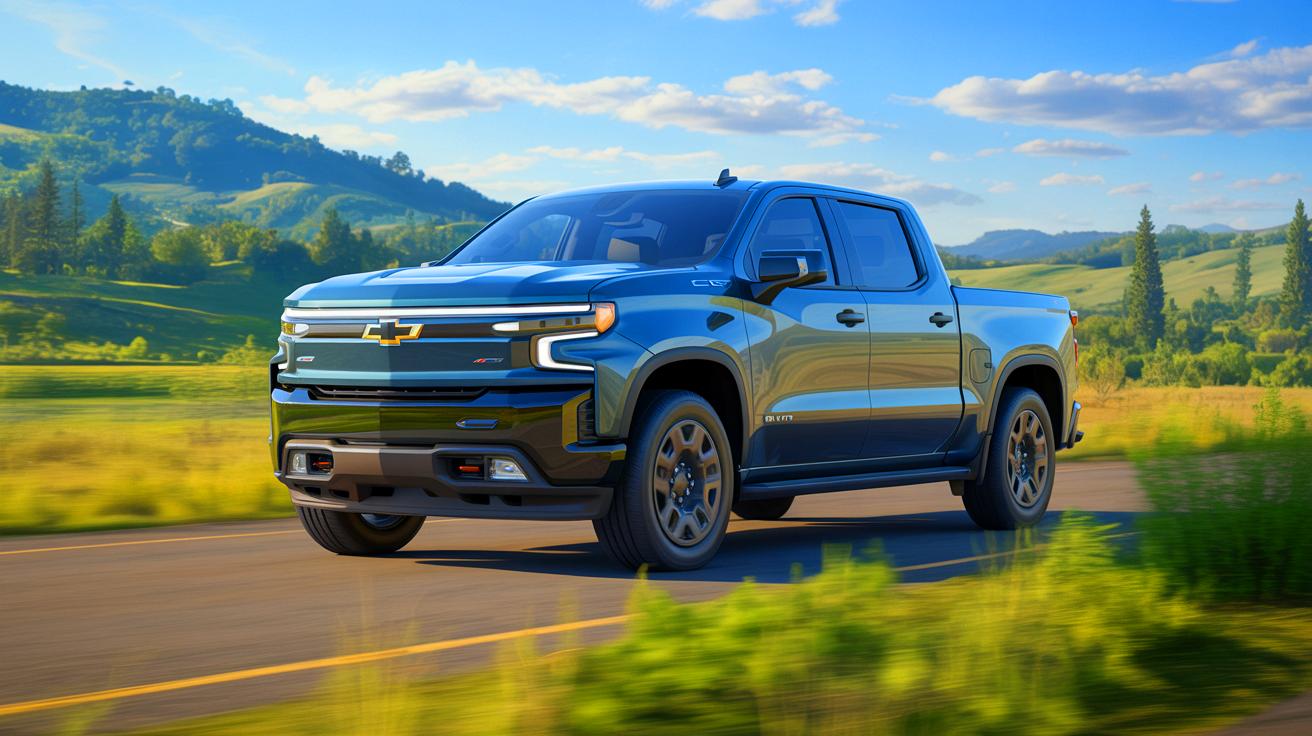
General Motors has made headlines with a remarkable feat: driving a Chevy Silverado EV over 1,000 miles on a single charge. This achievement not only surpasses previous electric vehicle records but also demonstrates the potential of electric trucks in the automotive industry. By optimizing various aspects of the vehicle, including weight and aerodynamics, GM engineers were able to push the limits of EV technology. This milestone underscores the growing capabilities of electric vehicles and challenges competitors to innovate further in the quest for greater efficiency and range.
Breaking the 1,000-Mile Barrier
The pursuit of breaking the 1,000-mile barrier was no easy task. GM engineers meticulously planned and executed a strategy to extend the range of the Silverado EV beyond the standard limits. The team focused on a holistic approach, integrating expertise across battery chemistry, drive unit efficiency, and vehicle engineering. By doing so, they managed to achieve a record-breaking range that astonished the automotive world.
The team employed several mileage-boosting techniques to achieve this feat. They minimized the vehicle’s weight by removing non-essential items and optimizing tire pressure. Additionally, they fine-tuned the vehicle’s aerodynamics by adjusting the wheel alignment and adding a tonneau cover to the truck bed. These modifications were within the vehicle’s user manual guidelines, ensuring that the challenge remained true to real-world conditions.
Despite the success, the driving conditions were far from ideal for everyday use. The team drove at a constant speed of 20 to 25 mph to maximize efficiency. While this speed is suitable for city driving, it presents challenges for long-distance travel, making it impractical for most drivers. However, the achievement highlights the potential for future improvements in EV technology.
The Role of Environment and Conditions
The timing of the challenge played a critical role in its success. Conducted during the Michigan summer, the mild temperatures provided optimal conditions for battery performance. However, this also meant that the team had to endure hours of driving without air conditioning to conserve energy. The engineers took turns driving the vehicle, each completing one-hour shifts, which allowed them to integrate the challenge into their regular workdays.
While the mild weather conditions favored battery performance, they were not conducive to driver comfort. The lack of air conditioning made the endeavor physically demanding. Nevertheless, the team persevered, driven by the goal of pushing the Silverado EV’s capabilities to the limit. This determination exemplifies the spirit of innovation and dedication that drives advancements in electric vehicle technology.
The choice of location also contributed to the challenge’s success. The team drove within a mapped section of public roads near GM’s Milford Proving Ground, ensuring a controlled environment that minimized external variables. This strategic decision allowed the team to focus solely on optimizing the vehicle’s performance, further demonstrating the meticulous planning that went into the challenge.
Implications for the Future of Electric Vehicles
The successful 1,059-mile drive of the Silverado EV sets a new benchmark in the electric vehicle industry. It challenges other manufacturers to rethink their approaches to EV range and efficiency. The achievement also highlights the potential for electric trucks to play a significant role in the future of transportation. As technology continues to advance, the possibilities for long-range electric vehicles become increasingly promising.
GM’s accomplishment serves as a testament to the company’s commitment to innovation and sustainability. By pushing the boundaries of what is possible with current technology, GM is paving the way for a future where electric vehicles are not only viable but competitive with traditional internal combustion engines. This achievement is likely to inspire further research and development in the field, driving progress across the automotive industry.
While the record-breaking drive was an internal challenge rather than an official world record attempt, it has garnered significant attention. The feat showcases the potential for electric vehicles to exceed current expectations, encouraging consumers and manufacturers alike to embrace the shift towards sustainable transportation solutions.
Challenges and Considerations for Everyday Drivers
Despite the impressive achievement, replicating the 1,059-mile drive poses challenges for everyday drivers. The conditions under which the record was set were highly controlled, with speeds maintained at 20 to 25 mph. For most drivers, this speed is impractical for long-distance travel, limiting the applicability of the record to real-world scenarios.
The challenge also highlighted the importance of weight management and aerodynamics in maximizing EV range. While removing excess weight and optimizing aerodynamics are feasible strategies, they may not be practical for all drivers. Additionally, driving without air conditioning is not a viable option for most, particularly in extreme weather conditions.
Nonetheless, the record-breaking drive serves as a valuable learning experience for both manufacturers and consumers. It demonstrates the potential of electric vehicles to exceed current limitations and encourages further exploration of innovative strategies to enhance EV performance. As the automotive industry continues to evolve, the insights gained from such challenges will play a crucial role in shaping the future of transportation.
As we consider the future of electric vehicles, one question remains: How will manufacturers balance the need for efficiency with the practical demands of everyday driving?


Wow, 1,059 miles on a single charge? That’s insane! 🚗🔋
Did they really drive at 20-25 mph the whole time? Seems kinda impractical for real-world driving. 🤔
Great achievement by GM! But how long did the charge take? ⏳
Not impressed. Try doing that with the AC on in the middle of a Texas summer! 🥵
Is this something we can expect from future Silverado models, or was it just a one-time experiment?
Hats off to GM engineers for pushing the boundaries of EV tech! 🎩👏
Would love to see a similar test in winter conditions to see how the battery holds up. ❄️
1,059 miles at 25 mph? That’s like watching paint dry. 😴
How did they manage to drive without air conditioning? That sounds like torture! 😅