

| IN A NUTSHELL |
|
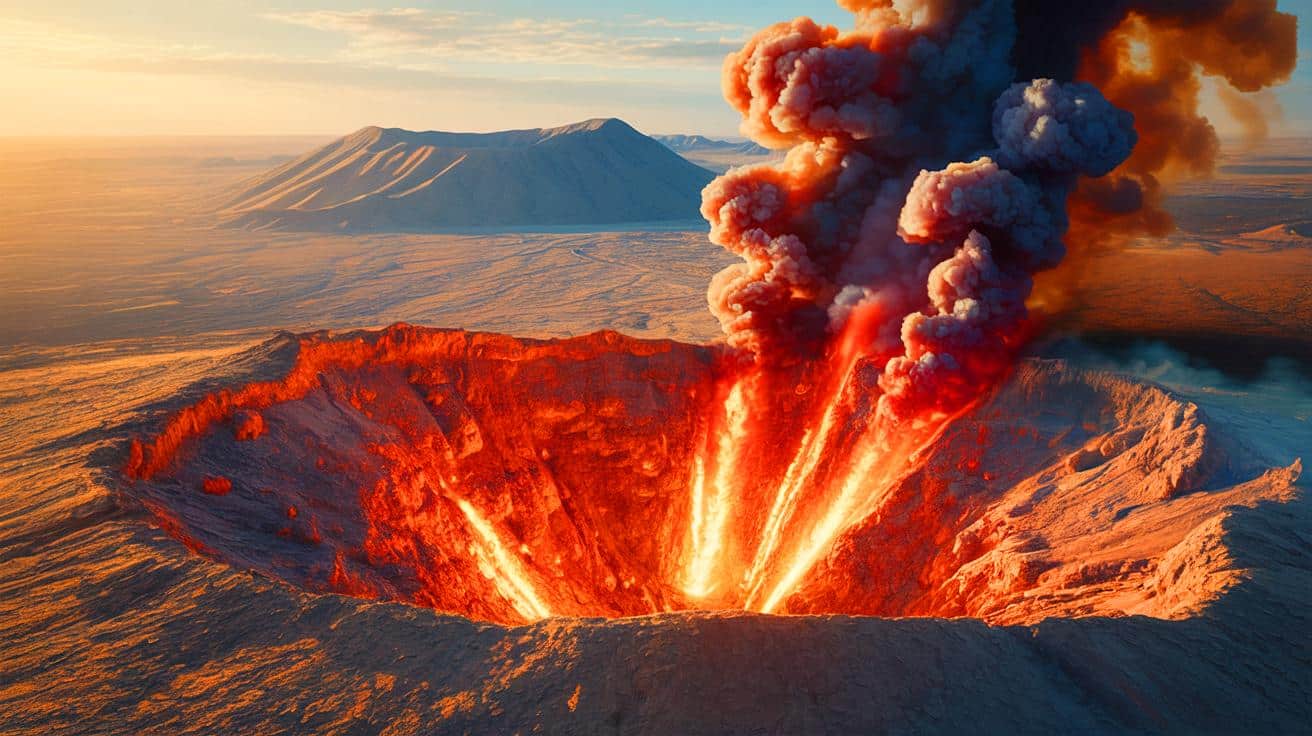
In the heart of Turkmenistan’s Karakum Desert, a natural spectacle is drawing to a close. The “Gates of Hell,” a fiery crater known as Darvaza, has been burning for half a century, spewing methane, a potent greenhouse gas. Now, authorities plan to extinguish this infamous blaze. This decision follows years of fascination, attracting tourists like Irina from Ashgabat, who braved hours of rough desert travel to witness the diminishing flames. Despite its allure, the site represents a significant environmental challenge, as Turkmenistan grapples with its role in global methane emissions.
The Environmental Impact of Methane
Methane is a major contributor to climate change, responsible for about 30% of global warming since the industrial revolution. It is far more effective at trapping heat in the atmosphere than carbon dioxide, making its management crucial in efforts to combat climate change. Turkmenistan, despite its smaller size compared to major emitters like the United States and China, holds a record for methane super-emissions, as reported by the International Energy Agency in 2024. The Darvaza crater, although a minor contributor to these emissions, symbolizes the broader environmental challenges faced by the nation.
The decision to extinguish the flames is not just environmentally motivated. Turkmenistan’s economy is heavily reliant on its vast gas reserves. President Gurbanguly Berdimuhamedov, in a move to protect both the environment and the nation’s economic interests, ordered the crater to be put out, citing the loss of valuable resources that could otherwise benefit the country’s population. The potential for gas export profits presents a compelling economic incentive to address the ongoing combustion.
Challenges in Extinguishing the Flames
The effort to control the Darvaza crater is fraught with challenges. Turkmenistan's state-run company, Turkmengaz, has reported success in reducing the intensity of the flames by over threefold. However, the unique geological makeup of the Karakum Desert complicates their efforts. The desert's subsurface is characterized by numerous thin layers of hydrocarbons interspersed with dense, water-containing strata. This geological complexity has prolonged the crater's combustion, as these layers continue to supply the fire with fuel.
Despite the progress reported by Turkmengaz, the task is far from straightforward. The company aims to completely isolate the crater's surface once the gas flow diminishes, thereby halting uncontrolled emissions. The lack of transparency and accessibility to Turkmengaz's operations, however, raises questions about the feasibility and accuracy of these claims. Information is tightly controlled by the Turkmen authorities, making independent verification difficult.
A Blow to Local Tourism
The Darvaza crater has been a unique tourist attraction since its accidental creation in 1971 by Soviet geologists. Anatoly Bouchmakine, a 90-year-old Turkmen scientist, recalls how the initial accident led to the continuous burning of the site. While the incident provided valuable insights into the gas reserves of the region, it also established an iconic landmark in an otherwise isolated country.
The potential closure of Darvaza presents significant challenges for Turkmenistan's nascent tourism industry. The country, largely covered in desert, offers few tourist attractions compared to its neighbors. For the limited number of foreign visitors able to secure visas, the fiery crater is a must-see destination. Local travel agencies, like the one employing Ovez Mouradov, fear the economic impact of losing such a draw. As he notes, the cessation of the flames could lead to significant revenue losses for many tourism-dependent businesses.
The Future of Turkmenistan's Environment and Economy
The decision to extinguish the Darvaza crater reflects Turkmenistan's balancing act between environmental responsibility and economic necessity. The country's leadership must navigate the challenges of reducing methane emissions while maximizing the economic benefits of its natural resources. This initiative could signal a shift towards a more sustainable approach to resource management, aligning with global efforts to mitigate climate change.
However, the opacity surrounding Turkmenistan's environmental policies and industrial practices complicates assessments of progress. As the country takes steps to address its environmental impact, both the local and international communities will be watching closely. The Darvaza crater, once a fiery symbol of environmental negligence, may yet become a testament to Turkmenistan's commitment to a sustainable future. Will this initiative pave the way for broader environmental reforms in Turkmenistan?

Is it really possible to put out a fire that’s been burning for 50 years? 🤔
Wow, it’s the end of an era! I always wanted to visit the “Gates of Hell” 🔥. Does this mean no more fiery selfies?
Can’t believe they are finally extinguishing the Gates of Hell! This is huge for the environment.
Why did it take Turkmenistan so long to decide to extinguish the crater? Seems like they could have done this years ago.
What will happen to the local tourism industry now? Will they find another attraction? 🌍
Great initiative, but why did it take so long for them to decide this was necessary?
This is a great move for the environment! Thanks for highlighting the importance of reducing methane emissions.
I’m skeptical about the effectiveness of this effort. Will it actually reduce emissions significantly?
Finally, some action against methane emissions! Thank you for this article! 😊
How exactly do they plan to extinguish a fire that’s been burning for over 50 years? Sounds like a tough challenge.
Are there any plans to develop alternative tourist attractions in Turkmenistan?
Why didn’t they think of using the gas for economic benefits 50 years ago?
What will happen to the local tourism industry without this major attraction? 🏜️
Hope this marks the beginning of broader environmental reforms in Turkmenistan.
Is Turkmenistan’s government transparent enough about their plans to extinguish the crater?
Finally! Better late than never, I guess. Climate change is no joke.
This is a fascinating read. Thanks for highlighting such an important issue!
How will the local businesses that depend on tourism survive this change?
Imagine being a tourist who visited the crater just before they extinguished it! 😮
What are the technical challenges involved in putting out such a massive fire?
This article is eye-opening. I had no idea about the scale of methane emissions there.
Will extinguishing the fire actually have a noticeable impact on climate change?
At least they’re doing something about it now. Better late than never, right?
Why is there so little independent verification of Turkmenistan’s environmental policies?
Would love to hear more about the scientist who recalls the initial accident. Sounds intriguing!
Is this the end of an era for Turkmenistan’s tourism sector?
How effective has Turkmengaz been in reducing the flames so far?
Are there any similar sites in other countries facing the same issue?
It’s sad to see such a unique landmark go, but the environment must come first. 🌱
How will this decision affect Turkmenistan’s economy in the long run?
What sort of technology is being used to extinguish the fire?
Turkmenistan should be commended for taking this step, despite the tourism losses.
Wish there were more details about the geological challenges mentioned. 🏜️
Has Turkmenistan considered renewable energy alternatives for economic benefit?
How did the crater start burning in the first place? This is intriguing!
It’s a tough decision, but extinguishing the fire is the right call for the planet. 🌍
This move is long overdue. Hope it inspires other countries to tackle their own emissions.
I’m curious about how local guides and businesses are reacting to this news.