


| IN A NUTSHELL |
|
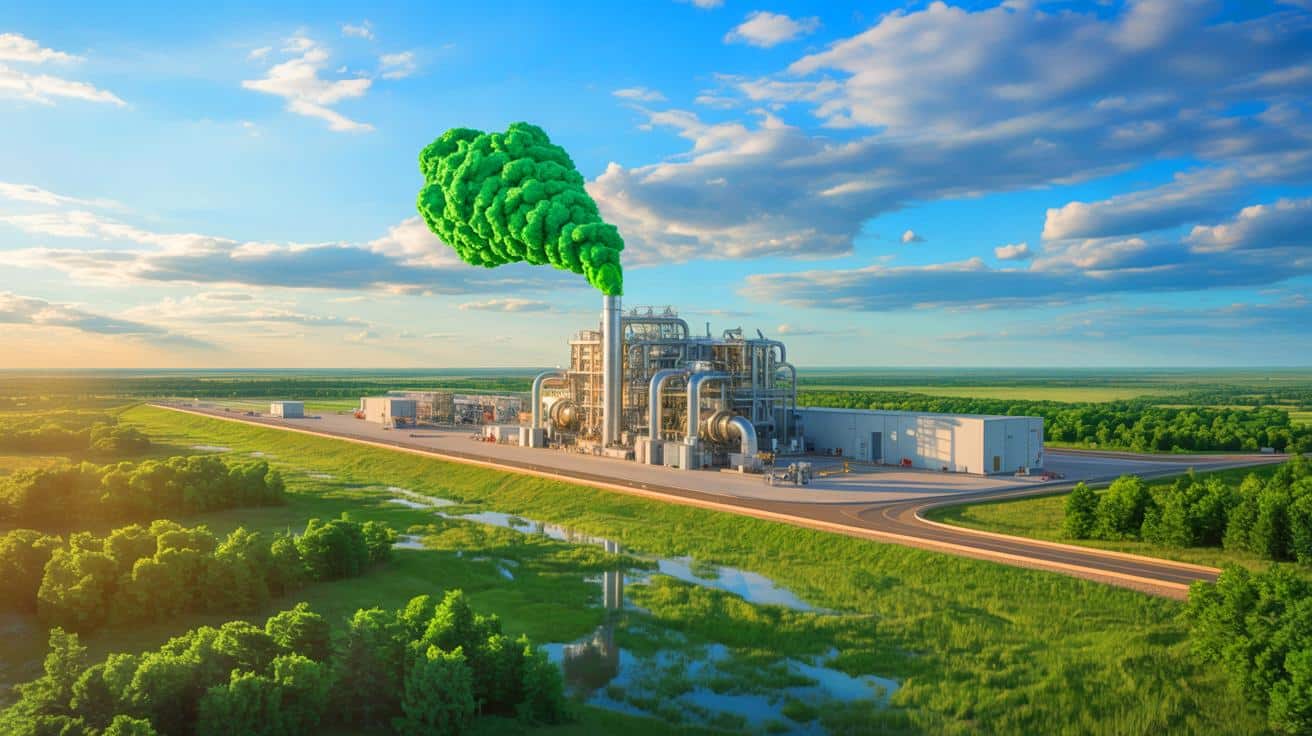
Southwestern Manitoba is poised to become a pivotal player in the global carbon removal industry, thanks to the ambitious plans of Deep Sky, a Canadian company. Deep Sky is set to construct one of the world’s largest carbon removal facilities, with an expected capacity to remove 500,000 tons of carbon annually once fully operational. The facility will be built in phases, starting with a 30,000-ton capacity in 2026. This endeavor highlights a collaboration with the Dakota Grand Council, reflecting a shared vision for sustainable economic development. As climate challenges mount, such projects are increasingly critical for environmental management and economic growth.
Deep Sky’s Vision and Partnership
Deep Sky’s plan to establish a major carbon removal facility in Southwestern Manitoba is closely aligned with the long-term economic development strategy of the Dakota Grand Council. According to Raymond Brown, chairman of the Dakota Grand Council, the partnership with Deep Sky is a significant step towards sustainable development. The collaboration aims to combine the Dakota Oyate’s vision of a sustainable future with innovative industrial practices.
The choice of Manitoba is strategic, given its ideal geology for safe CO₂ storage and the province’s legislative support for carbon storage. The Manitoba government passed legislation in 2024 allowing for CO₂ storage, and further regulations are expected soon. Manitoba’s clean hydroelectric power is another advantage, providing the necessary energy to power carbon removal technologies without adding to emissions.
Economic Impact of the Carbon Facility
The construction of Deep Sky’s facility is anticipated to have a substantial economic impact on Southwestern Manitoba. The first phase of the project, with a 30,000-ton capacity, represents an investment exceeding $200 million. This investment is expected to generate construction and operational jobs, benefiting local businesses and suppliers. Additionally, the project will bring indirect economic opportunities, further boosting the region’s economy.
Jamie Moses, Manitoba’s Minister of Business, Mining, Trade, and Job Creation, emphasized that this project positions Manitoba as a leader in industrial innovation and climate action. The establishment of Deep Sky’s facility underscores the province’s commitment to harnessing cutting-edge technologies like direct air capture, reinforcing Manitoba’s leadership in reducing global CO₂ emissions.
The Importance of Carbon Removal Technology
Deep Sky’s initial venture into carbon removal began with the launch of Deep Sky Alpha in Alberta, which serves as the world’s first technology-agnostic Direct Air Capture (DAC) facility. This facility supports up to ten different DAC technologies in one location, offering valuable performance data to inform future technology choices for larger projects like Deep Sky Manitoba.
This innovative approach is crucial for mitigating the technological risks associated with large-scale carbon removal projects. As the demand for carbon removal grows, driven by global net-zero commitments, the industry is poised to expand into a multi-trillion dollar market. Facilities like Deep Sky Manitoba play a critical role in achieving the substantial CO₂ removal needed to avert severe climate impacts.
Canada’s Role in the Global Carbon Market
Deep Sky’s project in Manitoba is part of a broader Canadian strategy to lead in carbon removal technology. With other large-scale projects under development, including in Quebec, Canada is positioning itself at the forefront of this emerging industry. The potential for carbon removal technology is immense, with projections estimating the need to remove 6-10 billion tons of CO₂ annually by 2050.
This ambitious target underscores the urgent need for innovative solutions to address climate change. As countries and companies seek to fulfill their net-zero pledges, Canada’s investment in carbon removal infrastructure will be vital. The success of projects like Deep Sky Manitoba will not only support environmental goals but also stimulate economic growth and technological advancement.
As Deep Sky progresses with its plans in Manitoba, questions remain about the long-term sustainability and scalability of carbon removal technologies. How will the industry evolve to meet the increasing demands for carbon reduction, and what role will policy and innovation play in shaping its future?

Wow, this is huge! How soon can we expect the facility to start pulling CO₂ out of the air? 🚀
Wow, this project sounds massive! How long will it take to be fully operational? 🤔
Isn’t $200 million a bit too much for just the first phase? 🤨
Isn’t $200 million a bit too much to spend on something we haven’t fully proven yet? 🤔
Thank you Deep Sky for investing in the future of our planet! 🌍
Great initiative! Thanks for keeping us informed on climate action in Canada. 🌟
How does Manitoba’s geology make it ideal for CO₂ storage?
How will this project impact the wildlife in the area? Concerned about local ecosystems.
This sounds like an episode of Black Mirror but in a good way! 😂
I hope this doesn’t turn into another “too good to be true” tech promise. We’ve seen that before!
Will this technology be scalable to other parts of the world?
Can someone explain how carbon removal works? I’m a bit lost on the tech side.
How many jobs are expected to be created during the construction phase?
Does this project have any backup plans for when things don’t go as expected?
I hope this won’t raise our electricity bills. 😅