



| IN A NUTSHELL |
|
The world’s hottest places are not always where people expect. While Death Valley has long held the title for extreme heat, recent advances in satellite technology have revealed new contenders for this dubious honor. By measuring ground temperatures directly, scientists are shedding light on previously overlooked regions that are breaking all known records. These findings challenge our understanding of the Earth’s thermal extremes and raise important questions about the impacts on local ecosystems and infrastructure.
Death Valley’s Reputation as the Hottest Place on Earth Is Challenged
For over a century, Death Valley has been synonymous with extreme heat. The iconic weather station at Furnace Creek recorded a legendary air temperature of 134 degrees Fahrenheit in July 1913. However, this measurement only captures the air temperature about five feet above the ground, under very controlled conditions. It’s a symbolic record, but it doesn’t tell the whole story.
The ground heats up faster and retains more warmth than the air. Early 20th-century measurements in the Tuscan desert documented up to a 30-degree difference between ground and air temperatures. A 2011 report by the Bulletin of the American Meteorological Society highlighted that ground temperatures can soar above 158 degrees Fahrenheit, even when air temperatures are significantly lower.
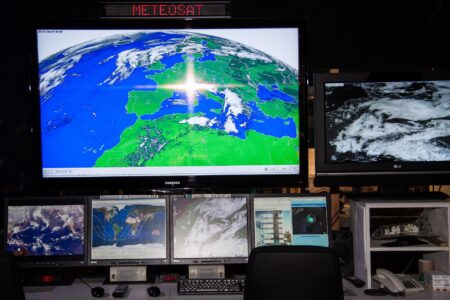
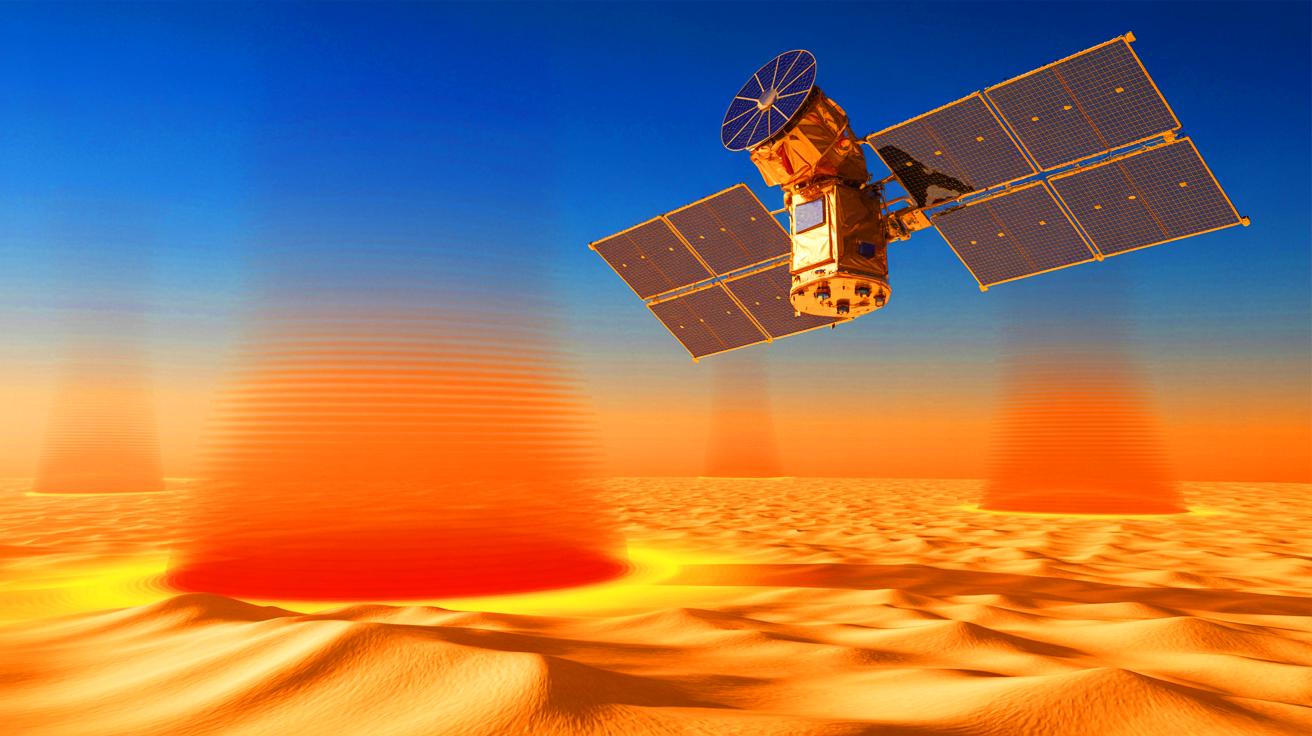
This discrepancy was largely ignored due to the lack of appropriate measurement tools. The advent of satellite technology, particularly NASA’s MODIS sensor on the Terra and Aqua platforms, has revolutionized our understanding. This thermal spectroradiometer measures the Earth’s surface temperature, providing critical insights into where the planet’s true heat extremes lie.
Deserts of Iran and Mexico: Surprising Heat Champions
Thanks to the MODIS technology, scientists have mapped the Earth’s thermal extremes more accurately. Analyzing 18 years of data with one square kilometer resolution, researchers identified two areas where ground temperatures regularly exceed 176 degrees Fahrenheit: the Dasht-e Lut desert in Iran and the Sonoran Desert in Mexico.
The geographical features of these regions intensify solar radiation. In the Dasht-e Lut, the surrounding mountains trap hot air, volcanic rock surfaces absorb heat, and the lack of evaporation prevents cooling. This combination turns the area into a formidable heat trap. According to a 2021 study published in BAMS, the Lut holds the current world record with a ground temperature of 177.4 degrees Fahrenheit.
These deserts are often overlooked in popular discussions as they are far from traditional measurement centers. However, they represent some of the most extreme conditions on Earth. The Sonora Desert’s low humidity, low altitude, and basin-like topography contribute to its extreme heat.
Global Temperature Records Present Ecological Challenges
These new measurements are not merely geographical curiosities. They reshape our understanding of climate limits and what is sustainable for life. Although the satellite-recorded thermal extremes pertain to desert regions, the effects of extreme heat extend beyond these boundaries.
The BAMS report from 2011 noted that surface temperatures, especially in sparsely vegetated areas, exert direct pressure on ecosystems. In some desert basins, like China’s Qaidam, daily temperature fluctuations, known as diurnal temperature ranges, can exceed 144 degrees Fahrenheit. This variability forces animal and plant species to endure rapid and extreme environmental changes.
Beyond ecological impacts, these temperature variations pose technical challenges to human infrastructure. Roads, sensors, and materials warp and degrade faster, accelerating wear and tear in already vulnerable regions. The new satellite data provides a clearer picture of how heat is distributed across the globe, revealing a world far more variable than official station records suggest.
Understanding the Implications of Rising Surface Temperatures
Beyond reshaping geographical records, these findings have significant implications for climate science and policy. They challenge previously held assumptions about where and how heat affects the planet. As surface temperatures rise, they can alter local climates, influencing weather patterns and increasing the frequency of extreme weather events.
These new insights necessitate a reevaluation of existing climate models and forecasts. Understanding the true extent of thermal extremes is crucial for effective climate adaptation strategies. As regions continue to experience unprecedented heat, questions arise about the future of human settlement, agriculture, and biodiversity in these areas.
Moreover, the economic implications are profound. As infrastructure struggles to cope with extreme temperatures, costs related to maintenance and adaptation will likely rise. Policymakers must consider these factors when planning for sustainable development in hot regions.
As we continue to uncover new data on the Earth’s thermal extremes, the question remains: How will societies and ecosystems adapt to a world where heat records are being redefined?

Wow, 176 degrees? That’s hot enough to fry an egg! 🍳
Are there any human settlements near these heat zones? How do people cope? 🤔
This is terrifying! How can we help mitigate these extreme temperatures?
Death Valley, you have some serious competition now! 😅
Is there any chance these measurements could be wrong? Seems too extreme to be true.
Thank you for this insightful article. It really highlights the urgency of climate change. 🙏
Does this mean Death Valley might lose its tourism appeal?
I can’t even imagine how plants or animals survive in these conditions. Amazing resilience!
So, what’s the plan to adapt to these conditions? Are governments taking action?
Skeptical about this whole climate change thing. Could this just be natural variation?