



Close Menu
  • Last News
    • Cities
    • Climate
    • Energy
    • Impact
    • Markets
    • Opinions
    • Policy
    • Reports
    • Research
  • About Us
  • Advertise
  • Contact Us

Subscribe to Our Newsletter

News, investigations, and analysis — our top stories every morning to start your day right.

Trending
learn effective methods to measure your personal sustainability impact and make mindful choices for a greener future.
How to measure your personal sustainability impact
explore the growth of sustainable investments and green finance, highlighting their impact on the global economy and the shift towards environmentally responsible financial practices.
The rise of sustainable investments and green finance
Region Trade Bank Strengthens Governance as Sustainable Finance Places Greater Emphasis on Institutional Integrity
Facebook X (Twitter) LinkedIn YouTube TikTok
Sustainability Times
Facebook X (Twitter) LinkedIn YouTube TikTok
Subscribe
  • Featured
  • Cities

    The Hidden Carbon Cost of Construction Projects (And Why Better Planning Matters More Than You Think)

    05/13/2026
    explore the future of sustainability in urban development, focusing on innovative strategies and technologies shaping eco-friendly and resilient cities.

    The future of sustainability in urban development

    02/24/2026
    Illustration of a vertical farm in Beijing showcasing sustainable urban agriculture practices.

    “China Just Built Farm Skyscraper”: Beijing Greenhouse Grows Food In 37,673 Square Feet While Solar Panels Power Vertical Agriculture Revolution

    09/30/2025
    Illustration of Trojena Ski Resort's futuristic design in the Saudi Arabian desert.

    “We’re Building Winter Olympics in Pure Desert”: Saudi Arabia’s Trojena Ski Resort Hosts 2029 Asian Games Without Natural Snow

    09/09/2025
    Illustration of the historic Kiruna Church being relocated on self-propelled transporters to its new site in Sweden.

    “Sweden Moved a 700-Ton Church”: Historic Kiruna Building Traveled 3.1 Miles on Robot Transporters While King Watched the Journey

    09/03/2025
  • Climate

    The Hidden Carbon Cost of Construction Projects (And Why Better Planning Matters More Than You Think)

    05/13/2026
    explore the vital link between sustainability and climate change, understanding how sustainable practices can help mitigate environmental impact and promote a healthier planet.

    The connection between sustainability and climate change

    04/07/2026

    How to Turn ESG Commitments into Real Results in Oil & Gas: Mikhail Zubkov on Implementing Practical Solutions

    02/24/2026

    Sustainability in Action—How Straight Six Auto Parts Is Revolutionising Automotive Recycling

    01/05/2026
    Illustration of glaciers retreating due to rising global temperatures.

    New Forecast Reveals When Thousands of Glaciers Will Disappear, Highlighting Urgent Need for Climate Action

    12/20/2025
  • Energy

    How bio-LNG is transforming the maritime sector

    06/29/2026
    explore how technology is accelerating sustainability innovations, driving eco-friendly solutions and creating a greener future for our planet.

    How technology is driving sustainability innovations

    03/24/2026

    How to Turn ESG Commitments into Real Results in Oil & Gas: Mikhail Zubkov on Implementing Practical Solutions

    02/24/2026
    explore the vital role of renewable energy in promoting sustainability and reducing environmental impact for a greener future.

    The role of renewable energy in achieving sustainability

    01/27/2026

    How Ilnar Iakhin’s Practical Field Innovations Are Reducing the Environmental Footprint of Gas Production

    12/19/2025
  • Impact
    learn effective methods to measure your personal sustainability impact and make mindful choices for a greener future.

    How to measure your personal sustainability impact

    07/14/2026

    Region Trade Bank Strengthens Governance as Sustainable Finance Places Greater Emphasis on Institutional Integrity

    06/30/2026
    explore sustainable packaging options designed to reduce environmental impact and promote eco-friendly practices for a greener future.

    Sustainable packaging options to reduce environmental impact

    06/30/2026
    explore how circular economy models promote sustainability by reducing waste, conserving resources, and fostering eco-friendly innovation.

    How circular economy models support sustainability

    06/23/2026
    discover practical tips and actions individuals can take at home to support sustainability and contribute to a greener planet.

    What individuals can do to support sustainability at home

    06/09/2026
  • Markets
    explore the growth of sustainable investments and green finance, highlighting their impact on the global economy and the shift towards environmentally responsible financial practices.

    The rise of sustainable investments and green finance

    07/07/2026
    Switzerland’s regulated online gambling ecosystem is built on strict licensing rules, ensuring that only ESBK-approved casinos tied to land-based establishments can legally operate.

    Are Online Casinos Legal in Switzerland? Understanding the Current Regulatory Framework

    11/21/2025
    Illustration of the abrupt halt of a major lithium mine in China impacting global markets.

    “One Mine Shut Down and Prices Exploded”: CATL Halts Major Chinese Lithium Operation Sending Global Markets Into Chaos

    09/11/2025
    Illustration of the massive iron ore deposit discovered in the Pilbara region of Western Australia.

    Geologists Iron Find Worth $6 Trillion Sparks Geopolitical Firestorm As US-China Trade Rivalry Reaches Unprecedented Flashpoint

    08/24/2025
    Illustration of a colossal 55 billion-ton iron ore deposit discovery in Western Australia. Image generated by AI.

    Worldwide Panic as Monumental Geological Find Disrupts Global Trade and Triggers Market Turmoil on Every Continent

    06/04/2025
  • Opinions
    discover the essentials of sustainability and corporate social responsibility, exploring their impact on businesses and society for a better future.

    Sustainability and corporate social responsibility explained

    04/21/2026

    The Hidden Risks of Nepotism and Conflicts of Interest in Corporate Governance

    03/19/2026

    Sustainability, Family Offices, and Private Equity: A Powerful Alignment for Long-Term Impact

    08/05/2025

    Preserving Heritage While Innovating: How AI is Reshaping Design for a Sustainable Future

    07/23/2025

    Factories Without Real-Time Carbon Data Are Flying Blind: Why MES Must Become the Carbon Control Tower

    07/23/2025
  • Policy
    explore the crucial role of governments in advancing sustainability policies to protect the environment, promote social equity, and ensure economic growth for future generations.

    Role of governments in promoting sustainability policies

    06/16/2026
    explore effective strategies to promote sustainability through education, empowering communities to adopt eco-friendly practices and foster environmental awareness.

    Ways to promote sustainability through education

    03/10/2026
    Illustration of the NUMO Ground Robot Deployed by Ukraine for Military Operations.

    “It’s Doing the Dangerous Work for Us”: This Ukrainian Combat Robot Redefines the Battlefield (and It’s Already Saving Soldiers’ Lives)

    10/15/2025
    Illustration of NATO aircraft participating in the Steadfast Noon nuclear deterrence exercise.

    “You Can Feel the Tension in the Air”: This NATO Nuclear Exercise Sparks Unease Across Europe (and Leaders Call It ‘Routine’)

    10/15/2025
    Illustration of China's newly constructed underground military command center near Beijing.

    “Analysts Warn of Escalation”: Satellite Images Expose China Building World’s Largest Underground Military Command Hub To Counter US Power And Regional Rivals

    10/03/2025
  • Reports
    explore the latest trends and innovative solutions driving sustainability in the food industry, from eco-friendly practices to cutting-edge technologies reshaping the future of food production.

    Sustainability in the food industry: trends and solutions

    06/02/2026

    New Study Finds Drip Irrigation Can Cut Coffee’s Carbon Footprint by Nearly 60%

    05/13/2026
    explore the top sustainable development goals to prioritize in 2026 and learn how to make a meaningful impact towards a greener, more equitable future.

    Top sustainable development goals to focus on in 2026

    04/28/2026

    MFC Asset Management Steps Up Its ESG Agenda

    09/24/2025
    Illustration of naval aviators in training during the Top Gun program.

    “We Push Them Until They Break”: Top Gun Training Forces Pilots Through 7.5 Gs While National Geographic Films

    09/21/2025
  • Research
    Illustration of ancient marine super predators dominating the complex food chains of the Cretaceous period.

    Ancient Super Predators Ruled Oceans: New Discoveries Challenge Our Understanding of Marine Life’s Evolutionary Past

    12/20/2025

    How Ilnar Iakhin’s Practical Field Innovations Are Reducing the Environmental Footprint of Gas Production

    12/19/2025
    Illustration of the body's distinct molecular systems for detecting cold on the skin and internally.

    Your Body’s Cold Sensations: Revealing the Dual Ways Temperature Affects Us and What It Means for Comfort

    12/19/2025
    Illustration of the digital reconstruction of a 1.5-million-year-old Homo erectus face from the DAN5 fossil.

    Scientists Reveal 1.5-Million-Year-Old Human Face, Unveiling New Clues to Our Ancient Ancestry

    12/18/2025
    Illustration of ancient pottery featuring plant motifs reflecting early mathematical thinking.

    Ancient Art Reveals How Early Humans Used Math Concepts 8,000 Years Ago Without Numbers

    12/18/2025
Sustainability Times
Home - Climate - Alongside climate change, COP26 must address crisis facing ecosystems

Alongside climate change, COP26 must address crisis facing ecosystems

Hina DinooHina Dinoo10/27/20210
Share Twitter Facebook LinkedIn Telegram WhatsApp Email Copy Link
Follow Us
Google News
(photo: Pixabay/Nordseher)
Share
Twitter Facebook LinkedIn WhatsApp Email Copy Link

Photo: Pixabay/Nordseher

The focus of the upcoming COP26, which is scheduled to run between October 31 and November 12, will be on worldwide carbon emissions and the daunting challenges of keeping the global rise in temperatures to a manageable level. That is already a lofty goal, but the delegates gathered in Glasgow, Scotland, and their British hosts should also address another issue of pressing concern: how the collapse of ecosystems fuels the global climate crisis.

Among the gravest environmental challenges facing numerous nations worldwide are ongoing deforestation, creeping desertification and the increasing loss of freshwater sources. Often these trends amplify one another in dangerous feedback loops, complicating efforts to reverse them. Intense forest clearing from the Amazon to Borneo, for instance, is depriving the planet of highly effective carbon sinks in the form of dense vegetation. At the same time, farming and agricultural production undertaken in areas where trees once thrived contribute to global greenhouse gas emissions, while intensive agriculture in other regions draws water away from seas and lakes that anchor entire regional ecosystems.
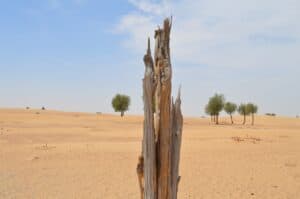
Desertification is an increasingly serious problem across much of the planet. (photo: Pixabay/Avanysathya)

As a result, these manmade phenomena pose a grave threat both to fragile ecosystems and to global efforts to keep planetary warming within 2° Celsius, as per the Paris Agreement. Yet often lost in talks about the challenges of climate change is the issue of biodiversity loss.

Losing forests and carbon sinks

The planet continues to lose some six million hectares of forest each year to clearing, with the vast majority of deforestation taking place in the tropics. Last year alone the loss of tropical forests equaled an area the size of the Netherlands, according to Global Forest Watch.

This rate of loss is disconcerting, since a healthy state of biodiversity is essential not only for life on Earth as we know it, but for human societies as well. “[Biodiversity] matters for human development, it matters for access to clean water, to sustainable nutritious food, and a whole host of other reasons as well,” Gavin Edwards, an expert at WWF International, says.

Encouragingly, participating nations at COP26 are expected to discuss solutions to massive deforestation and the repercussions of ongoing biodiversity loss alongside the impacts of climate change.

“Cop26 puts a heavy emphasis on trees – it’s there as an equal part of ‘coal, cars, cash and trees’ because [British Prime Minister Boris Johnson] personally believes protecting nature and biodiversity has to be a major part of how we tackle climate change. Alongside reducing carbon emissions from coal and cars, nature-based solutions are a priority. That’s why Cop26 sees the UK presidency pushing for a strong international agreement to halt and reverse deforestation by 2030,” a source at Downing Street told The Guardian.

Rapid deforestation and the increase in catastrophic climatic events like prolonged droughts and wildfires have highlighted the fragility of natural carbon “sinks” such as rainforests and wetlands. Recently scientists have found that forests in the Amazon produce more than a billion tons of CO2 a year, which means that they now emit more carbon than they absorb.

The main reasons for the reversal in the Amazon’s role as a major carbon sink include continued deforestation, which is also increasing stresses on local ecosystems inhabited by a host of endangered species. In other words, harmful human activities, coupled with the effects of a changing climate, often reduce the ability of existing forests to mitigate our emissions, even as these activities worsen the effects of climate change on embattled ecosystems.

“If we want to address climate change, we need to stop deforestation,” said Danny Marks, assistant professor of environmental politics and policy at Dublin City University in Ireland. “Unfortunately, compared to reducing fossil fuel emissions, forests are not getting the attention they deserve ahead of COP26.”

The threat of desertification

As the planet warms, the effects of our mismanagement of ecosystems often become magnified through accelerating processes such as desertification, which has been dubbed “the greatest environmental challenge of our time” by a UN expert. Once limited to such extremely arid regions as the Sahara, desertification is now happening across wide swathes of Asia and Africa, threatening the food and water sources of more than 2 billion people.

In tandem with creeping desertification, water shortages are becoming a fact of life across much of the planet. Major bodies of water like the Aral Sea and Lake Urmia were already drying up in decades past because of increased demands for water and environmentally disastrous policies. Yet now even the Caspian Sea, the largest enclosed inland body of water on the planet, is seeing its water levels drop by as much as 10cm a year owing to rising temperatures and other causes.
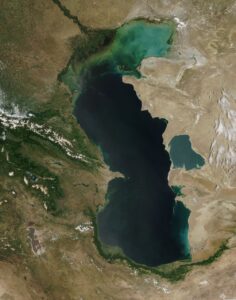
The Caspian Sea is fast losing its water (photo: Pixabay/WikiImages)

This is posing great challenges to several nations in Central Asia where other bodies of water are also shrinking fast. “Salt storms are an emerging threat for millions of people in north-western Iran, thanks to the catastrophe of Lake Urmia. Once one of the world’s largest salt lakes, and still the country’s largest lake, Urmia is now barely a tenth of its former size,” scientists explain.

A success story of environmental restoration

However, despite these grave challenges, we should not take it for granted that ecological collapse is inevitable – or that damage to the environment can’t be reversed. The fate of the Aral Sea, for example, is very different depending on which side of the Kazakhstan-Uzbekistan border you stand because the inland body of water has effectively split into two distinct parts.

The South Aral Sea in Uzbekistan has shrivelled into a strip of water in the west and an arid basin in the east. Not so its northern part in Kazakhstan, which has worked with the World Bank to  manage water flows feeding into its share of the Aral Sea. Kazakhstan’s portion of the Aral Sea is once again thriving thanks to intensive restoration aided by a $87-million project built and financed with assistance from the World Bank. A dyke known as the Kok-Aral Dam, which was a major part of the project, led to an increase of 3.3 meters in water levels after only seven months its launch in 2005, despite an expectation by scientists that it would take a decade for the water to rise that much.

“[T]he success has been astounding,” noted Masood Ahmad, the leader of the World Bank team that initiated the project in 2001. “Most governments usually give priority to generating incomes, like improving irrigation to increase crop production or water management so that they can supply water to cities. Environment and ecology improvements are the last thing that governments give priority to, but the Kazakhs did it.”

The benefits of the collaborative effort between Kazakhstan and the World Bank to save the northern portion of the Aral Sea have been as important in economic terms as they have been in ecological ones. Once on the brink of extinction, the fishing industry that long served as the lifeblood for Aral Sea communities like the city of Aralsk has progressively come back to life, with reported annual catches of 1,360 tons in 2006 rising to over 7,100 a decade later.

And the World Bank’s restoration project of the Aral Sea is far from complete. Several new projects are in the works in Central Asia aimed at restoring landscapes in the overexploited region, with the participation of innovators from 28 countries on five continents.

“Restoring degraded landscapes and committing to better environmental management can revitalize many economic sectors while preserving ecosystem services and natural assets,” stresses Lilia Burunciuc, the World Bank’s former regional director for the Central Asia Region. “Moreover, making livelihoods more resilient reduces people’s vulnerability to possible future shocks, like climate change, pandemics, and natural disasters.”

An ambitious plan for reforestation

The rescue of the northern Aral Sea demonstrates that ecological protection and economic growth can be achieved simultaneously. The governments getting ready to attend COP26 should work with industries and key stakeholders such as indigenous communities (who are often tireless guardians of natural resources) to hammer out long-term solutions to existential threats like deforestation and desertification, building on the example of the collaboration between the World Bank and countries like Kazakhstan to identify other targeted interventions and forward-thinking political initiatives that can lead to positive outcomes both for economies and the cause of environmental preservation.
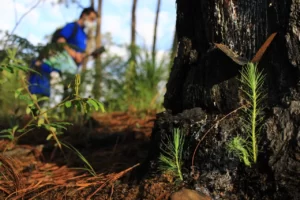
Targeted reforestation efforts can regreen large areas. (photo: Pixabay/Alessandra_Ceja19)

A case in point is an ambitious plan for reforestation on a large scale in the United Kingdom, which has one of the lowest rates of woodland in Europe. The Northern Forest project, partly sponsored by the government, is expected to last a quarter century and cost £500 million.

In all, it will see some 50 million trees planted in a dense belt over 62,000 acres across northern England, generating £2.5 billion in benefits and capturing millions of tons of carbon just a few hours by train from Glasgow.

Although the project has its critics, who argue that newly planted forests have nothing on ancient woodlands when it comes to biodiversity, it is a step in the right direction. The plan, Bloomberg noted, “amps up a transformation” that has involved other efforts to “re-green the English landscape.”

“Trees are some of our most cherished natural assets and living evidence of our investment for future generations,” said Michael Gove, a former Environment Secretary in the UK. “This new Northern Forest is an exciting project that will create a vast ribbon of woodland cover in northern England, providing a rich habitat for wildlife to thrive, and a natural environment for millions of people to enjoy.”

Similar efforts aimed at regrowing forests and driving deserts back are underway elsewhere across the planet. Governments can and should do more to ensure the success of all such efforts.

Subscribe to Our Newsletter

News, investigations, and analysis — our top stories every morning to start your day right.

Biodiversity Climate Change Forest
Follow on Google News Follow on X (Twitter)
Share. Facebook Twitter LinkedIn Telegram WhatsApp Email Copy Link
Previous ArticleRare owl sighting in Africa is a bright spot for biodiversity
Next Article Why we’ll need to realign environmental awareness
Hina Dinoo
  • X (Twitter)

Hina Dinoo is a Toronto-based journalist at Sustainability Times, covering the intersection of science, economics, and environmental change. With a background in journalism acquired in Toronto, she translates complexity into clarity. Her work focuses on how systems — ecological, financial, and social — shape our sustainable future. Contact: [email protected]

Keep Reading
explore the latest trends and innovative solutions driving sustainability in the food industry, from eco-friendly practices to cutting-edge technologies reshaping the future of food production.

Sustainability in the food industry: trends and solutions

New Study Finds Drip Irrigation Can Cut Coffee’s Carbon Footprint by Nearly 60%

The Hidden Carbon Cost of Construction Projects (And Why Better Planning Matters More Than You Think)

Add A Comment

Comments are closed.

Subscribe to Our Newsletter

News, investigations, and analysis — our top stories every morning to start your day right.

Trending
learn effective methods to measure your personal sustainability impact and make mindful choices for a greener future.
How to measure your personal sustainability impact
explore the growth of sustainable investments and green finance, highlighting their impact on the global economy and the shift towards environmentally responsible financial practices.
The rise of sustainable investments and green finance
Region Trade Bank Strengthens Governance as Sustainable Finance Places Greater Emphasis on Institutional Integrity
News by category
  • Featured
  • Cities
  • Climate
  • Energy
  • Impact
  • Markets
  • Opinions
  • Policy
  • Reports
  • Research
Information
  • About Us
  • Meet the Team
  • Advertise
  • Contact Us
  • Legal Mentions
  • Privacy Policy

Subscribe to Our Newsletter

News, investigations, and analysis — our top stories every morning to start your day right.

Facebook X (Twitter) LinkedIn YouTube TikTok
© Sustainability-Times.com. All rights reserved.

Type above and press Enter to search. Press Esc to cancel.