


| IN A NUTSHELL |
|
The recent discovery of colossal ancient structures beneath the Atlantic Ocean is shedding new light on Earth’s geological history. Scientists have unveiled evidence suggesting that these structures, hidden under layers of sediment, date back approximately 117 million years. This groundbreaking finding has significant implications for our understanding of the Earth’s tectonic movements and the formation of the Atlantic Ocean. By analyzing sediment cores collected decades ago, researchers have pieced together a narrative that not only corroborates previous theories about the separation of South America and Africa but also suggests that the Atlantic Ocean may have begun forming earlier than previously thought. This discovery opens up new avenues of research into the dynamic processes that have shaped our planet over millennia.
The Mud Waves Beneath the Atlantic
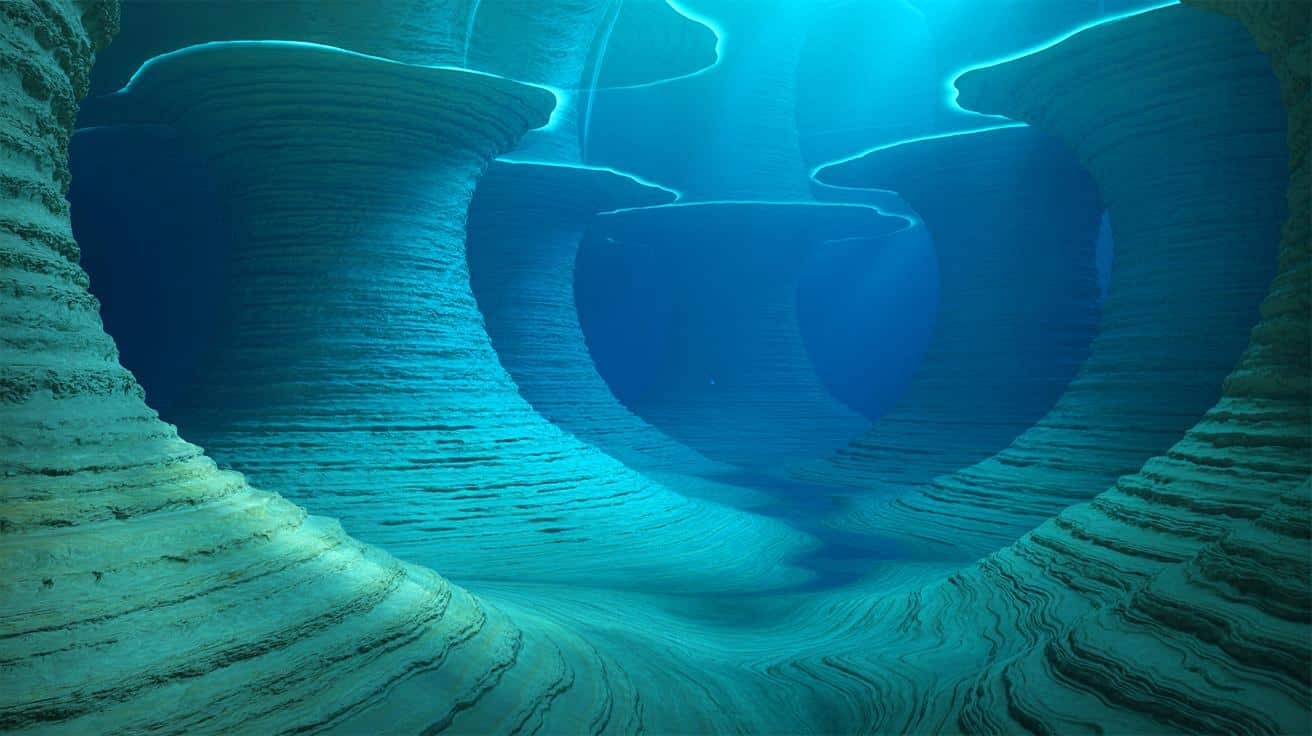
Geologists from Heriot-Watt University and other institutions have made a remarkable discovery off the coast of western Africa. By examining sediment cores drilled over 45 years ago, researchers uncovered evidence of enormous mud waves. These formations were found 250 miles west of Guinea-Bissau and are believed to have formed during a critical phase in the Atlantic Ocean’s development. The mud waves, some as long as one kilometer and a few hundred meters high, offer valuable insights into the geological processes that contributed to the separation of South America and Africa.
The formation of these waves was the result of intense mixing between highly saline water from the South Atlantic and less salty water from the North Atlantic. This mixing generated powerful currents that sculpted the mud waves now buried deep beneath the ocean floor. Uisdean Nicholson, a leading geologist on the project, describes this phenomenon as occurring at the final “pinch-point” of the separating continents. The discovery of these mud waves provides a snapshot of the dramatic forces at work during the rifting of the continents, highlighting the complexity of Earth’s geological history.
The Role of Tectonic Movements and Oceanic Rift
The formation of the Atlantic Ocean was not a sudden event but rather a gradual process marked by tectonic activity. As South America and Africa drifted apart, a widening gap filled with water eventually formed the Atlantic Ocean. The mud waves are believed to have been created during the final stages of this separation when the connection between the continents was weakest. Before the Atlantic’s full formation, the region between the continents consisted of deep basins, akin to lakes, rich with salt deposits from the South Atlantic.
The resulting highly saline water mixed with the less salty waters of the North Atlantic, leading to the formation of the mud waves. This mixing occurred after the final split of the continents, illustrating the powerful geological forces at work. The discovery of these waves underscores the intricate relationship between tectonic movements and the creation of oceanic bodies, offering new insights into the Earth’s geological evolution.
The Climate Impact of the Atlantic’s Formation
The opening of the Atlantic Ocean, while primarily a geological event, had far-reaching implications for the global climate. The basins that once separated Africa and South America were rich in carbon, and their disruption during the Atlantic’s formation reduced carbon sequestration efficiency. This led to a period of global warming between 117 and 110 million years ago, driven by increased carbon emissions into the atmosphere.
Débora Duarte, a geologist involved in the study, highlights the importance of this event in global climate change. The rise in carbon emissions during this period may have initiated shifts in Earth’s climate, contributing to the conditions we experience today. The study underscores the interconnectedness of geological processes and climate, emphasizing the significant role that the Atlantic’s formation played in shaping the planet’s environmental history.
Sediment and Geological Evidence
The mud waves discovered beneath the Atlantic are preserved under layers of sediment accumulated over millions of years. These formations serve as a testament to the dramatic geological activities during the Atlantic’s birth. Sediment cores from this region reveal a landscape shaped by the violent separation of tectonic plates. Over time, sediment buried the waves, concealing them within the ocean’s crust.
The discovery of these ancient mud waves challenges previous assumptions about the timeline of the Atlantic Ocean’s formation. It provides a clearer picture of the physical processes involved, offering a glimpse into Earth’s dynamic geological history. This finding is a significant contribution to our understanding of the forces that have shaped the planet, highlighting the complexity and interconnectivity of Earth’s geological and climatic systems.
The unearthing of these ancient structures beneath the Atlantic Ocean offers a new perspective on Earth’s geological past. By revisiting sediment cores collected decades ago, scientists have unveiled evidence that challenges existing theories about the timing and processes of the Atlantic Ocean’s formation. This discovery not only enhances our understanding of Earth’s tectonic history but also underscores the intricate relationship between geological and climatic systems. As researchers continue to explore these hidden structures, what other secrets might they uncover about our planet’s past?


Fascinating read! How could these findings impact current climate models? 🤔
Wow, 117 million years is mind-blowing! What does this mean for our understanding of Earth’s history? 🤯
Wow, 117 million years? Makes my last vacation feel like yesterday.
Can someone explain how these mud waves formed? I’m a bit lost. 🌀
Is there any chance these structures could affect ocean currents today?
Are these structures related to the Bermuda Triangle in any way? Just curious!
Great article! Thank you for making complex science accessible to everyone.
This is fascinating, but how do we know these structures are really that old?
Are there any implications for marine life with this discovery?
Great article! Thanks for sharing such groundbreaking research. 🙌
So, do we need to rewrite the Earth’s geological history books now? 😄
Does this discovery have any implications for current climate models?
This is mind-blowing! Could there be more undiscovered structures like this?
Why haven’t we found these structures before now? 🤨
That’s incredible! Will these findings affect how we predict future tectonic movements? 🌍
Incredible! I love learning about our planet’s mysterious past. 🌍
Does this discovery change the estimated age of the Atlantic Ocean?
Thank you for sharing this groundbreaking research! Much appreciated.
Are these mud waves stable, or could they cause underwater landslides?
How does this connect to global warming that happened millions of years ago?
Wow, just when you think you know everything about Earth, surprise! 🎉
117 million years old? That’s older than my grandma! 😂
How did scientists manage to date these structures so accurately?
Is this linked to the separation of Pangea? Curious about the timeline.
Does this mean the Atlantic Ocean started forming earlier than we thought?
A discovery like this makes me want to go back to school for geology!
What tools did they use to uncover these ancient structures under the ocean?
Incredible discovery! Can’t wait to see what other secrets the ocean holds. 🌊
Why are these findings important for understanding Earth’s climate today?
So much history hidden beneath the waves. Simply amazing!
Could these findings affect our understanding of continental drift?
Thank you for this article. Very enlightening and well-written!
Amazing! What other theories about Earth’s history could be challenged?
Does anyone else find it odd these were only discovered now? 🤔
What does this mean for the future of oceanic and geological research?
How do these structures compare to other ancient geological formations?
Every time we discover something new, it feels like science fiction! 🚀
How might this discovery influence the study of tectonic movements?
Is it possible that similar structures exist under other oceans?
I’m amazed at how much we still don’t know about our own planet.
What’s next? Dinosaurs living under the sea? 😄
Does this affect any current geological or oceanic theories? 🤔