




| IN A NUTSHELL |
|
In a remarkable turn of events, a fossil unearthed over a century ago has finally been identified, thanks to the application of modern technology. Discovered in 1899, this fossil was long considered an enigma, its origins shrouded in mystery. Now, through the use of 3D scanning technology, a student has managed to assign it a rightful place in the annals of paleontology. This breakthrough not only sheds light on the fossil’s identity but also underscores the potential of technology to unlock secrets from the past that have remained hidden for generations.
The Power of Modern Technology in Paleontology
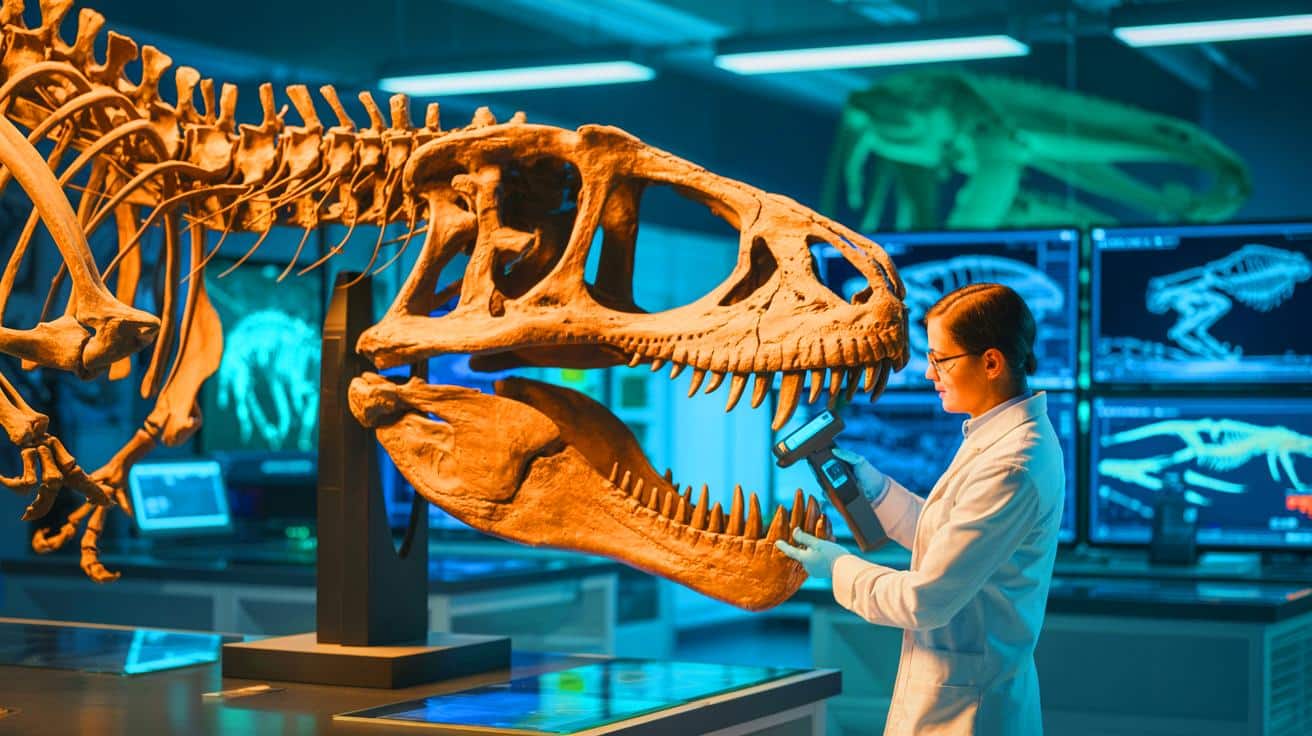
Owain Evans, a dedicated student of paleontology at the University of Bristol, embarked on a journey to unravel the mystery behind a fossilized jawbone that had remained unidentified for decades. Despite being on display for years, the fossil had largely been ignored by the scientific community. Evans, however, saw potential where others did not. He utilized a cutting-edge technique known as photogrammetry, which involves creating 3D models from photographs, to digitally reconstruct the jawbone.
By scanning both sides of the fossilized mold, Evans and his fellow researchers were able to recreate a nearly complete jaw. This reconstruction revealed a plethora of new details, including grooves, ridges, and serrations on the teeth. These features provided crucial clues that led to the fossil’s classification as a theropod, a type of bipedal, often carnivorous dinosaur. Evans’s work highlights how technology can breathe new life into fossils, offering insights that were previously out of reach.
The Identification of a 23-Foot Predator
The application of 3D scanning technology allowed researchers to confirm that the fossil belonged to a large theropod dinosaur, which once roamed the southern Welsh coastline during the late Triassic period. This dinosaur, characterized by its unique dental arrangement and carnivorous nature, stood out as a significant find. According to Evans, its features place it near the origins of the two primary theropod lineages: Coelophysoidea and Averostra.
Measurements derived from the digital reconstruction estimated the dinosaur’s length to be between 16 and 23 feet. “This size is exceptionally large for a Triassic theropod, as most were significantly smaller,” Evans noted. The discovery not only adds a new member to the family of theropods but also challenges existing perceptions about the size and diversity of these ancient creatures during that era.
A Name That Honors History
With its identity confirmed, the dinosaur has been given a new name: Newtonsaurus cambrensis. This name pays tribute to Edwin Tully Newton, the paleontologist who originally discovered the fossil in 1899. The second part of the name, cambrensis, acknowledges Wales, the fossil’s “homeland.” This renaming represents a significant moment in paleontology, as it shifts the fossil from a generic category to a distinct identity.
The naming of Newtonsaurus cambrensis also highlights the role of Wales in paleontological research. The Triassic layers in this region are rare globally, yet Wales boasts several such deposits. As Cindy Howells from the National Museum of Wales remarked, “The reclassification of Newtonsaurus cambrensis emphasizes the importance of Wales in paleontological discoveries. There may very well be other dinosaurs waiting to be discovered here.”
Implications for Future Discoveries
This rediscovery serves as a reminder of the untapped potential within museum collections worldwide. Many fossils remain unidentified, their origins obscured by time and limitations in past technologies. The case of Newtonsaurus cambrensis illustrates how advances in technology can transform our understanding of these ancient relics.
It also raises questions about other artifacts languishing in museum archives. Could there be more fossils waiting for identification, hidden in plain sight? The success of this endeavor encourages a renewed examination of existing collections, using the latest methods to extract new information and perhaps redefine our understanding of prehistoric life. As technology continues to evolve, so too does our capacity to uncover the mysteries of the past.
The story of Newtonsaurus cambrensis is a testament to the power of curiosity and innovation in science. As we look to the future, we must ask ourselves: what other secrets from the past remain to be unearthed, and how might they reshape our understanding of the world?



Wow, this is amazing! Who would’ve thought a giant dinosaur was hiding in a museum storage all this time? 🦖
Wow, who knew museums were hiding such treasures? 🦖
Is there a possibility of finding more dinosaurs like this in other museums?
Is there any possibility that this dinosaur had a connection with other known species?
Why wasn’t this fossil identified sooner? Seems like a missed opportunity. 🤔
Great job, Owain! This must be a dream come true for any paleontology student.
Thank you for sharing this incredible discovery! Science never ceases to amaze me.
23 feet? That’s longer than my living room! 😲
This is why museums should invest more in technology and research. Great find!
23 feet? That’s one big dino! Imagine running into that on a walk. 😅
Why was the fossil ignored for so long? Seems like a huge oversight!
Is this new dinosaur species related to any famous dinosaurs we know?
So, how many more monsters are hidden in museum basements? 🤔
What other mysteries do you think are hidden in museum storages around the world?
Can we expect more dino discoveries from Wales? Sounds like a hotspot!
So cool to see students making such significant discoveries!