




| IN A NUTSHELL |
|
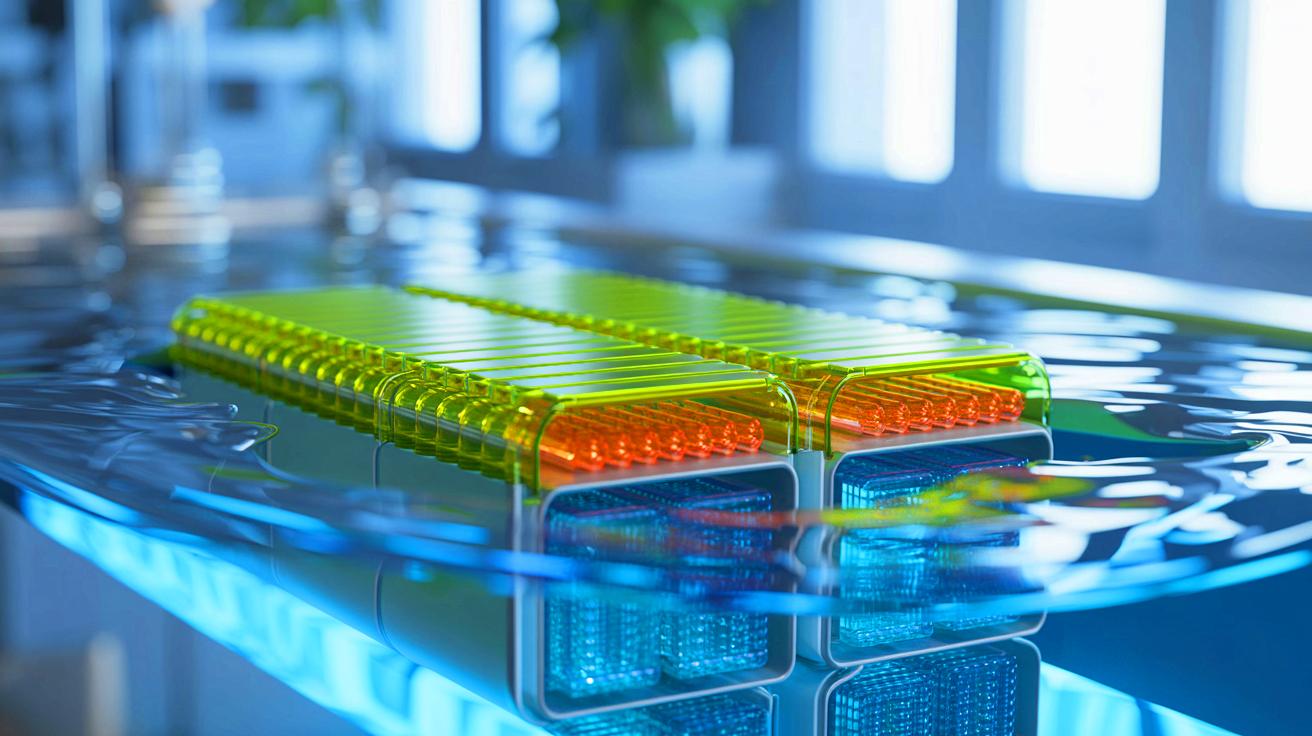
In the rapidly evolving field of energy storage, the quest for safer and more sustainable solutions is ongoing. A recent breakthrough in the development of recyclable aqueous batteries could pave the way for significant advancements in this arena. Spearheaded by a team from Tohoku University in collaboration with Nitto Boseki Co., Ltd., this cutting-edge research addresses long-standing challenges associated with material compatibility in aqueous systems, particularly focusing on organic redox polymers. Through innovative design strategies, the team has managed to enhance the hydrophilicity and recyclability of these polymers, potentially revolutionizing their application in modern energy storage systems.
The Historical Context of Aqueous Batteries
Aqueous batteries have a long history, dating back centuries, and are known for their inherent safety and cost-effectiveness. Despite these advantages, their integration into modern energy storage systems, such as those used for grid storage and electric vehicles, has been limited. One of the primary obstacles has been the compatibility of electrode materials with aqueous electrolytes, which often results in suboptimal performance and efficiency.
Organic redox polymers, in particular, face challenges due to their hydrophobic nature, which hinders their interaction with water-based systems. Additionally, these polymers pose difficulties in terms of decomposition and recycling, issues that have long restricted their widespread adoption. Addressing these challenges is crucial for advancing the application of aqueous batteries in various industries, where safety and sustainability are paramount.
Innovative Approaches to Material Compatibility
The research team from Tohoku University has introduced a novel approach to overcoming the compatibility issues of organic redox polymers. By incorporating p-dihydroxybenzene, an organic molecule known for its high charge storage capacity, into a polyamine, they have developed a polymer that maintains high hydrophilicity. This water-soluble polymer can function effectively as an electrode-active material at room temperature, a significant advancement in the field.
The synthesis of this polymer is achieved through a straightforward condensation reaction, resulting in a material that can be easily broken down into its raw components under mild conditions, specifically at temperatures below 100°F. This innovation not only enhances the compatibility of the polymer with aqueous systems but also significantly improves its recyclability, addressing a major environmental concern associated with traditional battery materials.
Environmental and Safety Advantages
The development of these recyclable aqueous batteries offers two key benefits that could have far-reaching implications. First, the use of water-based electrolytes eliminates the risk of fire associated with conventional flammable solvents, enhancing the safety profile of these batteries. This is particularly important for applications in sensitive environments, such as in electric vehicles and large-scale grid storage.
Second, the polymers are composed of abundant elements and can be easily decomposed, which may contribute to reducing resource consumption and mitigating plastic pollution. As environmental sustainability becomes a critical consideration in technology development, these attributes offer a compelling case for the adoption of this new polymer technology in various energy storage applications.
Future Directions and Potential Applications
Looking ahead, the research team plans to evaluate the durability and other performance factors of the newly developed polymer to fully understand its potential for real-world applications. The ability to combine high charge storage capacity with recyclability opens new avenues for sustainable battery research, with implications for both consumer electronics and industrial energy systems.
As the global demand for efficient and eco-friendly energy storage solutions continues to grow, the advancements made by the Tohoku University team could play a pivotal role in shaping the future of the industry. Their work not only addresses existing challenges but also sets the stage for further innovations in the development of sustainable materials for energy storage.
| Feature | Traditional Aqueous Batteries | New Polymer-Based Aqueous Batteries |
|---|---|---|
| Material Compatibility | Limited | Enhanced |
| Recyclability | Poor | High |
| Safety | Risk of fire with solvents | Water-based, fire-resistant |
The breakthrough in recyclable aqueous batteries marks a significant step forward in the search for sustainable energy solutions. By addressing the challenges of material compatibility and recyclability, the researchers have opened up new possibilities for safer and more environmentally friendly energy storage. As the technology continues to evolve, what further innovations in battery technology might emerge to meet the growing demands of a sustainable future?


Wow, a battery that dissolves in warm water? Nature-inspired tech at its finest! 🌊🔋
Wow, a battery that dissolves in warm water? That’s pretty cool! 🌊🔋
What happens if it rains? Will my car battery dissolve? 😂
What happens if it rains? Does my phone battery just disappear? 😂
Thank you, Japanese scientists, for pushing the boundaries of what’s possible! 🙏
Thanks for the insight! Excited for more sustainable energy options. 🌱
Is it safe to use in electric vehicles given its water-based nature?
Recyclable and dissolvable? Sounds like magic. What’s the catch?
Can these batteries be used in smartphones or other small gadgets?
Is the battery’s performance comparable to lithium-ion batteries?
What a great step towards sustainable technology! Keep it up! 🌍
Wait, does this mean you can accidentally dissolve your battery by leaving it in the sun? 🤔
Is there a risk of the battery dissolving at high temperatures in certain climates?
Finally, a step toward eco-friendly tech! Let’s hope it scales up.
Love the innovation, but what about the cost? 💸
Sounds promising, but I wonder about the long-term durability of these batteries.
So, does this mean I can just pour water on my old batteries to recycle them? 😅
Finally, a battery that won’t end up in a landfill! 🗑️
Does this mean we can say goodbye to battery fires? 🔥❌
How does this compare in performance to traditional lithium-ion batteries?
Great news for the environment! Let’s hope it’s adopted widely soon. 🤞
Can they withstand freezing temperatures or only warm climates?
Hope this tech is affordable enough for everyday use. 🤞
How many recharge cycles can these batteries handle before they degrade?
Is there any risk of the battery dissolving if the device overheats?
Why haven’t we thought of water-based batteries before? Genius! 💡
Will these batteries be a game-changer for electric vehicles?
Are there any potential environmental downsides to this new technology?
I’m impressed! Japan always seems to be at the forefront of tech innovation. 🇯🇵
Does this mean we need to start worrying about water leaks in our devices? 😂
Are there any known limitations to the materials used in these batteries?
Amazing research! How can we support further developments in this area?
Are there any safety concerns we should be aware of with this new battery type?
Will this help reduce the mining of rare earth materials? 🌍
What impact will this have on battery recycling industries?
I’m skeptical. What happens when these batteries are exposed to high humidity?
Could this technology be scaled for industrial use, like in power plants? ⚡
Can these batteries be used in electric cars, or is it just for small devices?
How does this development affect the future of renewable energy storage?
How long until these batteries are available to the public?
So innovative! Can’t wait to see where this leads the battery industry. 🚀
Are these batteries biodegradable, or just recyclable?
Finally, a battery that doesn’t explode! Great work, researchers! 🎉
I’m curious, how does this new battery tech compare in terms of efficiency?