



| IN A NUTSHELL |
|
In an era defined by rapid technological advancements, the construction of colossal infrastructures has become a symbol of human ingenuity and ambition. From towering skyscrapers to sprawling dams, these structures are testaments to our ability to harness natural resources and reshape the physical environment. However, with such grand projects come unforeseen consequences that can extend far beyond their immediate surroundings. Recent discussions have highlighted how certain human-made structures might subtly influence Earth’s rotation, a notion supported by NASA. This exploration delves into the implications of such changes, focusing on the large-scale projects that have unexpected global repercussions.
Colossal Infrastructures and Their Unseen Impact
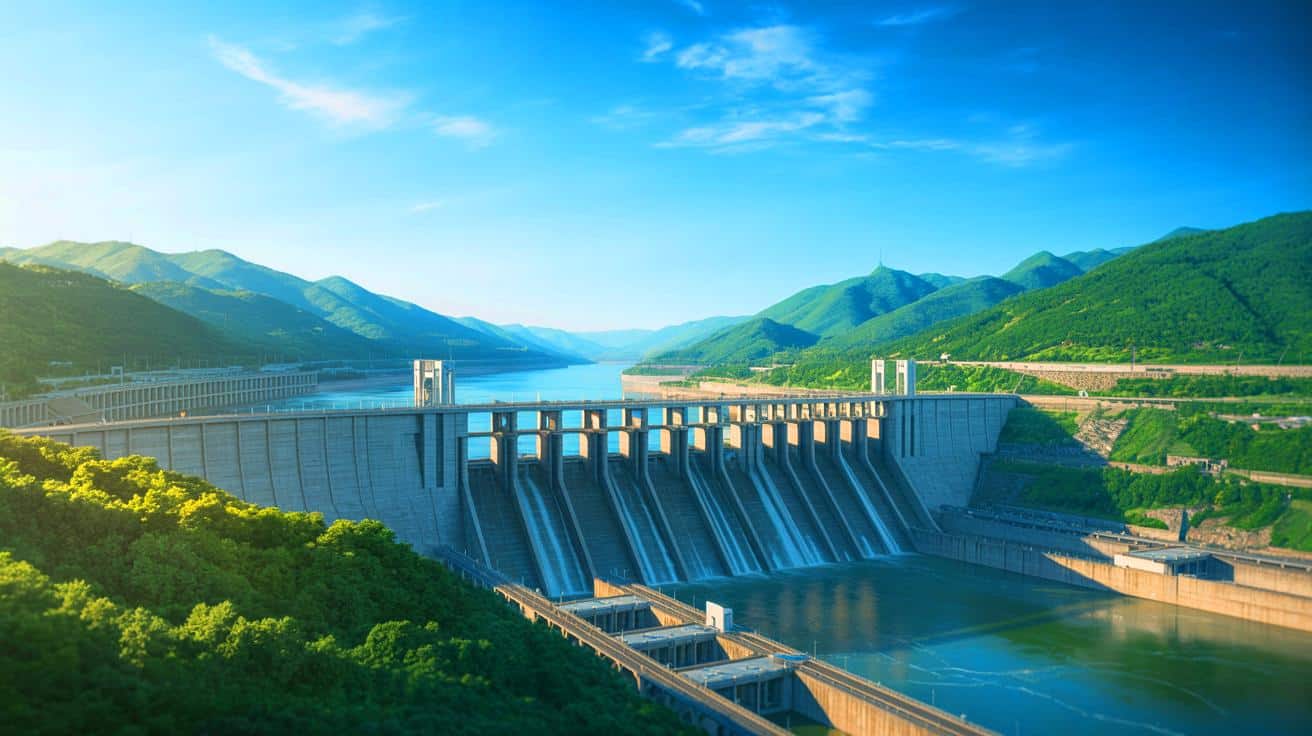
The past few decades have witnessed an unprecedented rise in the construction of massive infrastructures that push the boundaries of engineering. Iconic structures like the Burj Khalifa in Dubai and the Shanghai Tower in China represent this relentless quest for grandeur. Yet, beyond their architectural marvel lies a critical question: what impact do these constructions have on our planet? Among these monumental edifices, the Three Gorges Dam in China stands out as the largest hydroelectric dam in the world. It symbolizes China’s ambition to harness its natural resources and demonstrate its engineering prowess.
While the primary purpose of the Three Gorges Dam is to generate electricity, its implications extend beyond mere utility. The dam’s sheer scale and mass have sparked discussions about its potential to influence Earth’s rotation. This topic has garnered attention from researchers and scientists, prompting a reevaluation of how engineering feats might affect not only local environments but the planet as a whole. The possibility that human activities could impact global systems underscores the need for a thoughtful approach to construction and development.
The Three Gorges Dam: A Giant with Global Consequences
As the leading producer of hydroelectric power, China has positioned itself at the forefront of renewable energy. The Three Gorges Dam, despite its immense scale, only fulfills about 3% of the nation’s energy requirements. Yet, its significance transcends energy production. A NASA report from 2005 suggests that the dam might influence Earth’s rotation. Such changes occur whenever there is a significant shift in mass, whether due to natural events like earthquakes or human activities such as filling a reservoir.
According to Dr. Benjamin Fong Chao of NASA’s Goddard Space Flight Center, even seemingly negligible actions, like driving a car, can have a minor impact on our planet. The Three Gorges Dam, with its vast reservoir, exemplifies how human activities can unintentionally alter Earth’s natural dynamics. This insight into the dam’s potential impact on global systems highlights the interconnectedness of human activity and natural processes. It serves as a reminder of the profound influence that large-scale engineering projects can have on the planet.
The 0.06 Microsecond Effect
To understand the potential impact of the dam, one might compare it to an ice skater adjusting their rotation by repositioning their arms. Similarly, the 2004 earthquake shortened the day by 2.68 microseconds. If the Three Gorges Dam’s reservoir were filled to capacity, it would contain approximately 10.6 trillion gallons of water. This massive water displacement could increase the length of a day by 0.06 microseconds and slightly alter Earth’s shape, making it more rounded at the equator and flatter at the poles.
Though these changes might seem minuscule, they underscore the intricate balance of Earth’s systems. The cumulative effect of numerous human activities could have significant implications for the planet’s rotation, climate, and overall stability. As we continue to exploit natural resources on an unprecedented scale, understanding these nuances becomes increasingly important. The subtle yet profound influence of large-scale projects on Earth’s natural rhythms highlights the need for careful consideration in future developments.
Looking Toward the Future
The influence of human constructions on our planet is a topic of growing concern. As we persist in building larger and heavier structures, it is crucial to consider the potential consequences. How will these changes impact our daily lives and environment in the long term? Infrastructures like the Three Gorges Dam serve as reminders of humanity’s immense influence on Earth. Ultimately, we must ask ourselves whether we are prepared to shoulder the responsibilities that accompany these technological advancements.
As we forge ahead with new developments, the question remains: how can we balance our quest for progress with the need to preserve the stability of our planet? This ongoing dialogue will shape the future of engineering and environmental stewardship. How do you envision the balance between advancement and sustainability being achieved in the coming decades?

Wow, this is mind-blowing! So, the Three Gorges Dam can actually affect Earth’s rotation? 🌍🚀
Wow, did not expect the Three Gorges Dam to have such a global impact! 🌍
Isn’t this just a bit of an overreaction? 0.06 microseconds is hardly anything.
Are we sure this isn’t just a conspiracy theory? Seems a bit far-fetched to me.
Isn’t there a way to mitigate these changes or is it irreversible?
Thank you for the detailed analysis. I never considered how large structures might impact the planet on such a level.
Thanks for the informative article. I had no idea human projects could change Earth’s rotation!
How exactly does the dam change the Earth’s rotation? Can someone explain it in simpler terms?
This is terrifying! Are there other dams causing similar issues? 🤔
This is a wake-up call. We need to think about environmental impacts before building megastructures.
I’m skeptical. Does NASA really think a dam could change Earth’s spin?
Great read! It’s amazing how interconnected everything is.
What are the long-term consequences of a 0.06 microsecond change?
Seems like the plot of a sci-fi movie! 😄
Thank you for sharing this. More people need to be aware of these impacts.
So much engineering, so little consideration for the planet. 😢
Does anyone else think this is a bit of fear-mongering?
Can similar effects be seen with other large constructions worldwide?
How will this affect our global climate in the long run?
Is it possible to reverse or counteract these changes with technology?
This is mind-blowing! I never realized the scale of human influence on Earth.
Really fascinating topic, but I wonder how accurate these predictions are.
I’m grateful for this insight. We need to push for more sustainable development.
Isn’t it possible the Earth has always experienced such shifts naturally?
Wow, I can’t believe a dam can do that! Thanks for the eye-opener.
Does this mean we should stop building large infrastructures altogether? 😬
Are there any other structures known to have similar effects on Earth?
This is why we need to focus on renewable energy sources that are less impactful.
How can a tiny time change have such big implications? I’m a bit confused.
Hope this prompts more responsible engineering practices in the future.
Seems like a drop in the bucket to me, pun intended! 😂
It’s crazy to think our actions could change the planet’s rotation!