




| IN A NUTSHELL |
|
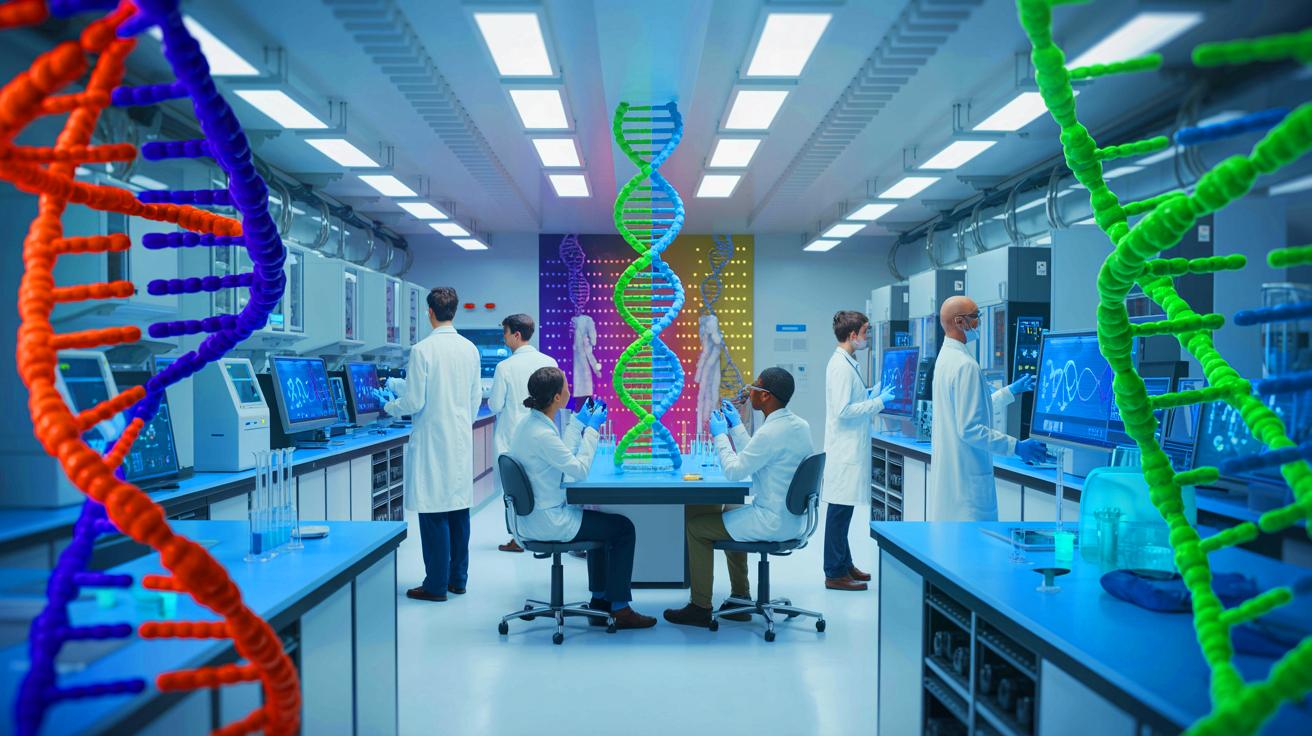
Imagine a world where it becomes possible to create human DNA from scratch, not just by reading or modifying it. What once seemed like science fiction is now within reach thanks to an ambitious and pioneering scientific project called SynHG. Led by an international team of researchers and funded by the prestigious Wellcome Trust, this project aims to design a fully synthesized human genome chemically—a groundbreaking feat that could revolutionize medicine, biotechnology, and even our understanding of life itself.
A Project with Immense Promises and Complex Ethical Questions
The creation of synthetic human DNA generates as much hope as it does controversy. For decades, the scientific community has explored the mysteries of the human genome, primarily through analysis or genetic editing methods. However, synthesizing an entire human genome opens a brand new era: that of “writing” life, designing its fundamental blueprints from A to Z.
Yet, this approach is not without significant concerns. At the turn of the millennium, with the success of the Human Genome Project and the emergence of powerful tools like CRISPR, some experts and citizens raised alarms. The fear of a shift toward modern eugenics—where efforts are made to “improve” the human species through designer babies—has marked these ethical debates. Moreover, our understanding of the complex interactions between genes and the environment remains imperfect, casting doubts on the potential long-term impacts of such manipulations.
A Rigorous and Responsible Approach
Aware of these challenges, the researchers of the SynHG project do not dive headlong into this adventure. They have established a strict and transparent ethical framework, with a dedicated program—Care-full Synthesis—that involves experts, policymakers, industry leaders, as well as civil society representatives worldwide.
This social component aims to anticipate ethical, legal, and societal questions right from the start of research, ensuring responsible innovation. The idea is to include diverse cultural and geographical perspectives and to guarantee an equitable sharing of knowledge, ensuring that this technology serves the common good.
Progressive Steps Toward an Ambitious Goal
The project does not promise the complete synthesis of the human genome overnight. It is a multi-decade endeavor, where each step is a major scientific challenge. The first task is to create a fully synthetic human chromosome—a fundamental step that will lay the groundwork for future efforts.
This approach relies on advances in synthetic biology, DNA chemistry, and biotechnology, but also requires the development of innovative tools and methods capable of manipulating and assembling DNA molecules on a scale never seen before.
| Step | Description |
|---|---|
| 1. Synthetic Chromosome | Creation of a fully synthetic human chromosome |
| 2. DNA Assembly | Developing tools for large-scale DNA molecule manipulation |
Toward Applications with Multiple Impacts
If the SynHG project succeeds, its impacts could be immense. In medicine, it could pave the way for new personalized treatments, revolutionary cell therapies, and advances in custom-made organ transplantation.
Beyond medical applications, the ability to create and modify entire genomes could also transform agriculture and the environment. For instance, plants could be designed to withstand climate change, ensuring better food security in a rapidly changing world.
Most importantly, this research could upend our fundamental understanding of life and health. As Michael Dunn, Director of Research at Wellcome, explains, “Our DNA determines who we are and how our bodies function.” By manufacturing this genetic code from scratch, scientists hope to better understand the complex mechanisms governing our biology and open up unimaginable possibilities.
A Global Scientific Collaboration
At the helm of the project is Professor Jason Chin from the University of Oxford, coordinating a team of specialists from several major British universities, including Cambridge, Manchester, and Imperial College London. This synergy of expertise is essential to meet the project’s technical and ethical challenges.
The Care-full Synthesis program, led by Professor Joy Zhang of the University of Kent, works in parallel to explore social and cultural perceptions surrounding this advancement. Their survey work in various parts of the world will guide research toward more inclusive practices, adapted to the needs of diverse communities.
The SynHG project embodies both the immense potential and the significant responsibilities of contemporary science. By synthesizing human DNA, researchers open the door to a world where humans might one day “write” their own lives, with all the promises of health and adaptation that entails. But this advancement must be pursued with caution, ethics, and always keeping in mind the social and moral impact. Are we ready to embrace and regulate this scientific promise for the good of all?



Wow, this is incredible! Are we really on the brink of creating life from scratch? 🤯
What are the potential risks if we start designing human genomes? Could this lead to unintended consequences?
This sounds like a plot from a sci-fi movie. Are we sure we should be playing God here?
Thank you for such an informative article. It’s amazing to see how far science has come!
I have concerns about the ethical implications of this. Who decides what’s ethical? 🤔
Can this technology help in curing genetic diseases? If so, how soon can we expect it? 🧬
Yikes! Sounds like the beginning of designer babies. Is there a plan to prevent misuse?
Why is the Wellcome Trust funding this? Seems risky.
So, can we expect dinosaurs to be back soon? 😂
Such a groundbreaking project! Hats off to the scientists involved! 🎓
How does this differ from genetic editing methods like CRISPR?
Thanks for the article, but I’m worried about the long-term effects on evolution.
Is there a way to ensure this technology won’t be monopolized by a few corporations?
OMG, this is the future! Can’t wait to see the positive changes it brings. 🚀
With such a powerful tool, what measures are in place to prevent its misuse?
Can someone explain how a synthetic chromosome is different from a natural one?
Great article! But what about the legal implications? Who “owns” a synthetic genome?
I’m skeptical. How can we trust that this won’t lead to new forms of inequality?
Is this a step towards immortality? 🤔
Interesting read! How does this impact the current understanding of biodiversity?
Are there any potential environmental risks associated with synthetic genomes? 🌍
How do different cultures view the synthesis of human DNA? Has this been considered?
Thank you for shedding light on this topic. It’s both exciting and terrifying.
Does this mean we can engineer humans to be resistant to all diseases?
Looking forward to how this will revolutionize agriculture. 🌱
What are the arguments against this project from the scientific community?
I can’t help but wonder, are we opening a pandora’s box here?
How do we ensure equitable access to the benefits of this technology?
Exciting developments! Can’t wait to see personalized medicine become a reality. 💉
Is there a way to reversibly modify genomes? What if we make a mistake?
How is this different from cloning? Can someone clarify?