




| IN A NUTSHELL |
|
Recent advances in human-animal chimera research have opened a new chapter in medical science, potentially revolutionizing organ transplantation. Scientists have successfully grown human cells within the organs of mice, presenting a remarkable opportunity to study human tissue development. This groundbreaking work could eventually lead to custom-grown human organs for transplantation, addressing critical organ shortages and saving countless lives. The concept of chimeras, organisms containing cells from two different species, isn’t entirely new, but the current methodologies have introduced innovative approaches that enhance our understanding and capabilities.
The Novel Experiment
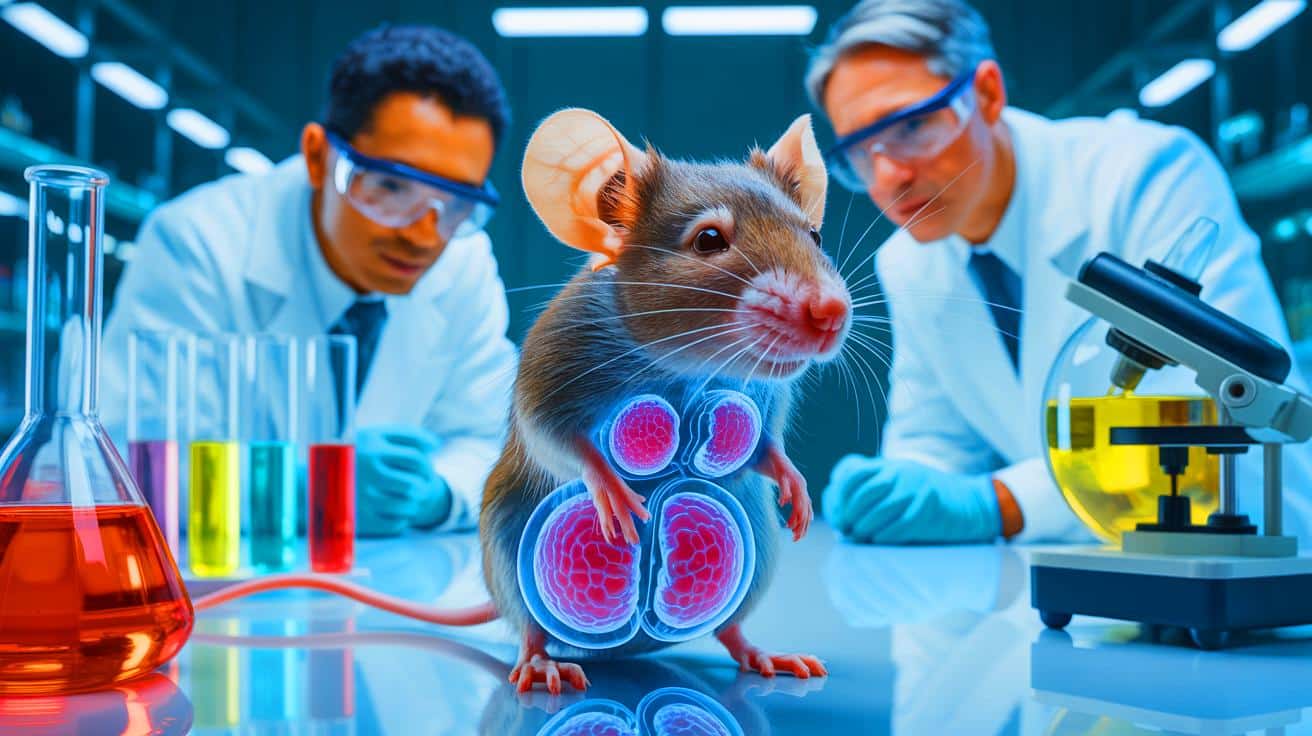
In a bold and innovative step, researchers have developed a new method for integrating human cells into animal embryos. Traditional approaches, involving the introduction of human stem cells into animal embryos, often resulted in poor survival and integration rates. However, this novel experiment, as reported by Nature, adopts a different strategy. Instead of injecting individual stem cells into embryos, researchers now inject 3D human tissue models, known as organoids, into the amniotic fluid of pregnant mice.
This method, led by Xiling Shen from the University of Texas MD Anderson Cancer Center and Qiang Huang from the Terasaki Institute for Biomedical Innovation, uses organoids derived from reprogrammed stem cells. These organoids are injected into the amniotic fluid of mice carrying early-stage embryos, allowing the embryos to develop naturally. Remarkably, this approach doesn’t require puncturing the embryonic wall, highlighting its minimally invasive nature.
The results have been astonishing. Human cells began to integrate into the growing mouse embryos, with organoids targeting specific organs. Within a month, around 10% of the mouse pups displayed human cells in their intestines, constituting about 1% of intestinal cells. Though the proportions were lower in the liver and brain, these human cells were functional and remained stable, demonstrating the method’s potential.
Ethical Concerns
While the scientific community celebrates these advancements, they also bring forth significant ethical challenges. As the proportion of human cells in these chimeras increases, particularly in the brain, concerns about human-like cognition and the ethical implications of such research gain prominence. This is not a new debate; similar ethical discussions arose in 2021 when a US-China team created human-monkey chimeric embryos.
These ethical considerations require careful examination and ongoing dialogue among scientists, ethicists, and policymakers to ensure responsible research practices. The potential for this research to address vital organ shortages is immense, yet it must be balanced with ethical responsibility. Continued research and transparent communication are essential to navigate these complex issues.
Implications for Organ Transplantation
The potential applications of this research in organ transplantation are profound. The ability to custom-grow human organs in animal hosts could drastically reduce waiting times for transplants, saving countless lives. Organ shortages remain a critical issue, with many patients unable to receive timely transplants. This innovative approach could revolutionize the field, providing a sustainable solution to this pressing problem.
Moreover, studying human tissue development in these chimeras offers invaluable insights into developmental biology, potentially leading to breakthroughs in understanding and treating various diseases. This research also raises the possibility of developing personalized organs tailored to individual patients, further enhancing the success rates of transplants and improving patient outcomes.
The Road Ahead
The journey to fully realizing the potential of human-animal chimeras is long and complex. Researchers must continue to refine these methodologies, ensuring the safe and ethical progression of this groundbreaking work. Collaboration across disciplines and international borders is crucial to address the scientific, ethical, and regulatory challenges that lie ahead.
As the scientific community advances, it is essential to engage in open discussions about the implications of this research, ensuring that it aligns with societal values and ethical standards. The promise of a future where organ shortages no longer exist is a powerful motivator, driving researchers to push the boundaries of what is possible.
The advancements in human-animal chimera research mark a significant milestone in medical science, offering hope for addressing critical organ shortages and enhancing our understanding of human biology. As scientists continue to explore these possibilities, they must navigate the ethical landscape with care and responsibility. How will society balance the incredible scientific potential of this research with the ethical considerations it entails?



Wow, this is mind-blowing! But are there any risks of creating half-mouse, half-human creatures? 🐭🤔
I’m amazed by the potential to save lives with this research. Thank you to the scientists for their hard work!
What are the long-term effects of having human cells in mice? Could it affect their health in unforeseen ways?
I’m a bit skeptical. How do we make sure these chimera experiments are ethically justified?
Incredible advancement! This could really change the future of organ transplants.
What happens if the human cells start affecting the mice’s behavior? Could it have ethical implications?
So, when can we expect practical applications of this research? Years from now or sooner?
Is there a risk that these mice might develop human-like thoughts or consciousness? 🧠
As exciting as this is, we must tread carefully with ethical considerations.
How do researchers ensure that these experiments are safe for both humans and animals?
Excuse me, but has anyone considered what the mice think about all this? 🤨
The potential to save thousands of lives is worth exploring this technology further!
Wait, does this mean we could eventually grow custom organs for transplant? That’s amazing!
What measures are in place to prevent misuse of this technology?
I wonder if there are any other applications for this research beyond organ transplants?
I’m all for scientific progress, but aren’t we playing God here? 🤔
Thank you for sharing this breakthrough. It’s crucial to keep the public informed!
What are the chances of rejection when transplanting these organs into humans?
I’m curious, how does this compare to other organ-growing technologies being developed?
This seems like a double-edged sword. Could it lead to unforeseen consequences? 😬
Grate work, but is there an international consensus on the ethics of chimera research?
Seems like we’re on the brink of a new era in medicine. Exciting times ahead!
This is a game-changer for medical science! Can’t wait to see how it progresses.
How soon could this technology be available to hospitals and patients?
Are there any known side effects for the mice carrying human cells?
I’m excited but also worried about the ethical implications. How do we ensure responsible use?
It’s thrilling to see how far science has come. Kudos to the researchers! 👏
Are there any other animals being considered for similar research, or is it just mice?
Sounds like a sci-fi movie plot! But seriously, amazing work by the scientists involved.