



| IN A NUTSHELL |
|
The ocean holds many secrets, and among them are the mysteries of underwater volcanoes. Recently, an undersea volcano known as the Axial Seamount off the coast of Oregon has caught the attention of scientists and the public alike. This intriguing formation, sometimes compared in size to a city, has shown signs that it might erupt soon. With social media posts amplifying concerns and claims about its potential activity, it is essential to understand the facts surrounding this natural phenomenon. While the prospect of an eruption is exciting, experts reassure us that there is little to fear from this mighty underwater giant.
The Magnitude of Axial Seamount
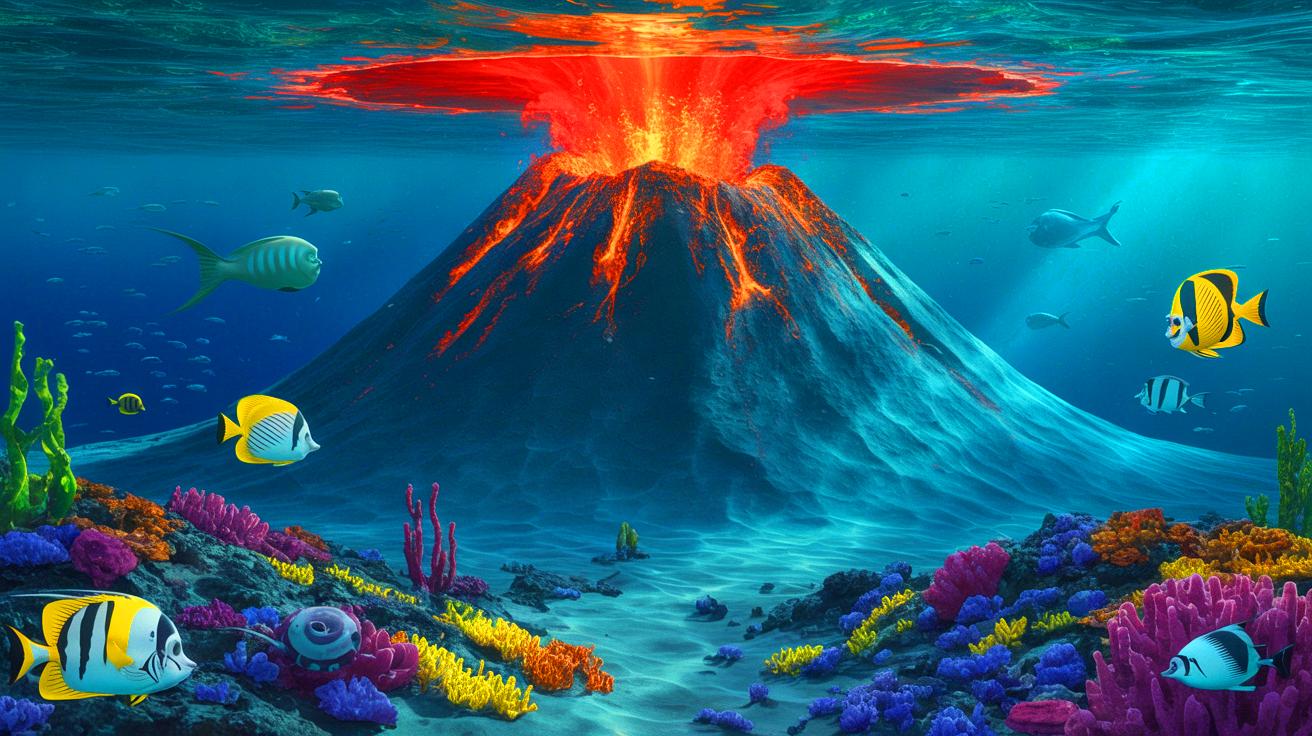
Axial Seamount is a remarkable geological feature, located about 4,600 feet beneath the ocean’s surface. Often described as “city-sized,” it stretches over a dozen miles, comparable to some of the larger cities in the United States. The volcano’s expansive nature and the fact that it is the most active submarine volcano in the region make it a subject of intense scientific interest. Despite its size, Axial Seamount’s eruptions are not explosive. Instead, they are characterized by effusive lava flows, similar to those of Hawaii’s Kilauea volcano. This means that while the volcano is active, its eruptions are relatively calm and pose no immediate threat to human life or ocean travel.
Research has shown that the inflation of the volcano is due to magma accumulation beneath its surface. This inflation has been a precursor to past eruptions, such as those in 1998, 2011, and 2015. However, the increase in size is not dramatic in absolute terms, measured only in inches per year. The U.S. Geological Survey (USGS) has confirmed that while the volcano is exciting due to its activity, it remains non-hazardous to people.
Forecasting the Eruption
The possibility of Axial Seamount erupting soon has been the subject of research and discussion among scientists. In December 2024, researchers led by William Chadwick from Oregon State University presented a forecast predicting that the volcano might erupt between July 2024 and the end of 2025. This prediction was based on the rising seismic activity and the rate of inflation observed at the site. The researchers have been monitoring the volcano closely, using these indicators as reliable signs of potential volcanic activity.
Despite the predictions, the volcano’s behavior has been described as unpredictable. In April 2025, it was noted that the inflation had surpassed levels seen before the 2015 eruption, yet no eruption occurred. Scientists like Chadwick and Scott Nooner provide regular updates through their blog, emphasizing that while the volcano is active, it is not showing signs of imminent eruption. This continuous monitoring allows for better understanding and preparedness, ensuring that any changes in the volcano’s activity are quickly communicated to the public.
Social Media and Public Perception
The discussion around Axial Seamount gained significant traction on social media platforms, with posts claiming that the volcano could erupt “any day now.” These posts often use alarmist language, contributing to public apprehension. For instance, a Facebook post garnered over 130,000 reactions in just four days, while other platforms also saw significant engagement. However, while these claims capture attention, they can sometimes misrepresent the scientific facts.
It is crucial to rely on expert analysis and official statements when considering the implications of such natural events. The language used by scientists is often more measured; they focus on the exciting scientific opportunities that studying Axial Seamount presents. The USGS emphasized that while the volcano is a subject of interest, it does not threaten human safety. Understanding the distinction between sensationalized claims and factual information is vital in navigating such discussions.
The Scientific Value of Studying Axial
Research into Axial Seamount provides valuable insights into volcanic activity and helps improve the forecasting of eruptions at more hazardous locations. By studying “benign” submarine volcanoes like Axial, scientists can better understand the processes that precede eruptions. This knowledge is essential for developing early warning systems and improving public safety measures in areas with more dangerous volcanoes.
Axial Seamount serves as a natural laboratory for geologists and volcanologists. The data gathered from its activity contributes to a broader understanding of volcanic behavior, both underwater and on land. As scientists continue to monitor the volcano, they gain insights that could one day be applied to more volatile volcanic regions, enhancing our ability to predict and respond to eruptions. The bottom line, as highlighted by experts, is that while Axial is an exciting subject of study, it remains non-threatening to humans.
Axial Seamount stands as a testament to the wonders hidden beneath the ocean’s surface. While it may capture the public’s imagination with its potential for eruption, its true value lies in what it teaches us about volcanic activity and Earth’s dynamic nature. As we continue to learn from Axial, we must remain discerning about the information we consume and share. What further secrets might this underwater giant reveal, and how can they shape our understanding of the Earth’s geological processes?




Is it true that Axial Seamount is the most active submarine volcano in the region? 🤔
Thank you for clarifying the situation. Social media can be so misleading sometimes! 🙌
This is just like when they said Yellowstone was going to blow up. Drama, drama, drama!
Why are people so worried if experts say it’s non-hazardous? Seems like unnecessary panic to me.
How accurate are these eruption forecasts usually? Can scientists really predict volcanic activity?
Thanks for sharing this information. It’s reassuring to know there’s no threat to us. 👍
I wonder how much magma is actually accumulating down there. Does anyone have those figures?
Social media exaggerating again? What a surprise! 😅
What exactly does “effusive lava flows” mean? Is it safe for marine life nearby?