




| IN A NUTSHELL |
|
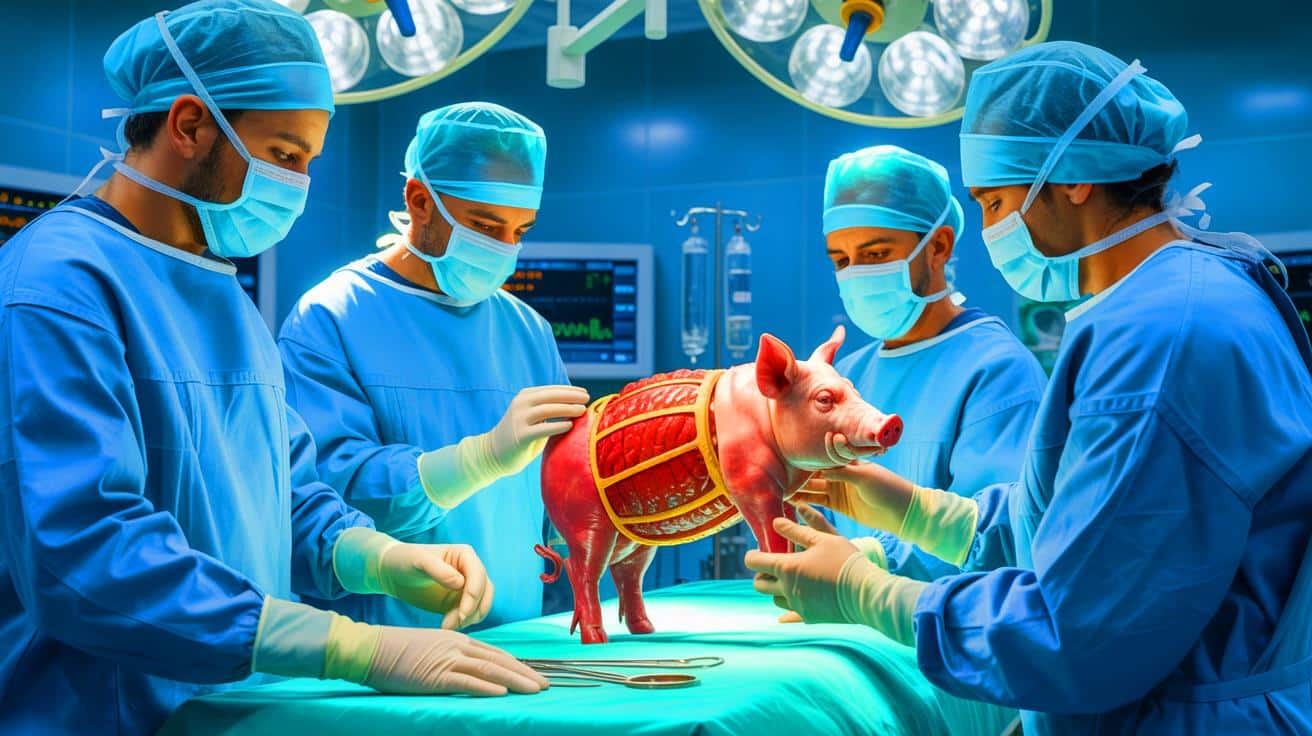
A groundbreaking medical procedure in China has attracted global attention after a genetically modified pig liver was successfully transplanted into a living human patient for the first time. The 71-year-old recipient, suffering from end-stage liver disease, survived 171 days post-transplant. This achievement marks a significant milestone in the field of xenotransplantation, which involves transferring organs between species. The procedure, hailed by experts as a “landmark in hepatology,” was conducted by a team at the First Affiliated Hospital of Anhui Medical University. Despite the patient’s eventual death, the case demonstrated the potential for genetically engineered pig organs to function in humans, offering hope for addressing the critical shortage of human organs available for transplant.
The Complex World of Xenotransplantation
Xenotransplantation, the practice of transplanting animal organs into humans, has long been considered a complex and challenging field. Experts have traditionally viewed the liver as too intricate for successful cross-species transplantation due to its complex functions. However, the recent case in China is beginning to change this perception. The patient, who had hepatitis B-related cirrhosis and hepatocellular carcinoma, was ineligible for traditional treatments due to his advanced condition. As a result, he became a candidate for this experimental procedure.
The surgical team implanted an auxiliary liver graft from a genetically modified pig, specifically designed to minimize the risk of immune rejection. The pig liver underwent ten gene edits, removing genes that could trigger severe immune responses in humans. Additionally, human genes were introduced to produce proteins that are more compatible with the human body. During the first month post-transplant, the pig liver functioned effectively, producing bile and synthesizing coagulation factors without signs of immune rejection.
Challenges and Complications
Despite the initial success, the procedure was not without its challenges. On the 38th day, the patient developed xenotransplantation-associated thrombotic microangiopathy (xTMA), a severe complication that required the removal of the pig liver graft. Although the xTMA was successfully treated, the patient’s condition deteriorated, leading to repeated gastrointestinal hemorrhages. Ultimately, the patient passed away on the 171st day after the transplant.
This case highlights both the promise and the hurdles of xenotransplantation. While the procedure demonstrated that a genetically engineered pig liver could function in a human for an extended period, it also underscored the need to address complications such as coagulation issues and immune responses. As Beicheng Sun, the lead investigator, noted, overcoming these challenges is crucial for future success in this field.
Addressing the Organ Shortage Crisis
The global shortage of human organs for transplantation is a pressing issue, with thousands of patients dying each year while waiting for a suitable donor. In China alone, hundreds of thousands of people suffer from liver failure annually, yet only a fraction receive transplants. The development of xenotransplantation could potentially bridge the gap between the high demand for organs and the limited supply. Although this recent case in China represents a short-term success, it paves the way for future advancements that could transform the treatment of severe liver conditions.
Previous trials, such as the transplant of a pig liver into a brain-dead patient in 2024, have shown limited success. However, the recent case of a living recipient surviving for over five months is a significant step forward. It suggests that with further research and development, xenotransplantation could become a viable solution for patients with acute liver failure, acute-on-chronic liver failure, and hepatocellular carcinoma.
“They’re Stealing Sunlight In The Arctic”: Company Builds Impossible Solar Farm Where Sun Disappears
The Road Ahead for Xenotransplantation
The recent success of the pig-to-human liver transplant in China marks a pivotal moment in medical research, but much work remains to be done. The procedure’s complications highlight the need for ongoing research to address issues such as immune rejection and coagulation dysregulation. The promise of xenotransplantation lies in its potential to alleviate the organ shortage crisis and offer new hope to patients with life-threatening conditions.
As scientists continue to explore the possibilities of genetically modified animal organs, the medical community must navigate ethical considerations and ensure that future procedures prioritize patient safety and long-term health outcomes. This landmark case raises important questions about the future of organ transplantation and the potential for animal organs to save human lives. What innovations and breakthroughs will the next decade bring in the field of xenotransplantation?



Is this the future of organ transplants? It’s both exciting and terrifying. 🤔
Wow, a pig’s liver? What’s next, a cow’s heart? 🤔
Wow, 171 days with a pig liver! That’s incredible progress. Keep it up!
Thank you for covering this. Truly eye-opening!
What are the ethical implications of using animal organs in humans?
I wonder how long it will take before this becomes a common practice.
Is this ethical though? Just curious about the implications.
The potential to end the organ shortage crisis is huge. 🙌
Are there any risks of diseases transferring from pigs to humans?
Why did the complications arise on day 38? Did the doctors anticipate this?
It’s amazing what science can achieve these days. Thank you, researchers!
This is both fascinating and terrifying at the same time.
How do they ensure the pig liver doesn’t get rejected by the human body?
Genetically modified pig livers sound like something out of a sci-fi movie! 😲
How long before this becomes a standard procedure worldwide? 🌍
What happened to the patient after the liver was removed?