




| IN A NUTSHELL |
|
Obstructive sleep apnea (OSA) is a widespread condition affecting around one billion individuals globally. It is characterized by repeated interruptions in breathing during sleep, often leading to daytime fatigue and other health complications. Recent research has made strides in addressing the dual root causes of OSA: the collapse of throat muscles and unstable breathing control by the brain. By targeting both these issues simultaneously with a combination of a mandibular advancement device (MAD) and supplemental oxygen, a new study by Monash and Harvard Universities offers a promising approach to drastically reduce breathing disruptions.
Understanding Obstructive Sleep Apnea
Obstructive sleep apnea is a condition where an individual’s breathing repeatedly stops and starts during sleep. This occurs due to the collapse of throat muscles, known as “pharyngeal collapsibility,” and the brain’s unstable control of breathing, known as “ventilatory control instability.” These interruptions can lead to poor sleep quality and have significant health implications if left untreated. Traditionally, treatments have focused on addressing one of these causes at a time.
The use of continuous positive airway pressure (CPAP) machines is a common approach, but many patients find them uncomfortable and difficult to tolerate. Other treatments include lifestyle changes and surgical interventions. However, these options often do not address the underlying non-anatomical causes of OSA. This new study aims to fill that gap by employing a combined therapy approach.
“They’re Stealing Sunlight In The Arctic”: Company Builds Impossible Solar Farm Where Sun Disappears
Innovative Dual-Therapy Approach
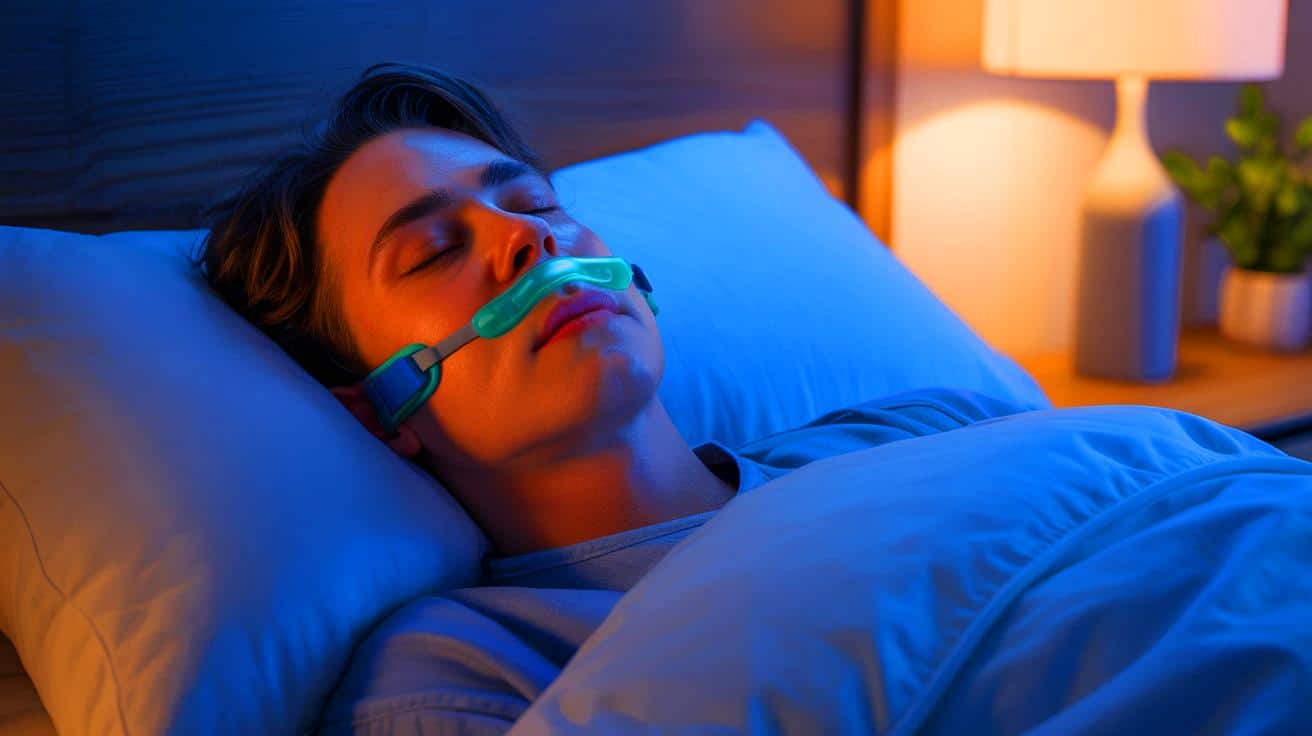
The study conducted by Monash and Harvard Universities leverages a dual-therapy approach using a mandibular advancement device (MAD) and supplemental oxygen. The MAD works by holding the lower jaw and tongue forward, keeping the airway open, similarly to a mouthguard. Supplemental oxygen helps stabilize the brain’s control of breathing.
Forty-one adults with moderate to severe OSA participated in the trial, which was designed as a randomized crossover study. Participants experienced four different treatment options: a sham treatment with air only, oxygen only, MAD only, and the combination of oxygen and MAD. Each treatment was applied on separate nights to allow for comprehensive comparison.
Significant Findings and Results
The study’s findings are revealing. Oxygen alone reduced the apnea-hypopnea index (AHI), which measures breathing interruptions per hour, by about 33%. The MAD alone achieved a 54% reduction. However, the combination therapy reduced AHI by approximately 68%. This reduction is statistically significant and highlights the effectiveness of the dual approach.
The combination therapy also improved sleep quality and reduced arousal index, though the improvements were not significantly better than MAD alone. Importantly, the greatest benefits were observed in patients whose OSA was driven by both airway collapsibility and unstable breathing control. This suggests that targeting both anatomical and non-anatomical causes can provide enhanced outcomes for patients.
Implications for Future Treatment
The implications of this study are substantial. The dual-therapy approach could serve as an alternative for patients who cannot tolerate CPAP therapy. As Associate Professor Brad Edwards from Monash University notes, this method targets the anatomical and non-anatomical causes simultaneously, providing a comprehensive treatment strategy.
Senior author Scott Sands, PhD, from Brigham and Women’s Hospital and Harvard Medical School, emphasizes the potential for this approach to become a standard treatment. He likens it to the use of multiple medications to control high blood pressure. The study advocates for larger trials to further explore targeted treatments for selected patient groups, paving the way for personalized OSA management.
As the study published in the European Respiratory Journal suggests, combining a mandibular advancement device with supplemental oxygen could revolutionize the treatment of obstructive sleep apnea. This approach marks a significant step forward in managing a condition that affects millions worldwide. As research progresses, could we see a shift in how sleep apnea is treated, leading to improved quality of life for countless individuals?



Wow, this could be a game-changer for so many people! Has anyone tried it yet? 🤔
Wow, this sounds amazing! Could this really replace CPAP for everyone with sleep apnea? 🤔
Finally, an alternative to CPAP machines! They’re such a pain to use every night.
I’m skeptical. Can these results be replicated in larger studies?
How much does this dual therapy cost compared to traditional treatments?
This is a game changer for those of us who hate CPAP machines. Thanks for sharing! 😊
Interesting read, but I’m skeptical about the long-term effectiveness. Any follow-up studies planned?
How do I know if I’m a good candidate for this dual therapy?
Is the mandibular advancement device comfortable to wear? I have trouble with mouthguards.
I’ve been using a CPAP for years. Could this new treatment really be more effective?