



| IN A NUTSHELL |
|
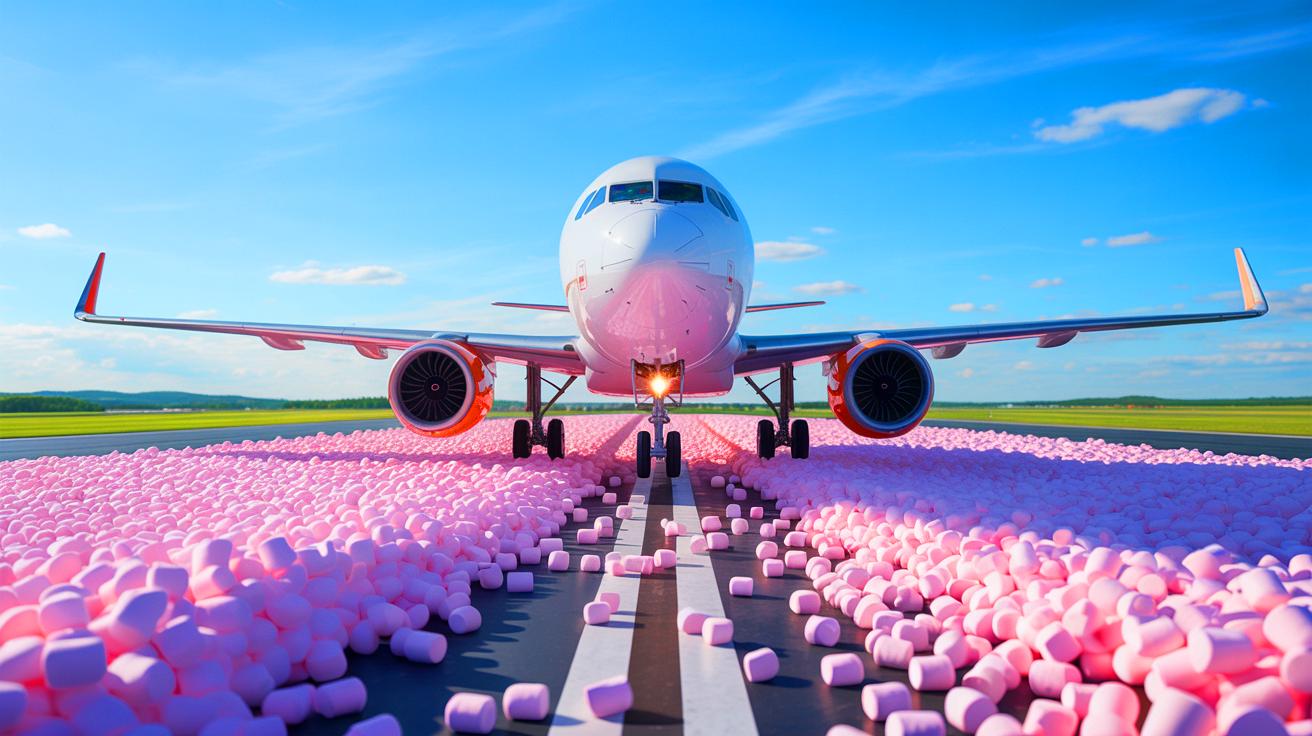
The aviation industry constantly seeks innovations that enhance safety and efficiency. Recently, a groundbreaking development from China has been making waves: a new type of runway material designed to improve emergency landing safety. This ultra-light foam concrete is a revolutionary material engineered to significantly reduce the risks associated with aircraft landings. Known as “marshmallow” concrete due to its unique properties, this material promises to transform how airports handle emergency situations. Already implemented in 14 Chinese airports, it is poised to become a new standard in aviation safety.
The Problem with Traditional Runway Systems
Takeoff and landing are the most critical phases of any flight, accounting for numerous aviation incidents. To mitigate these risks, the International Civil Aviation Organization mandates the use of Runway End Safety Areas (RESAs), measuring at least 295 feet beyond the runway. Historically, RESAs employed materials like sand, soil, or water pools, each with its own drawbacks. For example, soil can be affected by environmental conditions, becoming unstable, while water pools pose risks of freezing and attracting wildlife.
However, these traditional systems often fall short of modern safety requirements. Foam concrete emerges as a superior alternative, offering predictable and controlled deceleration for aircraft. The challenge in developing this material was ensuring that it would compress effectively under the weight of an aircraft without collapsing prematurely. This required precise engineering to maintain the foam’s strength between 0.30 and 0.35 megapascals, a narrow range that ensures optimal performance.
Engineering the Perfect Foam Concrete
The creation of this innovative material involved a meticulous process that the development team likened to “blowing bubbles” into the concrete mix. These bubbles are critical for creating the soft, energy-absorbing texture necessary to stop an aircraft smoothly. A specialized air-entraining agent made from maleated rosin was added to form a protective layer around each bubble, ensuring the material remains intact until needed.
To further enhance durability, the team implemented a two-stage strength-control system. This allows the foam concrete to adapt to various environmental conditions, an essential feature for airports in extreme climates. Unlike other systems that rely on calcium sulfoaluminate cement, which is costly and degrades over time, the Chinese approach uses ordinary cement. This not only reduces costs but also extends the material’s lifespan, making it an attractive option for smaller airports with limited budgets.
Implementation and Real-World Success
The “marshmallow” concrete system has already been deployed at 14 airports across China, with promising results. At an airport in Nyingchi, located in the challenging climate of Tibet, the material’s properties fluctuated by only 3 percent over a year, well within the design’s 10 percent tolerance. These results underscore the material’s reliability and effectiveness in real-world conditions.
This successful implementation marks a significant step forward in aviation safety. The combination of affordability, durability, and high performance makes this innovative material a strong candidate for global adoption. As more airports recognize its benefits, “marshmallow” concrete could soon become a staple in runway safety systems worldwide.
Future Implications for Aviation Safety
As aviation continues to evolve, the need for advanced safety measures becomes paramount. The development of ultra-light foam concrete represents a major leap forward in addressing these needs. By providing a controlled deceleration mechanism, this material enhances the safety of aircraft during emergency landings, potentially saving lives and reducing damage.
Furthermore, its cost-effectiveness and adaptability to different climates make it a viable option for airports of all sizes. As the aviation industry looks to the future, innovations like these will play a crucial role in shaping safer, more efficient air travel. The question remains: How soon will other countries adopt this groundbreaking technology to enhance their aviation safety measures?


Wow, “marshmallow” concrete? Sounds like something out of a sci-fi movie! 🍿✈️
I’m curious, how does this material hold up in extreme weather conditions?
This is a game-changer for aviation safety! Kudos to the Chinese scientists. 👏
Marshmallow concrete? I hope the planes don’t get stuck in it like chewing gum!
How cost-effective is this new material compared to traditional runway materials?
Has there been any testing done outside of China yet?
Sounds promising, but how about the environmental impact of this foam concrete?
This is incredible! Can’t wait to see this implemented globally. 🌍
Is there a risk of this material degrading over time or with repeated use?
Why hasn’t anyone thought of using “marshmallow” concrete before? Genius! 🤯
Can this material also be used in other areas like highways or bridges?
I’m skeptical. What are the potential downsides of this new technology?
Thank you for sharing this amazing innovation. It’s a relief to see safety being prioritized. 🙏
So, airplanes are landing on giant marshmallows now? Sweet! 🍬
Can this foam concrete be recycled or reused after it crumbles?
I hope this isn’t just another hype that fades away. Has it been peer-reviewed?
How does this technology compare to EMAS systems currently in use?
What happens if an airplane lands with more force than expected? Will it still hold up?
Great innovation! Could this be adapted for emergency vehicle stopping systems too?
Does it come in different flavors? Joking aside, impressive work! 😂
How quickly can this “marshmallow” concrete be installed at airports?
Interesting read. I’m amazed by the scientific advancements in aviation safety!
What is the lifespan of this foam concrete compared to traditional materials?
It’s fascinating how they managed to make concrete so soft yet effective. Bravo! 👏
Is this suitable for airports with high traffic or just smaller ones?
How does the cost of maintenance compare with existing runway safety systems?
Are there any airports outside China that have shown interest in this? 🌎
Will this material be able to handle larger aircraft like Airbus A380s?
Love the innovation! When can we expect it to be available in the US? 🇺🇸
Hope they have a backup plan if this “marshmallow” doesn’t work as expected.
How long did it take to develop this material from concept to implementation?
Does this mean airplane insurance might become cheaper? Asking for a friend. 😉
Is there a difference in performance between hot and cold climates?