


| IN A NUTSHELL |
|
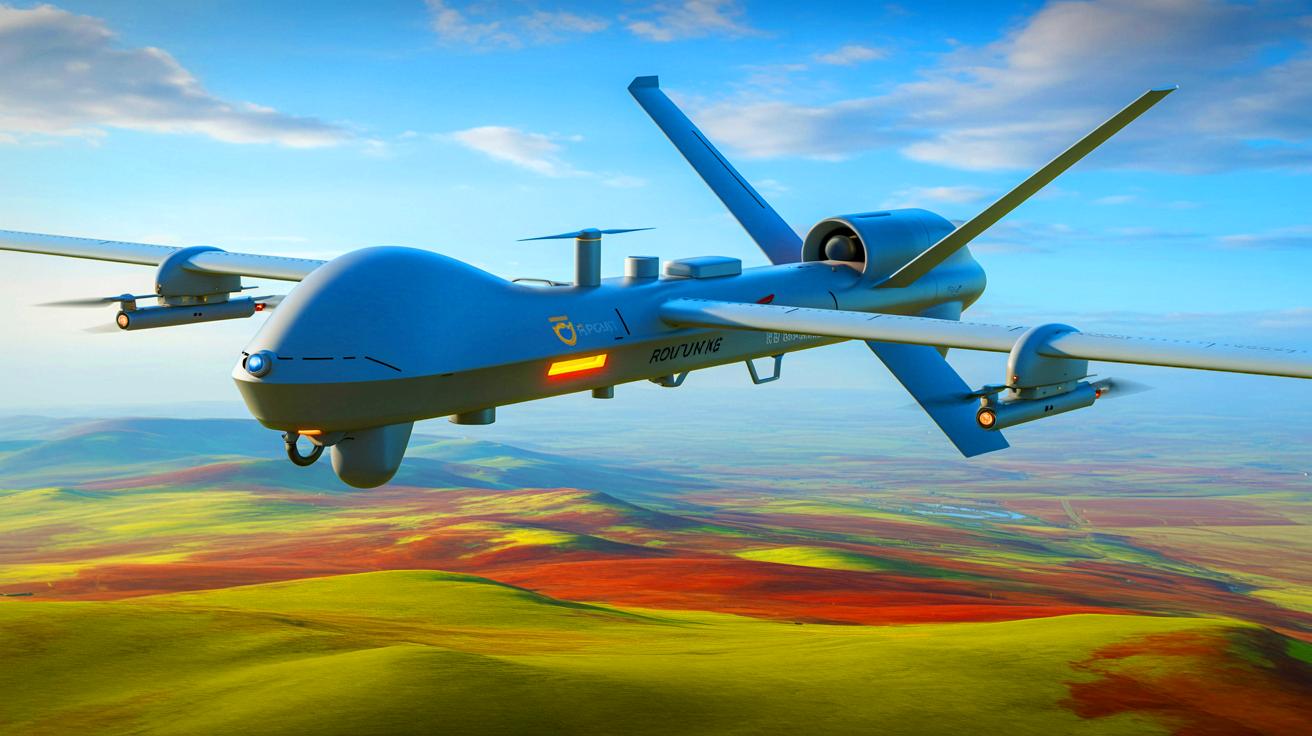
The integration of cutting-edge technology in military operations has always been a game-changer, and the United Kingdom’s latest advancement is no exception. The Royal Air Force (RAF) has officially introduced the Protector RG Mk1 drone into its service, marking a pivotal moment in British defense aviation. This new addition ushers in a fresh era of unmanned combat aviation, effectively replacing the older MQ-9A Reaper platform. With its remarkable capabilities, the Protector RG Mk1 is set to redefine the boundaries of modern warfare, offering unprecedented endurance and precision in military operations.
The Revolutionary 5,750-Mile Drone
The Protector RG Mk1, designed by General Atomics Aeronautical Systems Inc. (GA-ASI), represents a substantial leap forward in unmanned aerial technology. This drone is not just a replacement for the previous MQ-9A Reaper; it’s a multi-domain solution that provides persistent Intelligence, Surveillance, Target Acquisition, and Reconnaissance (ISTAR) and precision strike capabilities. The Protector can operate continuously for over 30 hours, reaching altitudes of up to 40,000 feet, and covering ranges exceeding 5,000 nautical miles (approximately 5,750 miles), depending on its configuration.
This advanced system can carry significant payloads, including 500-pound Paveway IV laser-guided bombs and Brimstone 3 missiles, enhancing its combat effectiveness. The successful test flight from RAF Waddington to RAF Marham demonstrated its integration with UK civil aviation standards, marking a historic achievement for the RAF. As Air Chief Marshal Sir Rich Knighton, Chief of the Air Staff, noted, the Protector’s entry into service ensures that the RAF remains at the forefront of uncrewed airpower, thanks to the dedicated efforts of the teams and industry partners involved.
First-Time Service: A New Era
The Protector RG Mk1 is equipped with a 79-foot wingspan and incorporates several key subsystems, including GA-ASI’s Lynx Multi-mode Radar, an electro-optical/infrared sensor suite, SATCOM control, and automated takeoff and landing capabilities. These features enable the drone to operate safely within civilian airspace, a critical differentiator from legacy RPAS platforms. The platform complies with NATO STANAG 4671 and UK DEFSTAN 00-970 standards, allowing it to operate within regulated civil environments across the US and European airspace.
Designed for versatility, the system can be deployed for various missions, primarily focused on intelligence gathering, threat monitoring, and target identification. Its ability to conduct Search and Rescue (SAR) operations allows for rapid responses during emergencies. Furthermore, the Protector RG Mk1 is effective for Maritime Patrol, covering both Anti-Submarine and Anti-Surface Warfare, which is crucial for safeguarding maritime security. The drone’s Airborne Early Warning and Defensive Counter Air operations capabilities are essential for maintaining air superiority and protecting ground forces, making the RAF the first military force globally to integrate the MQ-9B into full-spectrum service.
Training and Deployment
The UK Protector program is not just about deploying cutting-edge technology; it also involves the establishment of a dedicated training facility at RAF Waddington. This facility houses the NATO Flight Training Europe (NFTE) elements and simulators managed by 54 Squadron. The first air vehicle was delivered in September 2023, and currently, four aircraft are based in the UK, with six additional units undergoing test and evaluation in the United States. The full operational capability is slated for later in 2025, with all ten air vehicles expected to be operational by that time.
The training facility underscores the RAF’s commitment to ensuring that its personnel are adequately prepared to operate and maintain these advanced systems. This investment in training is essential to fully realize the potential of the Protector RG Mk1 and sustain its operational readiness. By integrating advanced training protocols, the RAF is ensuring that its personnel are equipped with the necessary skills to maximize the capabilities of this revolutionary drone.
Global Implications and Future Prospects
The introduction of the Protector RG Mk1 into the RAF’s arsenal has significant global implications. As the first military force to adopt the MQ-9B for full-spectrum service, the UK is setting a precedent for other nations to follow. This development highlights the increasing importance of unmanned aerial systems in modern military operations and underscores the need for continued investment in cutting-edge technology.
Looking ahead, the Protector RG Mk1 could pave the way for further advancements in unmanned aerial combat, potentially leading to new innovations and capabilities. As nations around the world continue to explore the possibilities of unmanned systems, the RAF’s experience with the Protector RG Mk1 will serve as a valuable case study. How will this new era of unmanned combat aviation influence the future of military operations worldwide?



Wow, this drone can fly over 5,750 miles? That’s like halfway around the world! 🌎✈️
Can this drone really handle search and rescue missions effectively? Seems like a lot to ask.
What happens if a drone like this malfunctions in civilian airspace? 🤔
Pretty cool tech, but I hope it doesn’t replace human jobs in the military.
Does the RAF offer tours to see these drones in action? I’d love to witness one fly!
Is the UK planning to sell this technology to allied nations?
Why is the wingspan so large? Does it improve stability or range?
Great article, but I’m more interested in how this tech could be used for peaceful purposes.
Is it possible to hack these drones? Cybersecurity must be a huge concern. 🔐
Is it just me or does this sound like something out of a sci-fi movie? 🤖
With such long endurance, how do they ensure the drones are reliable over extended missions?
What’s next after the Protector RG Mk1? Are there plans for even more advanced drones?
Why is there a need for such a long strike range? Seems excessive to me.
I’m impressed by the tech, but is there any public opposition to deploying these drones?
When will we see drones like this used in humanitarian efforts instead? 🤷
Do these drones have any self-defense mechanisms if they come under attack?
How realistic is it for these drones to completely replace manned aircraft in combat scenarios?
Is there any collaboration with other countries on the tech used in these drones?
What kind of data do these drones collect during their missions?
Are there any privacy concerns with having drones like this operating over civilian areas?
Love the article! It’s amazing to see how far drone tech has come. 🚁
Will these drones be used in conjunction with existing aircraft or replace them entirely?
How does the RAF ensure these drones are only used for their intended purpose?
Can someone explain how this drone complies with civilian airspace regulations? Seems tricky!
Why was General Atomics chosen to design the Protector? Are there no UK-based companies capable?
Can these drones operate in all weather conditions, including extreme environments?
What are the potential risks of relying so heavily on unmanned systems in combat?
This is impressive, but doesn’t it make us more vulnerable to attacks on our tech infrastructure?
How long did it take to develop the Protector RG Mk1 from concept to deployment?
Are there any plans to develop a civilian version of this drone for non-combat purposes?
Does the introduction of these drones mean fewer pilots are needed in the RAF?
Can these drones be used for anti-poaching efforts in wildlife conservation? 🐘
The capabilities are impressive, but what about the cost? How much does each unit cost to produce?
This is a game-changer for modern warfare, but what are the ethical implications?
Does anyone else think it’s a bit scary how advanced these drones are becoming? 😨
How does this drone compare to similar ones from other countries, like the US or China?
Thank you for the detailed article! It’s fascinating to see how technology is evolving in aviation.
I’m curious, what kind of training do RAF personnel undergo to operate these drones?
The Protector seems like a significant investment. How is it funded?
Is there any environmental impact from operating these drones at such high altitudes?
Why does every single comment sound like Ai?