




| IN A NUTSHELL |
|
Recent archaeological discoveries in Egypt have significantly reshaped our understanding of ancient engineering and construction methods. At the center of this revelation is the newly discovered water management system surrounding the Pyramid of Djoser. This complex network of structures, previously hidden beneath the sands, indicates that the ancient Egyptians utilized sophisticated techniques to harness seasonal floods for construction purposes. Such discoveries not only enhance our knowledge of ancient Egyptian engineering capabilities but also invite a reconsideration of the historical narratives that have long dominated our understanding of these monumental structures.
Ingenious Stone Dam Capturing Desert Floodwaters
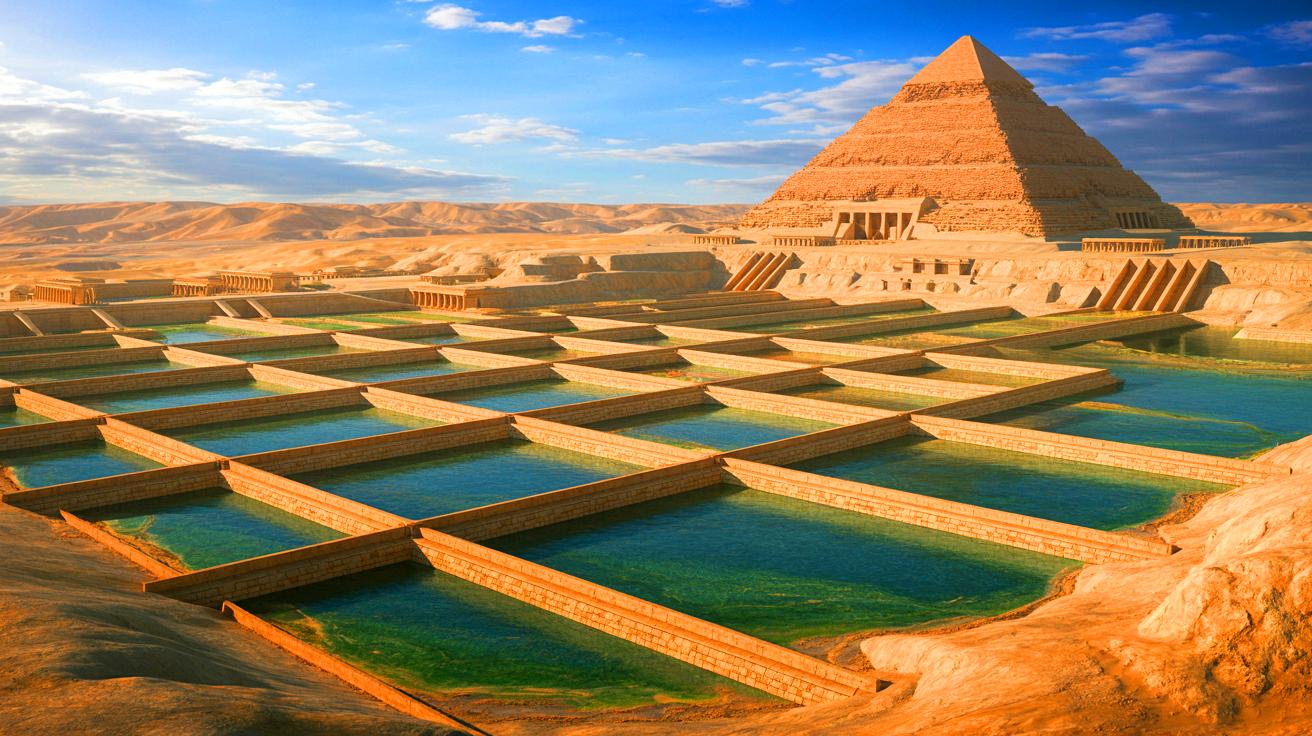
The enigmatic structure known as Gisr el-Mudir at Saqqara has long intrigued archaeologists due to its massive scale and ambiguous purpose. Recent research led by Xavier Landreau and his team has revealed its function as a stone dam, designed to capture and utilize seasonal floodwaters. This dam, stretching almost 1,180 feet, served as a crucial element in ancient construction projects by providing a steady water supply.
Through detailed analysis of the region’s terrain and hydrological patterns, researchers determined that the dam could hold up to 14 million cubic feet of water. This capacity was not only essential for construction but also enhanced the area’s agricultural productivity by depositing nutrient-rich sediments. Such findings have shifted perceptions of Saqqara, underscoring its strategic importance for both religious and hydrological reasons.
How Hydraulic Construction of Pyramids Worked
The stable water supply facilitated by the dam was just one aspect of the Djoser complex’s advanced engineering. Beneath the pyramid lies an intricate network of basins and shafts, forming a sophisticated water management system. Known as the “Deep Trench,” this system was functional rather than purely symbolic, playing a vital role in water purification and transportation.
This network likely enabled the use of a hydraulic elevator mechanism, where water pressure in vertical shafts allowed heavy stone blocks to be floated and elevated. Such innovation reduced the mechanical effort needed to lift massive stones, providing a practical solution to one of the most challenging aspects of pyramid construction. The evidence found in the galleries and underground compartments further supports this theory, highlighting the ancient Egyptians’ advanced understanding of hydraulic engineering principles.
Sophisticated Technology Matching Pharaohs’ Ambitions
While the hypothesis of hydraulic construction may appear bold, it is underpinned by substantial evidence. The coordinated system of dams, basins, galleries, and shafts illustrates the ancient Egyptians’ mastery of engineering. Their proficiency in hydraulic technology is well-documented, with a history of sophisticated irrigation, canal systems, and water management techniques.
This newfound understanding suggests that these advanced methods may have diminished the need for labor-intensive approaches like massive ramps, enhancing both the efficiency and precision of construction. The Pyramid of Djoser, often regarded as a prototype, stands as a testament to the engineering prowess of the Old Kingdom, challenging traditional narratives and demonstrating the Egyptians’ ability to innovate in response to environmental challenges.
How Saqqara’s Hydraulic Remains Alter Our Historical Perspective
Traditionally, pyramids have been examined primarily for their architectural and symbolic importance. However, the discovery of a comprehensive hydraulic system at Saqqara shifts this perspective, revealing that the ancient builders were not merely constructing religious monuments but also developing sustainable technical ecosystems.
This multidisciplinary approach, which combines archaeology, hydrology, and geotechnics, expands our understanding of ancient Egypt. It underscores a sophisticated level of work organization and resource management, suggesting that pyramid construction was as much an engineering achievement as it was a testament to human labor. As these insights prompt a reevaluation of other historical sites, we are encouraged to search for similar hydraulic systems that may have previously been overlooked.
As we continue to explore the engineering marvels of ancient Egypt, one must wonder: What other technological advancements remain buried beneath the sands, waiting to reshape our understanding of history?



Wow, this is amazing! Who knew the Egyptians were water geniuses too? 💧
How did they manage to build such complex systems without modern technology? Truly mind-blowing.
Is there any evidence to suggest other pyramids had similar systems?
This is nice and all, but I’d like to see more concrete evidence before jumping to conclusions.
Incredible! This makes ancient Egypt sound like a precursor to modern sustainable engineering.
Egyptian engineers were ahead of their time! Can we learn anything from their techniques today?
Maybe aliens taught them how to use water power. Just saying. 👽
Sounds like the Egyptians were a lot greener than we’ve ever been!
Is there a chance that other ancient civilizations used similar methods?
I wonder if this changes the timeline of how quickly the pyramids were built.
Brilliant discovery! The ingenuity of ancient civilizations never ceases to amaze.
Does this mean we should reevaluate the labor estimates for building the pyramids?
How much of this is theory and how much is actually backed by solid evidence?
Is there a way to simulate this hydraulic system to see how it worked in practice?
So they basically had ancient water lifts? That’s genius! 🚰
That’s impossible, assuming they could lift 80 tons blocks with water, how on earth were they moved from the “lift” to the right place? Baby oil?
I’m skeptical. How could they have possibly controlled so much water in the desert?
What other secrets of ancient Egypt are waiting to be uncovered?
I’m not sure I buy this water theory. Seems a bit far-fetched. 🤔
Love learning about ancient tech! This is the kind of stuff that keeps history alive! 📚
Can you do a follow-up article on the implications of this discovery for current engineering?
Seems like we might have underestimated the technological capabilities of ancient societies.
Does this mean the pyramids were built faster than previously thought?
It’s fascinating how much we still have to learn about ancient civilizations.
Thnk you for this insightful article! It opens up so many new questions.
How do they know the dam was specifically used for building the pyramids?
Was there any risk of floods damaging the pyramids themselves?
Could this discovery affect tourism at these sites? 🏜️
Seems like this could rewrite a lot of history books!
Is there a book or documentary that delves deeper into this discovery? 📖
Does this change our understanding of the labor used in pyramid construction?
Does this mean they didn’t use slaves to build the pyramids? 🤨
Great article! This really changes how I think about ancient Egypt. 🌟
Water elevators? Next thing you’ll tell me is they had wi-fi! 😂
So, is this water system still visible today or has it all eroded away?
Thank you for shedding light on this fascinating discovery! More articles like this, please! 🙏