

| IN A NUTSHELL |
|
The latest eruption of Hawaii’s Kilauea volcano has once again captivated global attention. Known for its frequent volcanic activity, Kilauea’s latest event, which began on August 22, 2025, is its 31st eruption since December 2024. This dramatic display has brought forth both scientific intrigue and cultural reverence. As lava fountains surged 100 feet into the Hawaiian sky, scientists and spectators alike gathered to witness this natural wonder. While Kilauea’s eruptions are not uncommon, each event offers a fresh perspective on the volcano’s behavior and the profound cultural significance it holds for the local Hawaiian community.
Kilauea’s Explosive Return
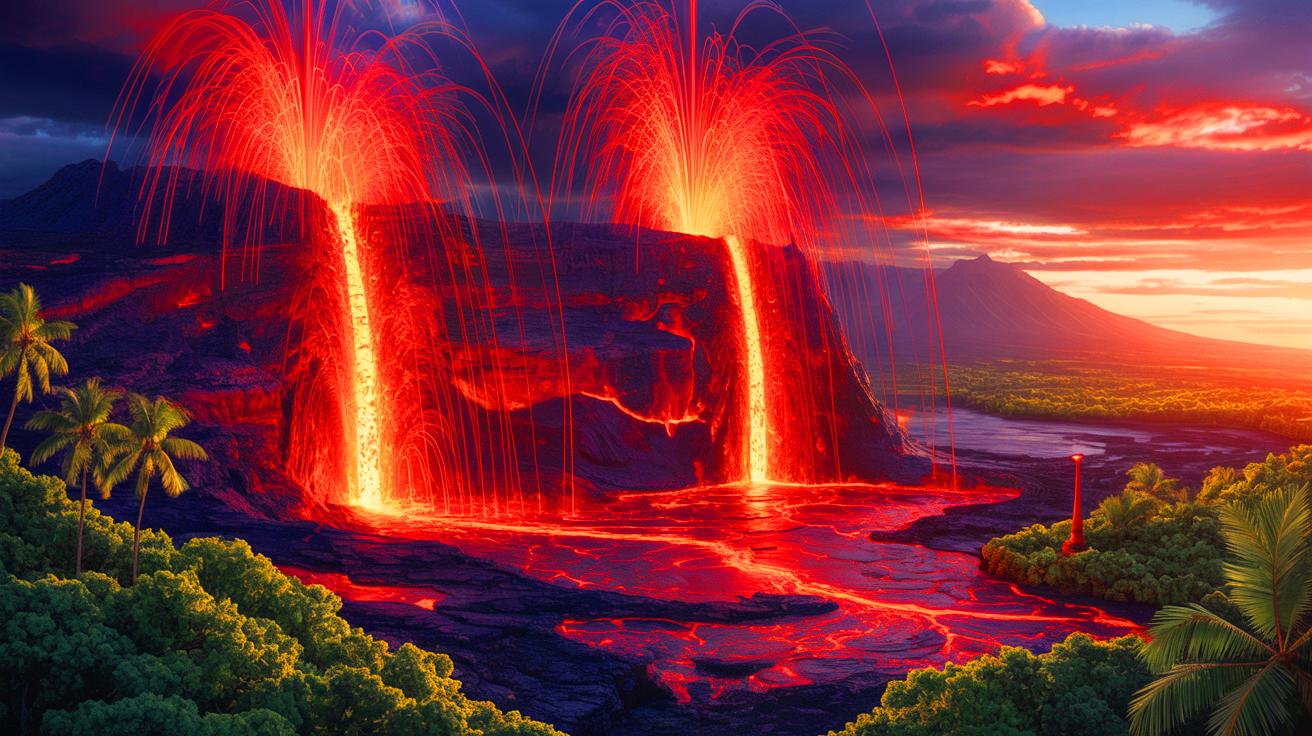
On August 22, 2025, Kilauea resumed its volcanic activity with a spectacular display of molten rock, as lava shot 100 feet into the air. This eruption originated from the summit crater’s north vent, where continuous lava spattering marked the beginning of the event. By afternoon, the activity had intensified, with lava fountains creating an extraordinary visual spectacle. Despite the impressive display, the eruption remained confined to the summit crater, posing no immediate threat to nearby homes.
The eruption drew crowds to Hawaii Volcanoes National Park, where onlookers witnessed nature’s grandeur. For those unable to visit, the U.S. Geological Survey provided livestreams, offering a virtual front-row seat to the event. Janice Wei, a volunteer at the park, described the experience as akin to “sitting in the front row at nature’s most extraordinary show.” This eruption continues Kilauea’s legacy as one of the world’s most active volcanoes, keeping the Hawaiian Volcano Observatory busy with its unpredictable yet fascinating behavior.
Understanding the Lava Fountains
The lava fountains observed during Kilauea’s recent eruption result from complex interactions within the volcano’s magma chambers. According to Ken Hon, scientist-in-charge at the Hawaiian Volcano Observatory, the magma beneath Halemaumau Crater fills the lower chamber, creating pressure that forces magma through vents and cracks. This process results in the lava fountains that have captured worldwide attention. Hon likened the challenge of studying the volcano to “being a bunch of ants crawling on an elephant trying to figure out how the elephant works.”
The dramatic eruptions are driven by gas pressure within the ascending magma. As this gas escapes, it generates the towering fountains of lava. Recent observations suggest that while initial eruptions were high, future fountains may become wider, creating a new phase in Kilauea’s activity. Despite these changes, experts like Steve Lundblad from the University of Hawaii at Hilo assure that the visual spectacle will remain undiminished.
The Cultural Significance of the Eruption
While scientists analyze the eruption’s data, the local Hawaiian community views Kilauea with cultural and spiritual reverence. The volcano is considered the home of Pele, the Hawaiian goddess of fire. Huihui Kanahele-Mossman, executive director of the Edith Kanakaʻole Foundation, emphasized the cultural importance of interpreting the eruption through ancient Hawaiian traditions. The foundation seeks to understand the eruption not just as a natural event, but as a continuation of stories and traditions passed down through generations.
For many Hawaiians, the lava represents the creation of new land, continuing a cycle of destruction and rebirth that has shaped the islands for centuries. As the lava cools, it forms new earth, blending natural phenomena with cultural practices. The eruption is a profound reminder of the interconnectedness of nature and culture in Hawaii.
The Ongoing Mystery of Kilauea
Despite Kilauea’s frequent eruptions, scientists still grapple with understanding its long-term patterns. Each eruption presents unique characteristics, making it difficult to predict future activity. The 1983 eruption, which evolved into a continuous lava flow until 2018, exemplifies the challenge of anticipating Kilauea’s behavior. It remains uncertain whether the current eruption will follow a similar path or taper off as magma supplies decrease.
Scientists, including Ken Hon, continue to monitor the volcano using advanced technology, such as seismic sensors and ground movement detectors. This ongoing research aims to unravel the mysteries of Kilauea’s behavior, providing valuable insights for both scientific understanding and public safety.
The Impact on Tourism and Public Safety
The eruption has significantly boosted tourism to Hawaii Volcanoes National Park, with park visitation in April 2025 increasing by 49% compared to the previous year. Visitors are drawn to the park to witness the eruption and experience the awe-inspiring power of one of the world’s most active volcanic sites. However, park officials caution that while the eruption is captivating, it also presents risks. Visitors are advised to stay on marked trails and avoid unstable terrain, as volcanic gases, ash, and glass can pose serious hazards.
Jessica Ferracane, a park spokesperson, highlighted the unpredictability of the eruption, noting that some lava fountains have lasted only 10 to 12 hours. The U.S. Geological Survey provides alerts to inform the public about the eruption’s status, but visitors are urged to remain vigilant, especially at night when hazards become more difficult to detect.
Kilauea’s latest eruption is a testament to the powerful forces of nature that continue to shape our world. As scientists strive to understand its behavior and locals honor its cultural significance, the volcano remains a source of wonder and mystery. How will future eruptions influence our understanding of volcanic activity and its impact on the Hawaiian community?


Wow, 100-foot lava fountains! Nature never ceases to amaze me. 🌋
Wow! 🌋 Are there any safety measures in place for tourists visiting the park?
I hope everyone in the vicinity stays safe. 🙏
Anyone else think “Hell’s Front Row” would make a great band name? 🎸🤘
Will this eruption impact air travel around Hawaii?
Kilauea really knows how to put on a show, doesn’t it?
Is this the biggest eruption in recent years?
Love the cultural insights provided in the article. Mahalo! 🌺
This is why I love nature, it’s unpredictable and beautiful. 🏞️
Can someone explain how magma chambers work in simple terms?
I’m curious, how do scientists predict these eruptions?
The photos must be incredible. Anyone got any good shots? 📸
Why isn’t this on every news channel?! This is big! 🔥
Are there any environmental impacts from these eruptions?
Does Pele have anything to do with this eruption? 🌋
Has anyone tried to roast marshmallows on the lava? Asking for a friend. 🤔
Great article, but the spelling could use a bit of work in places.
Is it safe to visit Hawaii Volcanoes National Park during the eruption?
What do scientists hope to learn from this eruption?
This is both terrifying and awe-inspiring at the same time.
Imagine living next to such a powerful force of nature! 🌋
Is it safe to visit Hawaii right now, with all this volcanic activity?
How do these eruptions compare to other famous ones around the world?
I’m in awe of nature’s power and beauty. Thank you for sharing this!
How often does Kilauea erupt? Seems like all the time!
The cultural perspective really adds depth to this story. Mahalo for including it!
Are there any live streams available to watch the eruption?
With all this lava, new land must be forming, right?
It’s fascinating how something so destructive can also be creative. 🌋
Can we expect more eruptions soon, or is this a one-time event?
I visited Hawaii last year; wish I could see this in person! 🌺
How do the locals feel about the increased tourism?
Is there a documentary about Kilauea’s history? I’d love to watch it.
I’m wondering how this will affect local wildlife. Any insights?
Why do they say the eruption is visible from space? Has anyone actually seen it from there?
Is it really visible from space? That’s insane! 🚀
Thank you for sharing this breathtaking event with us!
This article made me feel like I was right there at the park. Thank you! 😊
Does anyone know how long these eruptions usually last?
How do the scientists monitor these eruptions? Sounds like a tough job!
It’s amazing how nature can be so powerful yet so dangerous.