



| IN A NUTSHELL |
|
The ongoing saga of Turkmenistan’s “Gateway to Hell” has captured global attention for over five decades. Known for its dramatic flames and eerie glow, this natural gas fire in the Karakum Desert has been a prominent symbol of both environmental challenges and human error. Now, recent efforts by Turkmenistan to reduce the blaze mark a pivotal moment in the country’s energy and environmental policies. For a nation rich in natural gas reserves, finding a balance between economic growth and environmental responsibility is becoming increasingly crucial.
A Brief History of the ‘Gateway to Hell’
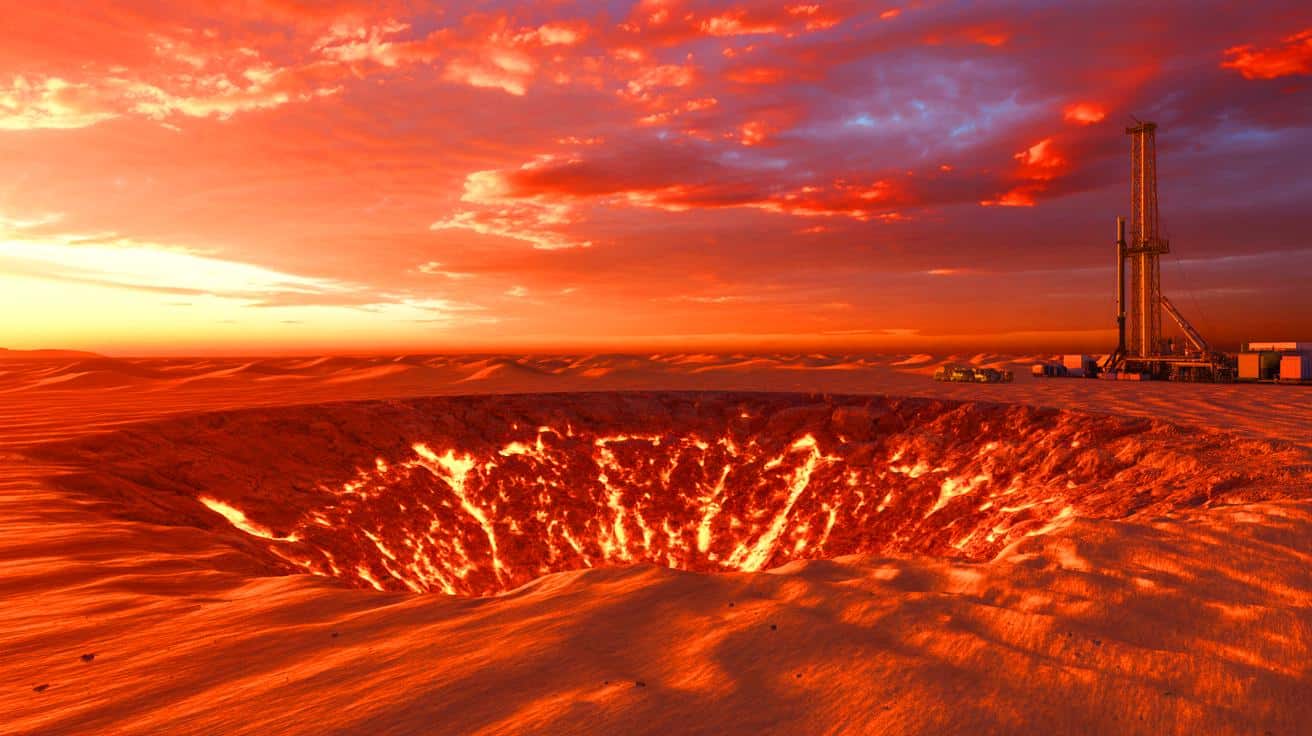
The “Gateway to Hell” began its fiery existence in 1971, the result of a Soviet drilling mishap in the Karakum Desert. During a geological expedition, Soviet scientists inadvertently tapped into an underground gas pocket. In an attempt to mitigate the release of potentially hazardous gases, they ignited the pocket, expecting the flames to extinguish within days. However, the fire persisted, becoming a permanent fixture in the desert landscape.
For decades, the blaze emitted a constant glow, visible from miles away, drawing curious tourists and researchers alike. Despite its fascinating allure, the fire posed significant environmental concerns due to the continuous release of methane, a potent greenhouse gas. The remote location and complex geopolitical landscape of Turkmenistan contributed to the fire’s longevity, leaving it largely untouched for years.
In recent times, Turkmenistan has intensified efforts to address the environmental impact of the blaze. The state-owned energy company, Turkmengaz, has undertaken various drilling operations aimed at capturing the escaping methane and reducing the fire’s intensity. These actions underscore Turkmenistan’s growing commitment to mitigating its environmental footprint amid international pressure to combat climate change.
The Significant Reduction of the Blaze
Turkmenistan recently announced a substantial reduction in the size of the “Gateway to Hell” fire, a significant milestone in the country’s environmental strategy. According to Irina Luryeva, a director at Turkmengaz, the blaze has been reduced by approximately threefold. Despite the lack of detailed timelines, this achievement marks a notable shift in Turkmenistan’s approach to managing its natural resources.
“Whereas before a huge glow from the blaze was visible from several kilometers away, hence the name ‘Gateway to Hell’, today only a faint source of combustion remains,” Luryeva stated. The reduction results from extensive drilling operations around the site, capturing methane and diminishing the fire’s intensity. This effort not only curtails environmental damage but also signifies a broader commitment to sustainable practices.
The move aligns with Turkmenistan’s broader objectives to address environmental and energy issues. As one of the top natural gas producers globally, Turkmenistan’s economy heavily relies on its gas reserves. The global shift toward sustainable energy and reduced carbon emissions places increased scrutiny on the country’s resource management practices.
Turkmenistan’s Energy and Environmental Future
Renowned for its vast natural gas reserves, Turkmenistan ranks fourth globally in terms of gas resources. The energy sector is pivotal to the nation’s economy, with natural gas constituting a major portion of its exports. However, the global focus on climate change and sustainability presents challenges for Turkmenistan, urging it to balance economic interests with environmental responsibilities.
The reduction of the Gateway to Hell fire is one of several steps Turkmenistan is taking to address environmental concerns. The country is also exploring renewable energy options to diversify its energy portfolio. Transitioning to a sustainable energy model presents challenges, given the existing infrastructure centered around gas reserves, but reflects a growing acknowledgment of the need for environmental stewardship.
By addressing the Gateway to Hell, Turkmenistan aims to improve its global reputation and contribute positively to the fight against climate change. This endeavor represents a crucial step in redefining its energy future and aligning with international sustainability goals.
A Symbol of Environmental Change
The “Gateway to Hell” has long symbolized the intersection of human error and natural power. Its inception as a scientific mishap has evolved into a global emblem of environmental challenges. The gradual reduction and potential extinguishing of the fire reflect changing perceptions of resource management and environmental responsibility.
For Turkmenistan, this development could signify more than an environmental accomplishment. It may herald a shift towards a sustainable energy future. As the global community grapples with climate change, Turkmenistan’s efforts to reduce emissions from the Gateway to Hell could serve as a testament to the power of dedication and innovation in addressing unique environmental issues.
As Turkmenistan continues its journey toward a more sustainable energy landscape, the world watches closely. How will the nation balance its economic reliance on natural gas with the imperative for environmental stewardship in the years to come?


Wow, I never thought they’d actually put it out! 😮
Wow, I can’t believe they finally did it! 🎉 How do they plan to keep the fire from reigniting?
Are there any plans to turn the site into a tourist attraction now that the fire is out?
Why did it take so long to address this issue? 🤔
Thank you for the detailed history; I had no idea this fire existed!
Thank you Turkmenistan for taking a step towards a greener planet! 🌍
So impressive! What’s next on Turkmenistan’s environmental agenda? 🌍
This is a huge milestone. Are there any other similar fires around the world?
Why did it take so long for them to address the fire?
🤔 Could this be a sign of more sustainable energy policies in Turkmenistan’s future?