



| IN A NUTSHELL |
|
In recent years, as the global quest for sustainable energy continues, the introduction of innovative solutions has been crucial. Traditional silicon photovoltaic (PV) solar panels have dominated the residential renewable energy market. However, a groundbreaking development is changing the landscape: the LIAM F1 UWT wind turbine. This silent and efficient technology promises not only to complement existing solar solutions but potentially to disrupt their dominance. As we explore this new frontier, we uncover the potential for a more diverse and resilient approach to home energy systems.
The Silent Wind Turbine That Could Change Your Energy Bills Forever
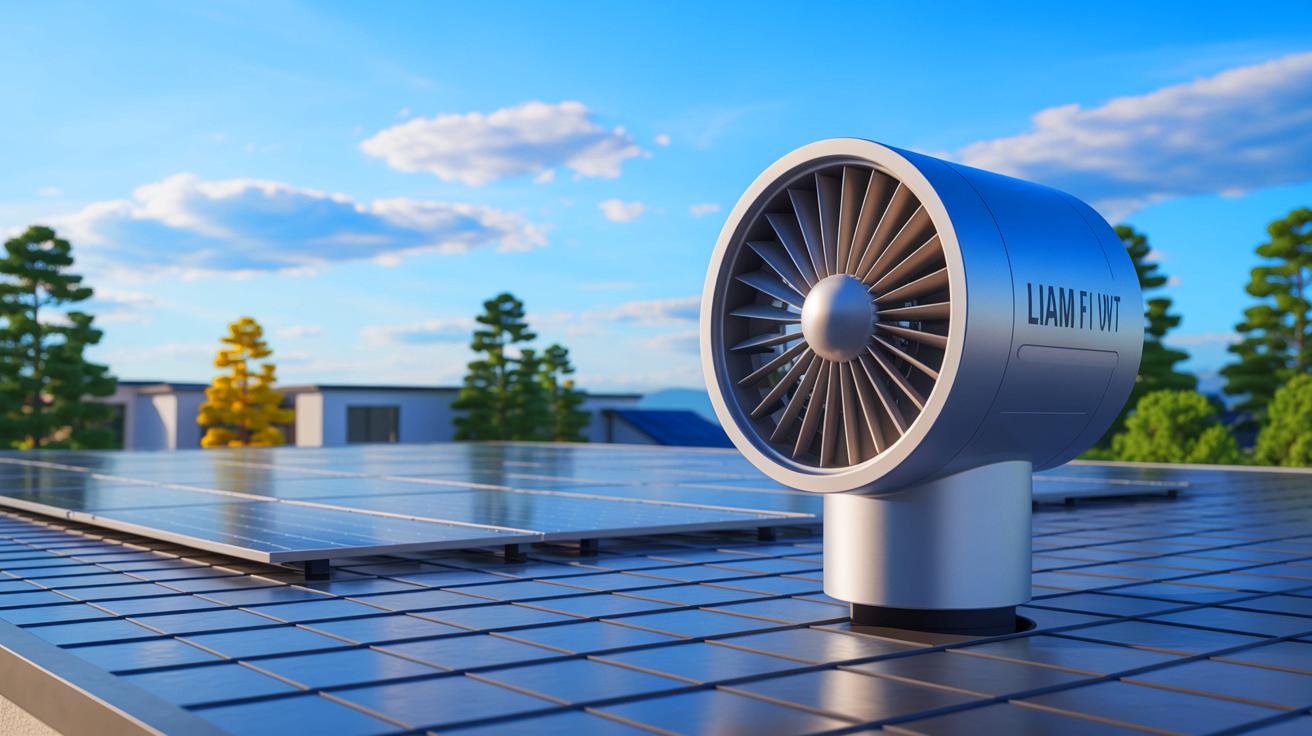
The LIAM F1 UWT, developed by the innovative Dutch startup Archimedes, represents a new era in wind energy technology. Unlike conventional wind turbines, known for their noise and bulkiness, the LIAM F1 UWT is compact and quiet. With a diameter of just 5 feet and weighing under 220 pounds, it is designed for residential spaces where size and noise are concerns. Its spiral rotor layout allows it to capture wind from any direction, ensuring optimal power generation even in fluctuating wind conditions.
This revolutionary design addresses a significant barrier to the adoption of wind technology in urban areas: noise pollution. Operating at noise levels below 45 decibels, it is quieter than traditional models, making it suitable for city rooftops and gardens. As urbanization increases, the LIAM F1 UWT offers a promising solution for integrating renewable energy into densely populated areas, potentially becoming a standard feature in sustainable city planning.
How the LIAM F1 UWT Outperforms Traditional Solar Panels
While solar panels have been the go-to choice for homeowners seeking to reduce their carbon footprint, they have limitations. Solar panels depend on sunlight, which can be scarce during gloomy weather or shorter winter days. The LIAM F1 UWT, however, thrives on wind, which is often available even at night. This capacity to harness wind energy makes it a robust alternative or complement to solar power systems.
The LIAM F1 UWT can generate between 300 and 2,500 kilowatt-hours (kWh) annually, providing additional free electricity beyond what solar panels offer. By combining both technologies, homeowners can achieve near energy-independence, especially in regions with limited sunlight. This adaptability ensures a consistent energy supply, making the LIAM F1 UWT an invaluable asset in renewable energy strategies.
Why Urban Areas Need This Innovative Wind Power Solution
In the face of escalating climate change challenges, urban areas are under pressure to reduce emissions and adopt sustainable practices. The LIAM F1 UWT offers a practical solution for cities aiming to cut carbon footprints while maintaining aesthetic appeal. Imagine cityscapes adorned with sleek, silent wind turbines working alongside solar panels, generating clean energy without disrupting the urban ambiance.
Integrating such cutting-edge technology into city infrastructure could transform urban planning, making renewable energy accessible and efficient. The Netherlands, a leader in wind energy innovation, exemplifies this vision with the LIAM F1 UWT, reflecting their commitment to pioneering energy solutions. As cities worldwide embrace this model, they could significantly reduce emissions and lead the charge in the global transition to green energy.
What the Future Holds for Wind Energy Innovations and Advancements
The LIAM F1 UWT marks just the beginning of a new wave of renewable energy technologies. Archimedes envisions extending its innovations to marine environments, developing wind turbines for sailing ships and hybrid wind-solar systems. This diversification is crucial for ensuring a reliable energy supply throughout the year, regardless of seasonal changes.
As the use of solar panels grows, experts warn that over-reliance can pose challenges, particularly during less sunny periods. The LIAM F1 UWT provides a solution to this issue, allowing homeowners to maintain energy independence and resilience. This silent wind turbine exemplifies the future of renewable energy: a future built on diversification and flexibility.
In conclusion, the LIAM F1 UWT offers a fresh perspective on renewable energy in the United States. Its quiet operation, urban-friendly design, and capacity to harness wind energy set it apart as a transformative force in home energy systems. As global attention shifts towards sustainable solutions, could the widespread adoption of technologies like the LIAM F1 UWT lead us to a more energy-independent future?


Wow, a turbine that’s silent? How is that even possible? 🤔
This sounds like a game-changer for urban areas. Are there any installation incentives?
1500 kWh from a compact turbine? Sounds fishy to me. Anyone else skeptical? 🤨
It’s utterly nonsense. This idea is around for over 10 years now; and apart from the efficiency of the powertrain, I can’t find the total amount of power being generated over a year for example, although they did tests on a free field location at 10m high in Korea. The issue is that usually the windspeed at most urban environments will never be that high (typically between 2-5m/s). Using physics we can just calculate that with such a small size and with such low windspeeds there won’t be enough to generate 1500 kWh per annum. My own quick calculations indicate something near 75 kWh/a…
At last, a turbine that won’t keep the neighbors up at night! 🎉
I love the idea of combining solar and wind for energy independence. When can I buy one?
What happens during periods of no wind? Is there a backup system?
Looks like half the posts here are bots.
The article goes on to state “The turbine generates between 300 and 2,500 kWh annually” which solar setups can do monthly.
Does it scale?
Am I going to put 12 of these on my roof?
It will come down to cost.
I’d love to see a comparison chart with solar panels. Anyone have one?
Are there any environmental concerns with this new turbine tech?
Seems like solar investors are worried. Is this the future of energy? 🌞
Can these turbines handle extreme weather conditions?
Finally, a wind turbine that doesn’t look like an eyesore! 😅
How long is the warranty on these turbines?
Does anyone know if they require much maintenance?
How does this turbine compare cost-wise to traditional solar panels?
Is this article sponsored by Archimedes? Just curious. 🤔
I’d like to see more data on its performance in urban environments.
Are these turbines efficient in areas with low wind speeds?
Why not combine this with solar tech into a single device? 🌬️🔆
How does it affect property value? Anyone have insights?
Love this! Hope it doesn’t cost an arm and a leg. 💸
Will this work in remote areas or just cities?
Silent turbines? Sign me up! But seriously, how silent are we talking? 🤷
Thank you for the informative article. This tech could really make a difference!
Can these be DIY installed, or do they require professional setup?
Is it just me, or does this sound too good to be true? 🤨
Has anyone here actually installed one yet? Would love to hear personal experiences.
How does this impact birds and local wildlife?
Why hasn’t this been implemented on a larger scale yet? 🌍
Does it connect seamlessly with existing solar setups?
Your panels are worthless now? A bit dramatic, don’t you think? 😂
Are there any rebates or tax incentives for installing this turbine?
The future is here, folks! Can’t wait to see more innovations like this. 🙌
Seems like a perfect fit for urban areas. How can cities encourage adoption?
Is this turbine available outside of the Netherlands?
Silent and compact? Perfect for my rooftop garden. 🌿
Show me the data.
There is a lot of repetition in this article & not much information. That isn’t a large amount generated…It would probably good for supplementing solar panels but its a long stretch saying it would replace them. I generate over 2000kwh in 3 months with my solar, the 2500kw per year is not so much.