


| IN A NUTSHELL |
|
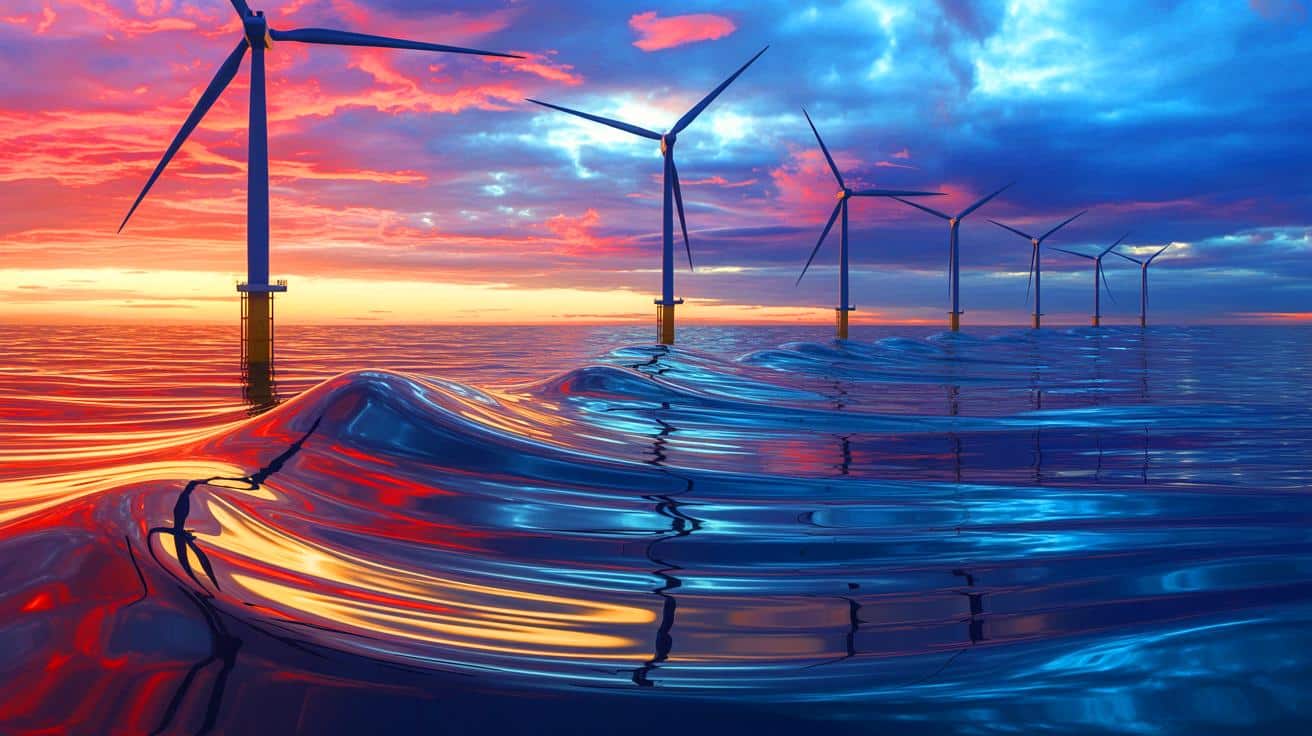
The phenomenon of the “wake effect” presents a significant challenge for offshore wind farms, as it impacts their energy efficiency and poses regulatory questions. This effect, caused by turbulence from wind turbines, affects downstream turbines by reducing their efficiency. The implications of this are particularly profound in areas densely populated with offshore wind farms, leading to a concerted effort by researchers and industry professionals to understand and mitigate its impact.
Understanding the Wake Effect: A Scientific Endeavor
The “wake effect” refers to the turbulence created by wind turbines, which disrupts wind flow and reduces the efficiency of downstream turbines. Research teams at the University of Bergen, the Fraunhofer Institute, and Takanori Uchida University are actively studying this phenomenon. Their goal is to develop more precise predictive models and identify solutions to minimize its impact. According to a study in Marine Policy, in unfavorable conditions, the wake effect can cause efficiency losses of up to 20% over a distance of 31 miles from offshore wind farms.
Industrial players are also conducting in-depth studies to inform wind farm placement and management practices. German energy company RWE, for instance, suggests that the wake effect could have repercussions up to a radius of 124 miles. This highlights the need for ongoing research and innovation to address these challenges and optimize wind farm performance.
Three-tonne fuel savings per day: This revolutionary winged cargo ship sets a new maritime standard
Emerging Solutions to Mitigate the Wake Effect
Various solutions are being explored to mitigate the wake effect. These include adjustments in wind turbine layout, material modifications, and the exploration of new turbine designs. Siemens' "Wake Adapt" project involves slightly adjusting turbine orientations when winds align with the turbines. This subtle change helps divert the wake effect without compromising turbine structure. Additionally, discussions focus on the type of wind turbines used. While three-blade turbines on masts are common, there is growing interest in inclined rotors that may reduce the wake effect.
The POWER project aims to install 10 "Touchwind" turbines to assess whether this design can enhance electricity production per square mile while limiting the wake effect. These efforts are part of a broader initiative to improve the efficiency and sustainability of offshore wind farms through innovative engineering and design solutions.
The International Cooperation Imperative
The complexity of the wake effect and its potential cross-border implications necessitate increased international collaboration. Clear regulatory frameworks and agreements among states bordering offshore wind farms are crucial for addressing this challenge in a coordinated manner. Eirik Finserås, a candidate at the Faculty of Law at the University of Bergen, underscores the importance of such collaboration.
"The Convention on the Law of the Sea imposes no explicit limitation, but one might interpret a potential limitation as requiring notification and consultation with other states if your offshore wind farm may have cross-border wake effects," he explains.
https://www.sustainability-times.com/policy/historic-energy-breakthrough-china-unleashes-qihang-the-20-megawatt-floating-wind-giant-that-leaves-the-u-s-reeling-in-amazement/
Understanding and mastering the wake effect is vital for maximizing offshore wind farm efficiency and ensuring their long-term sustainability. Through continuous research and collaboration among industry stakeholders, significant progress is being made to overcome this challenge and fully harness the potential of offshore wind energy.
Progress in Wake Effect Research
Several studies and projects are underway to better understand and address the wake effect. Scientists and engineers are developing advanced computational models to simulate wind flow and predict the wake effect more accurately. These models are essential for planning and optimizing the layout of wind farms.
Furthermore, international workshops and conferences are fostering knowledge exchange and collaboration among researchers and industry professionals. By sharing insights and findings, the global community is working towards innovative solutions that can enhance the performance of offshore wind farms.
As the demand for renewable energy continues to grow, the importance of addressing the wake effect becomes even more critical. The lessons learned from these efforts will not only benefit offshore wind farms but also contribute to advancements in wind energy technology as a whole.
The wake effect remains a significant challenge for the offshore wind industry, but ongoing research and innovation offer hope for effective solutions. As scientists, engineers, and policymakers work together, the future of offshore wind energy looks promising. Could the collaborative efforts in this field lead to groundbreaking advancements that redefine the limits of wind energy efficiency?

Wow, 124 miles is a massive dead zone! How can they even measure that? 🤔
Interesting article! So, do these “dead zones” affect marine life significantly? 🌊
Are there any alternatives to wind turbines that don’t have this wake effect problem?
Does the wake effect also impact onshore wind farms, or is it just an offshore issue?
This is a really informative article, thanks for sharing! 🌟
I’m curious if the efficiency losses are consistent or vary with weather conditions?
Is the “wake effect” the same for onshore wind farms?
Can the wake effect be reduced by spacing the turbines further apart?
Great insights! I had no idea the wake effect could stretch for over 100 miles. 😲
Interesting read, but how reliable are these predictive models? 🤷♂️
Sounds like a lot of work for just 20% efficiency loss. Is it really worth it?
Why don’t they just turn off some turbines to avoid this issue? Sounds simple enough!
How does the wake effect impact marine life around these offshore farms?
Is there any way to recycle or repurpose these “dead zones” for other uses?
I had no idea wind turbines could affect each other so much, mind blown! 🤯
This article makes me wonder if offshore wind farms are as green as they claim.
Great article! Are there any specific countries leading the way in tackling the wake effect?
This seems like a serious issue. Are there any regulatory bodies addressing this?
Is it really worth building these massive farms if they’re so inefficient?
Fascinating topic! I wonder if there’s a way to harness the wake effect for other uses?
🌍 International collaboration sounds great, but is it actually happening? Or just talk?
Thank you for highlighting this issue. It’s not something I hear about often.
Maybe they should design turbines that can float and move around to avoid wakes. 🚀
I think more transparency about these challenges would help the public understand wind energy better.
Are there any successful case studies where the wake effect was effectively minimized?
Is it just me, or does this sound like a plot for a sci-fi movie? 🤖
How does the wake effect influence the cost of energy production?
More research is definitely needed. Who’s funding these studies?
I’ve always been a fan of wind energy, but this makes me rethink its efficiency. 🤔
Why is the wake effect only being discussed now? Haven’t we had wind farms for decades?
It’s amazing how something invisible like wind can create such complex challenges! 🌬️
Does the article mention anything about the impact on local fishing industries? 🎣
How long before we see practical solutions to this wake effect problem?
Thank you for the insightful piece. It’s essential to keep the conversation going! 🙌
Is this wake effect considered when planning new wind farm locations?
Maybe they need to think outside the box, like using drones to manage airflow. 😄
How are local communities reacting to these massive offshore projects?
Are there any environmental benefits to the wake effect, or is it all bad news?
Wake effect sounds like something straight out of an engineering textbook. 📚