




| IN A NUTSHELL |
|
The construction industry is witnessing a significant shift towards sustainability, with hydrogen fuel cells emerging as a viable alternative to diesel generators. The push for cleaner energy sources is gaining momentum, as exemplified by the HS2 project in the United Kingdom. This ambitious initiative showcases the potential of hydrogen technologies to transform construction sites into emission-free zones. As companies like GeoPura lead the charge, the promise of hydrogen as a clean energy source is being explored, although significant economic and logistical challenges remain. This article delves into the transformative potential of hydrogen in construction and the hurdles that need to be addressed.
The Rise of Hydrogen Fuel Cells in Construction
The construction sector’s adoption of hydrogen fuel cells marks a pivotal move away from traditional energy sources. These fuel cells, largely driven by innovators like GeoPura, are positioned to replace diesel generators, notorious for their high carbon emissions. By offering a cleaner and more efficient power alternative, hydrogen fuel cells aim to decarbonize one of the world’s most polluting industries. However, the path to widespread adoption has its setbacks. In 2024, several hydrogen-focused companies encountered difficulties, casting doubt on the scalability and economic viability of this technology.
Despite these challenges, the HS2 project in the UK serves as a beacon of hope. This vast infrastructure project leverages hydrogen fuel cells to energize construction sites, demonstrating how these technologies can be integrated into large-scale endeavors. While the potential for hydrogen in construction is immense, its broad adoption will depend on overcoming economic and logistical obstacles. The progress observed at the HS2 project offers a promising outlook for hydrogen’s role in reshaping the construction landscape.
Innovative Energy Solutions at the HS2 Site
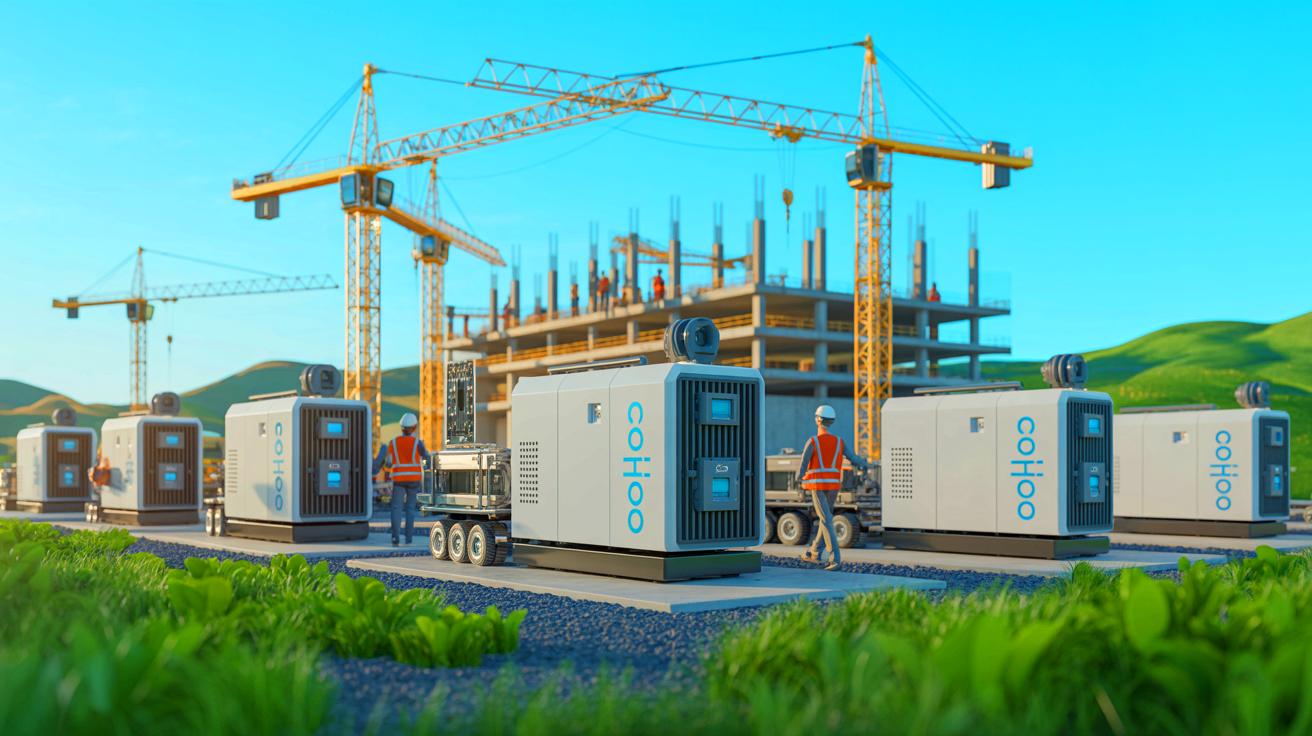
The HS2 Victoria Road construction site in London exemplifies the potential of hydrogen fuel cells. Beneath an intricate network of conveyor systems, two discreet white containers work silently, supplying the site’s energy needs. These containers house hydrogen fuel cells, which represent a revolutionary energy solution with the potential to eliminate emissions from construction activities.
Hydrogen is often heralded as the fuel of the future due to its abundance and high energy content—three times that of gasoline. The combustion of hydrogen produces only water, completely eliminating carbon emissions. Such characteristics make it an ideal candidate for powering heavy industries, including construction. The HS2 project highlights hydrogen fuel cells’ viability in real-world applications, offering a vision of a sustainable construction future.
GeoPura’s Vision and Business Model
GeoPura, in collaboration with Siemens Energy Ventures, leads the charge in hydrogen innovation. Established in 2019, the company produces renewable hydrogen in the UK and supplies it to hydrogen power units (HPUs) leased to construction sites and events. By 2025, GeoPura plans to expand its fleet to 3,600 HPUs by 2033 and invest in green hydrogen production facilities.
This ambitious strategy underscores GeoPura’s commitment to promoting a zero-emission construction industry. The company’s business model focuses on efficient hydrogen production and distribution, making it accessible for various applications. As hydrogen production costs continue to decline, the economic feasibility of these solutions becomes increasingly apparent, bringing the industry closer to a cleaner construction future.
Economic Challenges and Future Prospects
While hydrogen offers great promise, its deployment in the construction sector faces significant economic challenges. One of the main barriers is the higher cost of hydrogen compared to diesel generators. Additionally, the logistics of hydrogen production and distribution add complexity to its adoption. Nonetheless, these challenges are not insurmountable.
Initiatives led by companies like GeoPura are reducing production costs, and ongoing innovations in the field are paving the way for a less polluting construction industry. As more companies invest in hydrogen technologies, the construction sector may soon experience a green revolution. The question remains: how swiftly can these changes be implemented, and what impact will they have on the industry’s carbon footprint?
The potential of hydrogen as a clean energy source for construction is undeniable. With projects like HS2 leading the way, the industry is gradually transitioning towards more sustainable practices. However, the journey to widespread hydrogen adoption is fraught with challenges, especially economic ones. As we look ahead, the question lingers: will hydrogen fuel cells transform the construction industry, and what new innovations will emerge along the way?

Is using hydrogen fuel really going to be cost-effective in the long run? 🤔
Wow, “cranes blot out the sun” — sounds like a scene from a sci-fi movie! 🌞
Are there safety concerns with hydrogen fuel cells on construction sites?
This is great news for the environment! Hope it happens sooner rather than later. 🌍
Why don’t we hear more about hydrogen projects in the US?
GeoPura’s ambition is impressive, but is it really feasible?
High costs and logistical challenges sound like major hurdles. How are companies addressing these?
Thank you for shedding light on this important topic! 👍
Is the “green revolution” in construction just a buzzword or a real possibility?
Can hydrogen fuel cells support large-scale construction projects like skyscrapers?
Where can I find more information about the HS2 project’s hydrogen initiatives?
Finally, some good news for the planet! Let’s hope for more projects like this. 🌿
Why is Europe leading the charge and not the US? 🤨
The future of construction is looking bright, albeit a bit cloudy with all those cranes! ☁️
How will the transition to hydrogen affect construction jobs?
Can’t wait to see what GeoPura achieves by 2033! 🚀
Is there any timeline for when these hydrogen projects will be fully operational?
Hope this doesn’t turn into another overhyped tech that’s too expensive to deploy. 😅
Are there any environmental downsides to using hydrogen fuel cells?
Will other countries follow Europe’s lead in adopting hydrogen for construction?
Can hydrogen fuel cells withstand the harsh conditions on construction sites?
The article was very informative, thank you!
Hope to see more articles like this highlighting sustainable innovations. 📚
What role do governments play in facilitating these hydrogen projects?
Would love to see a documentary on this massive construction effort!
Is there a risk of hydrogen fuel cell tech being monopolized by a few companies?
How does the energy efficiency of hydrogen compare to traditional fuels?
Sounds like the beginning of a new era in construction. Can’t wait! 🏗️
Can hydrogen fuel cells be used in smaller construction projects as well?
Does anyone know if there are similar initiatives happening in Asia?
Hydrogen-powered construction — now that’s futuristic! 🤖
Seems like a complex issue. How can ordinary people help promote such initiatives?
What are the chances this tech will be available in developing countries?
I hope this isn’t just another project that gets abandoned after the initial hype. 🙄
Is Europe the only place with such large-scale hydrogen projects?
What happens to the water produced by hydrogen fuel cells on site?
Great read! Looking forward to a cleaner construction industry. 🌱