




| IN A NUTSHELL |
|
In a groundbreaking advancement for naval operations, the US Navy has successfully integrated unmanned technology into its submarine missions. This significant achievement involves the deployment and recovery of an unmanned underwater vehicle (UUV) from a nuclear-powered submarine. The USS Delaware, a Virginia-class attack submarine, served as the platform for this innovative operation. Known as the Yellow Moray, this reusable spy robot marks a pivotal moment in undersea warfare, demonstrating the Navy’s commitment to enhancing its operational capabilities while minimizing risks to personnel. This article delves into the details of this milestone mission, exploring the implications and future potential of such technology in military applications.
World’s First Reusable Spy Robot for Submarines
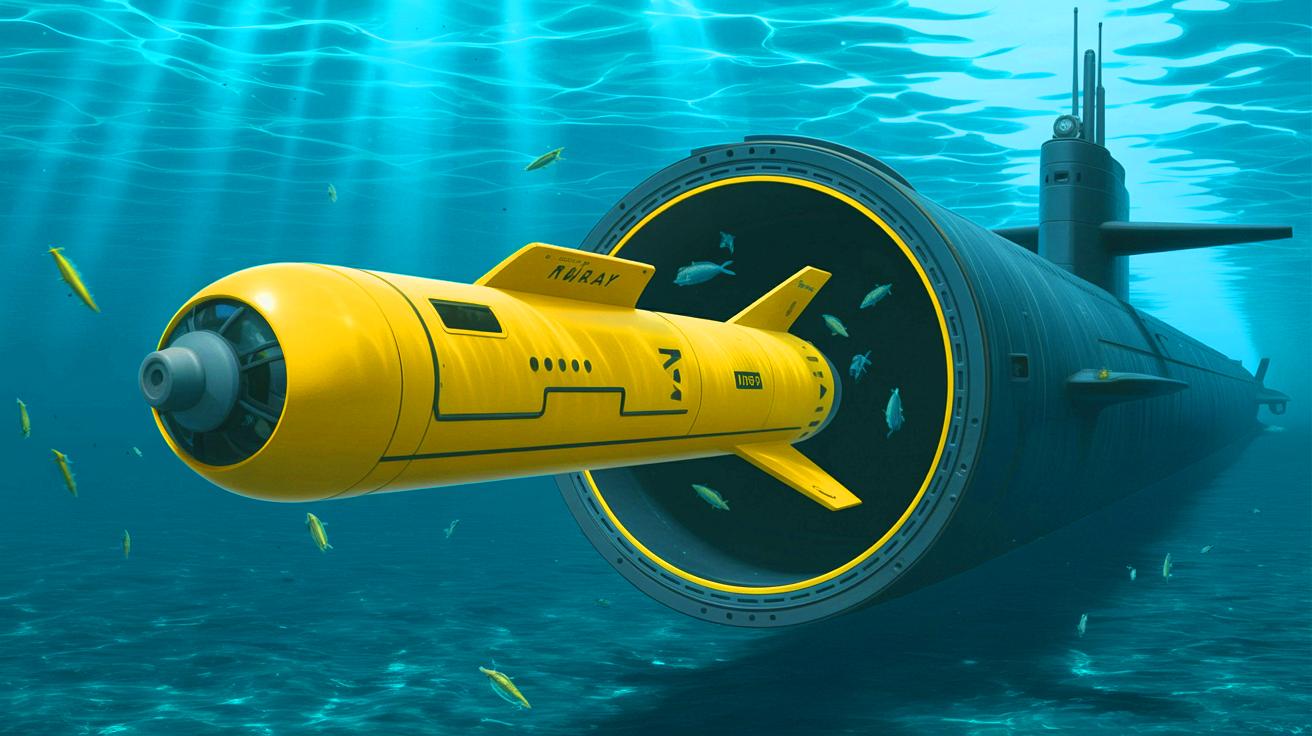
The recent mission took place in the US European Command (EUCOM) area of operations and featured the Virginia-class nuclear attack submarine USS Delaware (SSN 791). This successful test signifies a formidable leap in naval technology, as submarines can now enhance their capabilities using robotic systems without endangering divers or crew members. The Yellow Moray is based on the REMUS 600, a well-established UUV design used for various underwater missions, including seafloor mapping and intelligence gathering. This torpedo-shaped robot can autonomously carry out missions, operating independently of human control once launched.
During this deployment, the USS Delaware launched and recovered the Yellow Moray robot three times, with each mission lasting between 6 and 10 hours. All operations utilized the submarine’s torpedo tube, a traditional launch system for torpedoes. This operation demonstrated the Navy’s capacity to use the same UUV multiple times in one deployment, enabling the execution of missions in areas too shallow or hazardous for submarines. Moreover, the elimination of divers in launching and recovery processes further underscores the Navy’s ability to conduct safe and efficient operations with minimal human involvement.
Spy and Return in Secret
This mission illustrates the US Navy’s readiness to integrate manned submarines with advanced robotic systems in real-world scenarios. These robotic vehicles can access areas deemed risky or impossible for submarines, undertaking missions that are either too mundane or dangerous for human personnel. Tasks such as scanning the seabed for mines, conducting surveillance, or scouting enemy waters can now be performed more effectively. “This capability allows us to extend our reach,” stated Vice Admiral Rob Gaucher, Commander of Submarine Forces. “The Yellow Moray reduces risk to our submarines and divers by handling dull, dirty, and dangerous missions.”
The initial tests weren’t without challenges. During early trials in a Norwegian fjord, the Yellow Moray failed to return to the torpedo tube due to a damaged part. Despite this setback, the Navy swiftly adapted by repairing the robot and resuming successful operations from the USS Delaware. This adaptability highlights the Navy’s ability to maintain flexibility and mobility in future operations, emphasizing the strategic importance of robotic systems in future undersea missions.
Technological Adaptation and Future Prospects
The Navy’s ability to quickly diagnose and repair the Yellow Moray underlines the importance of technological resilience in military operations. Technicians identified the damaged component and returned the robot to the US for necessary repairs. Post-repair, the robot was flown back to Europe and successfully launched and recovered in subsequent missions from the USS Delaware. This swift adaptation ensures that missions remain on schedule, demonstrating the Navy’s readiness to overcome obstacles and maintain operational integrity.
In a notable first, Navy divers loaded the Yellow Moray into the submarine via the torpedo tube while docked in Norway, proving that future missions could remain flexible and adaptable. The Navy’s commitment to equipping more submarines with robotic systems like the Yellow Moray signifies a shift towards a more autonomous and resilient naval force. This mission reinforces the notion that the future of submarine warfare is not only underwater but also robotic, offering commanders expanded operational options while minimizing risks to sailors.
Implications for Future Naval Warfare
The integration of robotic systems into naval operations presents significant implications for the future of warfare. The ability to deploy and recover UUVs like the Yellow Moray from submarines enhances the Navy’s strategic capabilities, providing commanders with a versatile tool for diverse missions. This technology also opens new avenues for intelligence gathering and reconnaissance, allowing the Navy to operate in previously inaccessible or high-risk areas.
The Yellow Moray’s success suggests that future naval missions will increasingly rely on robotic and autonomous systems to undertake tasks that are too dangerous or impractical for humans. As the Navy continues to develop and integrate these technologies, it will inevitably reshape the landscape of undersea warfare. This evolution raises an intriguing question: How will the continued advancement of robotic technology redefine the boundaries of naval operations in the coming decades?


Wow, the Yellow Moray sounds like something out of a sci-fi movie! 🤖 How does it manage to stay underwater for so long?
How do they ensure the robot doesn’t get hacked by adversaries? Cybersecurity must be a big concern.
How do they retrieve the robot if it malfunctions or gets stuck?
Great job, US Navy! Keep innovating and staying ahead. 💪
What happens if one of these gets captured by an enemy nation? 😬
Is there a specific reason they named it Yellow Moray?
Hope they never encounter a Kraken! 🦑
It’s amazing how technology is evolving. Thanks for the informative article!
How environmentally friendly are these robots? 🌍
It’s incredible how technology is reshaping military operations. Thanks for the insights!
Can we expect these technologies to be commercialized in the near future?
What a time to be alive! Robots doing the dangerous jobs humans used to do.
How many times can the Yellow Moray be reused before it needs maintenance?
Why are they testing in Norwegian fjords specifically?
Seems like a game-changer for naval intelligence operations.
I’m a bit skeptical—how reliable are these robots in real combat situations?
Can civilians get a tour of the USS Delaware to see this tech in action? 😉
How does this compare to other countries’ naval technologies? 🤔
Are there any plans to make these robots more autonomous in the future?
Is there a backup plan if the robot fails during a critical mission?
Great read! The Navy’s adaptability is truly commendable.
How do they communicate with the Yellow Moray when it’s underwater? 🐠
How do they ensure the robot’s safe return to the submarine each time?
How big is the Yellow Moray compared to a regular torpedo?
Excited to see what future advancements come from this technology! 🚀
This is all fascinating, but what about the ethical implications of using robots in warfare?
So, does this mean fewer jobs for submariners? 🤔
This is cool and all, but how much taxpayer money was spent on this project? 💸
Just wait until the robots start taking over everything! #Terminator
Can the Yellow Moray be used for non-military purposes, like ocean research?
The future of warfare is here. The implications are both exciting and terrifying.