




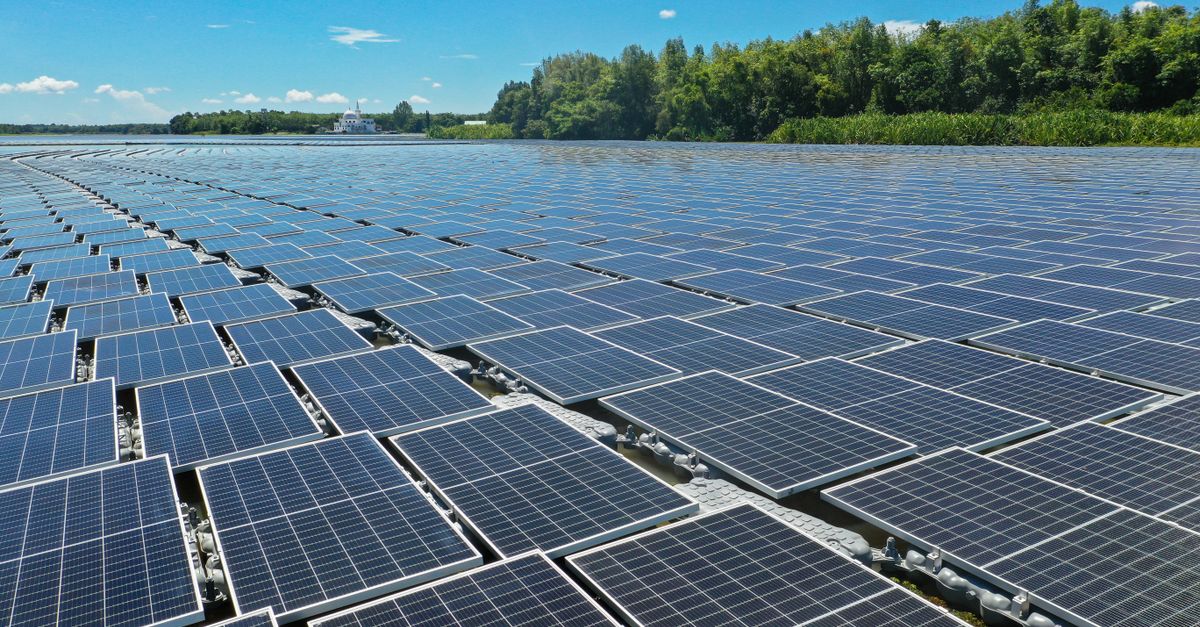
Solar power has become China’s largest energy source in terms of installed capacity. According to figures released by the National Energy Administration, the country’s photovoltaic capacity reached 1.286 billion kilowatts by the end of July 2026.
At the same time, installed coal-fired power capacity stood at 1.285 billion kilowatts. The difference remains marginal, but crossing this threshold illustrates the remarkable expansion of renewable energy across the country.
However, these figures refer to installed capacity rather than the actual amount of electricity generated. Because solar power is intermittent, having greater installed capacity does not mean that photovoltaic facilities now produce more electricity than China’s coal-fired power plants.
Solar power generation rises by 15.5%
China’s solar industry continues to expand at a rapid pace. Between January and July 2026, photovoltaic power generation increased by 15.5% compared with the same period a year earlier, according to the National Energy Administration.
This growth follows several years of massive investment in renewable energy. In 2025 alone, China added a record 315 gigawatts of solar capacity and 119 gigawatts of wind capacity. Together, the two technologies accounted for more than 80% of all newly installed electricity generation capacity in the country, according to the China Electricity Council.
Solar power is therefore playing an increasingly important role in an energy system that has historically relied heavily on coal.
Coal remains a key part of China’s energy mix
The milestone does not mean that China has ended its dependence on fossil fuels. Coal remains essential to electricity generation and continues to play a major role in meeting the country’s enormous energy demand.
There are nevertheless signs of change. In 2025, coal-fired electricity generation fell by nearly 2% despite continued growth in energy demand. It was the first decline in six years.
China, the world’s largest emitter of greenhouse gases, has pledged to reach peak carbon dioxide emissions before 2030 and achieve carbon neutrality by 2060.
Solar overtaking coal in installed capacity therefore represents an important milestone in this transition. The next major challenge will be determining how far the rapid expansion of renewable energy can translate into a lasting reduction in coal’s share of actual electricity generation.