




| IN A NUTSHELL |
|
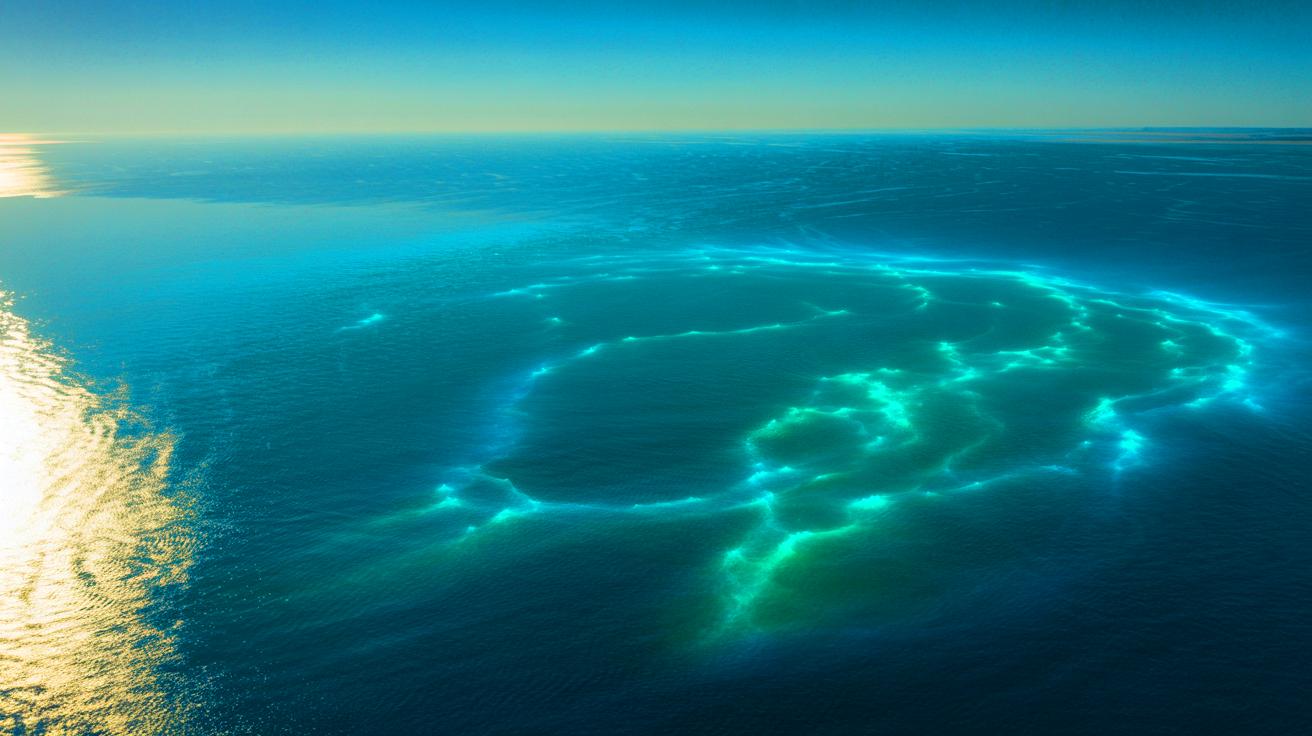
The recent discovery of a turquoise glow off Australia’s southern coast has captivated scientists and the general public alike. Detected by NASA satellites, this bioluminescent event is a massive phytoplankton bloom in the Great Australian Bight and Tasman Sea. Such occurrences not only offer breathtaking visuals visible from space but also play an integral role in marine ecosystems. These glowing organisms are a vital component of oceanic health, underscoring the complex and interconnected nature of marine life.
Phytoplankton Glow Captured From Space
The stunning bioluminescent glow seen off Australia was first captured by NASA’s PACE spacecraft. Utilizing the advanced Ocean Color Instrument (OCI), scientists were able to observe the vibrant waters between mainland Australia and Tasmania. This area is characterized by its dynamic currents and serves as a crucial maritime passage into Port Phillip Bay, home to Melbourne. The phenomenon’s visibility from space provides a unique vantage point for scientists to study these natural events.
This isn’t the first time such blooms have been documented in the region. Previous recordings by the Suomi NPP and Terra and Aqua satellites in late 2023 and early 2024 have provided valuable data. These repeated observations allow scientists to map the bloom’s patterns, revealing its seasonal nature. High-resolution satellite imagery continues to offer insights into the oceanographic dynamics of the Great Australian Bight, contributing to our understanding of marine ecosystems.
Uncovering the Source of the Glow
The vivid turquoise glow is primarily attributed to high concentrations of chlorophyll-a in the phytoplankton. This green pigment is essential for photosynthesis, enabling these organisms to flourish in the ocean’s photic zone where sunlight penetrates the surface. Here, the phytoplankton utilize nutrients such as nitrogen and phosphorus, often released from decaying marine life, to thrive.
Oceanographer Jochen Kaempf of Flinders University has extensively studied these blooms. He notes that the green filaments visible from space signify a substantial phytoplankton bloom along the shelf break, approximately 500 feet deep. The surrounding blue hues may result from sediment disturbances in shallower regions or other phytoplankton species contributing to the glow. This intricate play of marine elements underscores the complexity and beauty of ocean ecosystems.
Ecological Significance in the Bass Strait
Phytoplankton are foundational to the oceanic food web, supporting a vast array of marine life. On the Bonney Coast, these blooms serve as critical feeding grounds for numerous species. Researchers estimate that up to 80 blue whales visit the area annually, drawn by the abundance of krill and other small organisms that feed on the phytoplankton. Moreover, the blooms sustain sardines, anchovies, tuna, crabs, and a myriad of fish, establishing the region as a vibrant hub of marine biodiversity.
In addition to their ecological role, these algae significantly contribute to global oxygen production and climate regulation. NASA scientists highlight the importance of these blooms in understanding ocean circulation, nutrient cycling, and seasonal dynamics along Australia’s southern coast. The presence of bioluminescent phytoplankton is a testament to the ocean’s crucial role in sustaining life on Earth.
Looking Ahead: What Next for Ocean Exploration?
As we delve deeper into the ocean’s mysteries, discoveries like Australia’s bioluminescent phytoplankton bloom offer crucial insights into marine ecosystems. These phenomena not only intrigue and inspire but also underscore the significance of oceanographic research in understanding climate change and ecological balance. With ongoing advancements in satellite technology, our capacity to monitor and study these events will only grow, paving the way for new scientific discoveries and environmental protections. What other hidden wonders await beneath the ocean’s surface, ready to be revealed by our ever-vigilant satellites?



Wow, this is incredible! How does the glow affect marine life in the area? 🐋
Is it just me, or does this sound like something out of a sci-fi movie? 🌌
Thank you for the detailed explanation. It’s amazing how much we can learn from space! 🚀
So, can I see this glow from a cruise ship? Asking for a friend. 😏
What causes the phytoplankton to glow specifically? Is it a defense mechanism?
This is truly fascinating. How often do these blooms occur?
Is this phenomenon unique to Australia or does it happen elsewhere too?
I love these kinds of articles. Nature is so full of surprises! 🌿
Great read! How do NASA’s satellites differentiate between different phytoplankton species?
Can such blooms be harmful to marine life or humans in any way?
Does the glow have an impact on the local fishing industry?
It’s like the ocean decided to throw a party! 🎉
How long do these glowing blooms typically last?
Is there a specific season when these blooms are more likely to occur?
Thanks for sharing this. Nature never ceases to amaze me! 🌊
Does the glow attract predators to the phytoplankton?
What role do these blooms play in the global carbon cycle?
Wow, I had no idea phytoplankton could be seen from space! 😲
Are there any environmental concerns associated with these blooms?
How accurate are the satellite images in capturing the bloom’s size and intensity?
This is why I love science—always something new to discover! 🔬
Can anyone explain more about chlorophyll-a and its role in this process?
This sounds like something from another planet! 👽
I wonder what other marine secrets are yet to be discovered…
Are there any ongoing projects to study these blooms in more detail?
Phytoplankton are like the unsung heroes of the ocean, aren’t they?
So, does this mean the ocean is like a giant nightlight? 😂
I’m curious, how does this glow compare to the Northern Lights?
Is this glow visible to the naked eye from the shore?