



Close Menu
  • Last News
    • Cities
    • Climate
    • Energy
    • Impact
    • Markets
    • Opinions
    • Policy
    • Reports
    • Research
  • About Us
  • Advertise
  • Contact Us

Subscribe to Our Newsletter

News, investigations, and analysis — our top stories every morning to start your day right.

Trending
learn effective methods to measure your personal sustainability impact and make mindful choices for a greener future.
How to measure your personal sustainability impact
explore the growth of sustainable investments and green finance, highlighting their impact on the global economy and the shift towards environmentally responsible financial practices.
The rise of sustainable investments and green finance
Region Trade Bank Strengthens Governance as Sustainable Finance Places Greater Emphasis on Institutional Integrity
Facebook X (Twitter) LinkedIn YouTube TikTok
Sustainability Times
Facebook X (Twitter) LinkedIn YouTube TikTok
Subscribe
  • Featured
  • Cities

    The Hidden Carbon Cost of Construction Projects (And Why Better Planning Matters More Than You Think)

    05/13/2026
    explore the future of sustainability in urban development, focusing on innovative strategies and technologies shaping eco-friendly and resilient cities.

    The future of sustainability in urban development

    02/24/2026
    Illustration of a vertical farm in Beijing showcasing sustainable urban agriculture practices.

    “China Just Built Farm Skyscraper”: Beijing Greenhouse Grows Food In 37,673 Square Feet While Solar Panels Power Vertical Agriculture Revolution

    09/30/2025
    Illustration of Trojena Ski Resort's futuristic design in the Saudi Arabian desert.

    “We’re Building Winter Olympics in Pure Desert”: Saudi Arabia’s Trojena Ski Resort Hosts 2029 Asian Games Without Natural Snow

    09/09/2025
    Illustration of the historic Kiruna Church being relocated on self-propelled transporters to its new site in Sweden.

    “Sweden Moved a 700-Ton Church”: Historic Kiruna Building Traveled 3.1 Miles on Robot Transporters While King Watched the Journey

    09/03/2025
  • Climate

    The Hidden Carbon Cost of Construction Projects (And Why Better Planning Matters More Than You Think)

    05/13/2026
    explore the vital link between sustainability and climate change, understanding how sustainable practices can help mitigate environmental impact and promote a healthier planet.

    The connection between sustainability and climate change

    04/07/2026

    How to Turn ESG Commitments into Real Results in Oil & Gas: Mikhail Zubkov on Implementing Practical Solutions

    02/24/2026

    Sustainability in Action—How Straight Six Auto Parts Is Revolutionising Automotive Recycling

    01/05/2026
    Illustration of glaciers retreating due to rising global temperatures.

    New Forecast Reveals When Thousands of Glaciers Will Disappear, Highlighting Urgent Need for Climate Action

    12/20/2025
  • Energy

    How bio-LNG is transforming the maritime sector

    06/29/2026
    explore how technology is accelerating sustainability innovations, driving eco-friendly solutions and creating a greener future for our planet.

    How technology is driving sustainability innovations

    03/24/2026

    How to Turn ESG Commitments into Real Results in Oil & Gas: Mikhail Zubkov on Implementing Practical Solutions

    02/24/2026
    explore the vital role of renewable energy in promoting sustainability and reducing environmental impact for a greener future.

    The role of renewable energy in achieving sustainability

    01/27/2026

    How Ilnar Iakhin’s Practical Field Innovations Are Reducing the Environmental Footprint of Gas Production

    12/19/2025
  • Impact
    learn effective methods to measure your personal sustainability impact and make mindful choices for a greener future.

    How to measure your personal sustainability impact

    07/14/2026

    Region Trade Bank Strengthens Governance as Sustainable Finance Places Greater Emphasis on Institutional Integrity

    06/30/2026
    explore sustainable packaging options designed to reduce environmental impact and promote eco-friendly practices for a greener future.

    Sustainable packaging options to reduce environmental impact

    06/30/2026
    explore how circular economy models promote sustainability by reducing waste, conserving resources, and fostering eco-friendly innovation.

    How circular economy models support sustainability

    06/23/2026
    discover practical tips and actions individuals can take at home to support sustainability and contribute to a greener planet.

    What individuals can do to support sustainability at home

    06/09/2026
  • Markets
    explore the growth of sustainable investments and green finance, highlighting their impact on the global economy and the shift towards environmentally responsible financial practices.

    The rise of sustainable investments and green finance

    07/07/2026
    Switzerland’s regulated online gambling ecosystem is built on strict licensing rules, ensuring that only ESBK-approved casinos tied to land-based establishments can legally operate.

    Are Online Casinos Legal in Switzerland? Understanding the Current Regulatory Framework

    11/21/2025
    Illustration of the abrupt halt of a major lithium mine in China impacting global markets.

    “One Mine Shut Down and Prices Exploded”: CATL Halts Major Chinese Lithium Operation Sending Global Markets Into Chaos

    09/11/2025
    Illustration of the massive iron ore deposit discovered in the Pilbara region of Western Australia.

    Geologists Iron Find Worth $6 Trillion Sparks Geopolitical Firestorm As US-China Trade Rivalry Reaches Unprecedented Flashpoint

    08/24/2025
    Illustration of a colossal 55 billion-ton iron ore deposit discovery in Western Australia. Image generated by AI.

    Worldwide Panic as Monumental Geological Find Disrupts Global Trade and Triggers Market Turmoil on Every Continent

    06/04/2025
  • Opinions
    discover the essentials of sustainability and corporate social responsibility, exploring their impact on businesses and society for a better future.

    Sustainability and corporate social responsibility explained

    04/21/2026

    The Hidden Risks of Nepotism and Conflicts of Interest in Corporate Governance

    03/19/2026

    Sustainability, Family Offices, and Private Equity: A Powerful Alignment for Long-Term Impact

    08/05/2025

    Preserving Heritage While Innovating: How AI is Reshaping Design for a Sustainable Future

    07/23/2025

    Factories Without Real-Time Carbon Data Are Flying Blind: Why MES Must Become the Carbon Control Tower

    07/23/2025
  • Policy
    explore the crucial role of governments in advancing sustainability policies to protect the environment, promote social equity, and ensure economic growth for future generations.

    Role of governments in promoting sustainability policies

    06/16/2026
    explore effective strategies to promote sustainability through education, empowering communities to adopt eco-friendly practices and foster environmental awareness.

    Ways to promote sustainability through education

    03/10/2026
    Illustration of the NUMO Ground Robot Deployed by Ukraine for Military Operations.

    “It’s Doing the Dangerous Work for Us”: This Ukrainian Combat Robot Redefines the Battlefield (and It’s Already Saving Soldiers’ Lives)

    10/15/2025
    Illustration of NATO aircraft participating in the Steadfast Noon nuclear deterrence exercise.

    “You Can Feel the Tension in the Air”: This NATO Nuclear Exercise Sparks Unease Across Europe (and Leaders Call It ‘Routine’)

    10/15/2025
    Illustration of China's newly constructed underground military command center near Beijing.

    “Analysts Warn of Escalation”: Satellite Images Expose China Building World’s Largest Underground Military Command Hub To Counter US Power And Regional Rivals

    10/03/2025
  • Reports
    explore the latest trends and innovative solutions driving sustainability in the food industry, from eco-friendly practices to cutting-edge technologies reshaping the future of food production.

    Sustainability in the food industry: trends and solutions

    06/02/2026

    New Study Finds Drip Irrigation Can Cut Coffee’s Carbon Footprint by Nearly 60%

    05/13/2026
    explore the top sustainable development goals to prioritize in 2026 and learn how to make a meaningful impact towards a greener, more equitable future.

    Top sustainable development goals to focus on in 2026

    04/28/2026

    MFC Asset Management Steps Up Its ESG Agenda

    09/24/2025
    Illustration of naval aviators in training during the Top Gun program.

    “We Push Them Until They Break”: Top Gun Training Forces Pilots Through 7.5 Gs While National Geographic Films

    09/21/2025
  • Research
    Illustration of ancient marine super predators dominating the complex food chains of the Cretaceous period.

    Ancient Super Predators Ruled Oceans: New Discoveries Challenge Our Understanding of Marine Life’s Evolutionary Past

    12/20/2025

    How Ilnar Iakhin’s Practical Field Innovations Are Reducing the Environmental Footprint of Gas Production

    12/19/2025
    Illustration of the body's distinct molecular systems for detecting cold on the skin and internally.

    Your Body’s Cold Sensations: Revealing the Dual Ways Temperature Affects Us and What It Means for Comfort

    12/19/2025
    Illustration of the digital reconstruction of a 1.5-million-year-old Homo erectus face from the DAN5 fossil.

    Scientists Reveal 1.5-Million-Year-Old Human Face, Unveiling New Clues to Our Ancient Ancestry

    12/18/2025
    Illustration of ancient pottery featuring plant motifs reflecting early mathematical thinking.

    Ancient Art Reveals How Early Humans Used Math Concepts 8,000 Years Ago Without Numbers

    12/18/2025
Sustainability Times
Home - Energy - Whither the way for India in its energy transition?

Whither the way for India in its energy transition?

Eirwen WilliamsEirwen Williams10/14/20180
Share Twitter Facebook LinkedIn Telegram WhatsApp Email Copy Link
Follow Us
Google News
(photo: Pixabay)
Share
Twitter Facebook LinkedIn WhatsApp Email Copy Link

India is one of the largest and most populous nations on the planet with one of the world’s fastest-growing economies. That booming economy is expected to grow at around 8% for the next decade and beyond, helping lift millions and millions of people out of poverty. A fifth of people in the world live in India, two-thirds of whom do so in the countryside. Despite marked economic progress in recent years, a quarter of a billion Indians in the vast rural hinterland continue to lack access to electricity. Yet as the country’s economy and middle-class will keep on growing, so will India’s electricity needs.

Since the turn of the new millennium, energy use in India has nearly doubled, making the country one of the world’s leading electricity producers, even as per capita consumption has remained around a third of the global average owing to persisting social and income inequalities. India generates around 1,160.1 billion units of electricity annually, as per figures from 2017 (an increase of 4.72% over 2016), trailing only behind China (6,015 terrawatt hours) and the United States (4,327 TWh).

Air pollution can reach chronically hazardous levels in cities like Mumbai. (photo: Flickr)

The country currently boasts a power-generating capacity of 334.4 gigawatt, making it the fifth largest in the world. Over the past five years alone, India added another 99.21 GW of capacity, predominantly from thermal sources (91.73 GW) with the rest coming from hydropower and nuclear power (5.48 GW and 2 GW, respectively). “Multiple drivers (like industrial expansion and rising per capita income) are leading to growth in power demand; this is set to continue in the coming years,” notes the India Brand Equity Foundation (IBEF), an arm of the Indian Ministry of Commerce.

However, production levels continues to lag behind rising demands, which have outstripped domestic supply by about 7.5%. Nor has it helped matters that three-quarters of domestic energy is generated by burning fossil fuels, which has contributed to the appalling levels of air pollution in many of India’s towns and cities, blighting the lives of their residents and endangering their health.

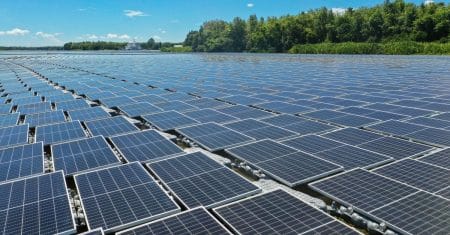
To wean itself off fossil fuels, at least in part, India’s government has pledged to have 100 GW of new solar capacity installed by 2022 as part of its Jawaharlal Nehru National Solar Mission target. Yet, according to the ratings agency Crisil, the country is likely to come up short with a solar capacity of around 80 GW in a best-case scenario. The country’s current capacity of solar power is just sort of 22 GW, which means that it would need to nearly quadruple that capacity within the next four years to reach even that lower target.

That could leave the door open for more nuclear power. Nuclear energy, according to numerous industry experts, is a safe, clean and reliable form of abundant electricity, and it is already the fifth largest source of electricity in India after coal, gas, hydroelectricity and wind power. At its seven nuclear power plants around the country, India has 22 reactors in operation with a total installed capacity of 6,780 MW.

A drawback to nuclear power, however, is that it does not come cheap. The construction of new reactors is a costly long-term undertaking and so policymakers are often reluctant to commit themselves to the construction and maintenance of new reactors or nuclear plants. Thus, even as prosperous Western nations like Finland are forging ahead with their nuclear ambitions, developing nations like India are more hesitant to do so.

Prof. M. V. Ramana (photo: courtesy of M. V. Ramana)

“Nuclear energy is quite mainstream. That is not the problem. The problem is that it is very expensive. Not just the cost of construction but also the cost of operating plants,” says M. V. Ramana, the Simons Chair in Disarmament, Global and Human Security at the Liu Institute for Global Issues at the University of British Columbia in Canada. Ramana is the author of The Power of Promise: Examining Nuclear Energy in India (2012) and in his current work focuses on the future of nuclear energy in the context of climate change and nuclear disarmament.

“In the United States, many old nuclear plants, which have paid off their capital costs, are shutting down because their operating costs are too expensive in comparison with renewables (which have nearly zero marginal costs) and gas (which depends on the price of gas),” Prof. Ramana tells Sustainability Times in an interview. “That is not likely to change. We know that there is no case for nuclear energy in the short to medium term,” he stresses.

Faced by high costs, many experts have been advocating for the new generation of smaller modular light-water reactors that can generate around 60 MW by using scalable versions of pressurized water reactor technology. Ramana is not one of those experts, however. “What I have argued is that the idea that a new generation of nuclear reactors will come in and solve the cost challenge, while also being safe and so on, is a false hope. I don’t think there is any point in holding on to that idea,” Ramana explains. “There may be a case for nuclear energy in the really long term — say, when we get down to 90 percent lower CO2 emissions from the electricity sector as compared to the present — but there may also be other alternatives by that time.”

That said, India’s homegrown nuclear power industry is hardly moribund. India, a vast country with excellent resources and great human capital, has largely been self-sufficient in its nuclear energy generation, from mining its modest uranium resources to manufacturing it into fuel and from designing and constructing reactors to reprocessing and managing nuclear waste. The country is also working on technologies to exploit its abundant resources of thorium as a nuclear fuel so as to reduce its dependence on the need to import uranium in large quantities.

The country’s government has said it would like to have a total of 60 GWe nuclear energy by 2032, fueled by more imported uranium, of which it has already imported some 4,500 metric tons since 2008. These targets have remained subject to debate and revision. However, according to India’s Atomic Energy Commission anywhere between 500 GWe and 700 GWe of nuclear power could be online by 2050 or 2060 in India, thereby providing half of all domestic electricity.

However, considerations of costs will remain important factors. Developing countries like India with limited financial resources, says Prof. Ramana, should “tailor their energy strategies based on cost. Given the rapid decline in the costs of solar PV and wind, investing in them is an obvious strategy, but alongside they would also need to invest in strengthening their grids so that they can deal with the intermittency of these sources.”

Western nations could and should also help finance the low-carbon transitions of nations like India, the expert argues. “[D]eveloping countries have historically much lower levels of carbon emissions and correspondingly lower levels of responsibility for climate change,” Ramana says. “So, if they have to adopt costlier sources of energy generation [like nuclear], it is only fair that they would have to be compensated,” he adds.

“Currently, I don’t see much financial flow from the developed to the developing world,” Ramana explains. “That has to change and so those interested in having developing countries transition away from coal would have to [urge] developed countries to increase their contributions to climate mitigation funds.”

Subscribe to Our Newsletter

News, investigations, and analysis — our top stories every morning to start your day right.

Nuclear Energy Renewables
Follow on Google News Follow on X (Twitter)
Share. Facebook Twitter LinkedIn Telegram WhatsApp Email Copy Link
Previous ArticleA sustainable future depends on businesses
Next Article Study: orangutans are facing a form of eco-genocide
Eirwen Williams
  • X (Twitter)

Eirwen Williams is a New York-based journalist at Sustainability Times, covering science, climate policy, sustainable innovation, and environmental justice. With a background in journalism acquired through a specialized program in New York, he explores how cities adapt to a warming world. With a focus on people-powered change, his stories spotlight the intersection of activism, policy, and green technology. Contact : [email protected]

Keep Reading

How bio-LNG is transforming the maritime sector

explore the latest trends and innovative solutions driving sustainability in the food industry, from eco-friendly practices to cutting-edge technologies reshaping the future of food production.

Sustainability in the food industry: trends and solutions

New Study Finds Drip Irrigation Can Cut Coffee’s Carbon Footprint by Nearly 60%

Add A Comment

Comments are closed.

Subscribe to Our Newsletter

News, investigations, and analysis — our top stories every morning to start your day right.

Trending
learn effective methods to measure your personal sustainability impact and make mindful choices for a greener future.
How to measure your personal sustainability impact
explore the growth of sustainable investments and green finance, highlighting their impact on the global economy and the shift towards environmentally responsible financial practices.
The rise of sustainable investments and green finance
Region Trade Bank Strengthens Governance as Sustainable Finance Places Greater Emphasis on Institutional Integrity
News by category
  • Featured
  • Cities
  • Climate
  • Energy
  • Impact
  • Markets
  • Opinions
  • Policy
  • Reports
  • Research
Information
  • About Us
  • Meet the Team
  • Advertise
  • Contact Us
  • Legal Mentions
  • Privacy Policy

Subscribe to Our Newsletter

News, investigations, and analysis — our top stories every morning to start your day right.

Facebook X (Twitter) LinkedIn YouTube TikTok
© Sustainability-Times.com. All rights reserved.

Type above and press Enter to search. Press Esc to cancel.