




| IN A NUTSHELL |
|
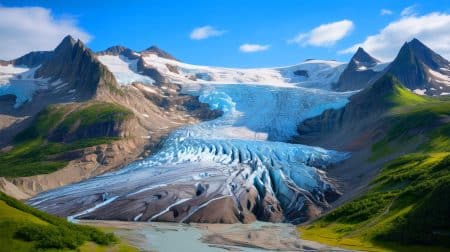
Greenland’s vast ice sheet, stretching over a million square miles, is melting at an alarming rate, shedding approximately 270 billion tons of ice each year. This meltwater is not only raising global sea levels but is also playing an unexpected role in boosting ocean life. According to a recent NASA-backed study, the freshwater from melting glaciers is creating fertile conditions for phytoplankton. These microscopic plant-like organisms are crucial for marine ecosystems and the global carbon cycle. By using advanced computer models, scientists are unraveling the complex interactions between ocean physics and marine life, providing new insights into the ecological impact of Greenland’s melting ice.
The Unexpected Link Between Ice Melt and Ocean Life
Greenland’s ice sheet, which is over a mile thick in some areas, is rapidly losing mass due to climate change. Each summer, the melting process releases more than 300,000 gallons of freshwater into the surrounding seas. This influx of freshwater is creating turbulent plumes that mix with the saltwater. NASA scientists have discovered that this process acts like an elevator, transporting essential nutrients such as iron and nitrate from the deep ocean to the sunlit surface. This nutrient-rich environment stimulates the growth of phytoplankton, tiny organisms that serve as the foundation of the ocean’s food web.
The ability to observe these processes directly in Greenland’s remote waters is limited. However, computer models have become an invaluable tool in understanding these dynamics. As Dustin Carroll, an oceanographer affiliated with NASA’s Jet Propulsion Laboratory, pointed out, the challenge was to comprehend a system buried beneath ice. The ECCO-Darwin model has been a breakthrough in this regard, offering insights that were previously inaccessible.
Advanced Computing Unveils Ecological Dynamics
The ECCO-Darwin model, developed by NASA’s Jet Propulsion Laboratory and the Massachusetts Institute of Technology, is a sophisticated tool for studying the interactions between ocean biology, chemistry, and physics. By creating a “model within a model,” researchers focused on a single fjord at the foot of the Jakobshavn Glacier, one of the most active glaciers in Greenland. Utilizing NASA’s supercomputers, scientists simulated the effects of glacial runoff on nutrient dynamics.
The findings revealed that the nutrients carried by meltwater could increase summertime phytoplankton growth by 15% to 40%. This data aligns with previous satellite observations showing a substantial increase in phytoplankton in the Arctic waters over the past two decades. In June 2024, NASA’s Aqua satellite captured an image of a vast phytoplankton bloom in the North Atlantic Ocean, illustrating the scale of this phenomenon.
Implications for Marine Ecosystems and Climate
Phytoplankton, though smaller than the head of a pin, play a vital role in the ocean’s food web and the global carbon cycle. These organisms absorb carbon dioxide and are a primary food source for krill and other small marine creatures. The increased growth of phytoplankton due to glacial meltwater could have far-reaching implications for marine life, particularly fish and whale populations.
However, scientists remain cautious about predicting the long-term effects of this phenomenon. While an increase in phytoplankton could benefit some marine species, it could also disrupt existing ecosystems. The impact on fisheries and other marine resources is still uncertain, prompting researchers to continue their investigations to better understand these complex interactions.
Future Research and Global Impact
With Greenland’s ice melt projected to accelerate, understanding its full impact on the ecosystem is crucial. The ongoing research aims to expand simulations to encompass the entire Greenland coastline and beyond. The findings from this research have been published in the journal Nature Communications: Earth & Environment, underscoring the importance of this work.
The potential global impact of these findings cannot be understated. As the planet continues to grapple with climate change, these insights provide crucial data for policymakers and scientists. The study highlights the interconnectedness of global systems and the need for comprehensive strategies to address environmental challenges.
The melting of Greenland’s ice sheet not only raises concerns about rising sea levels but also presents new challenges and opportunities for understanding marine ecosystems. As researchers continue to unravel these complex dynamics, one question remains: how will these changes shape the future of our oceans and the life they sustain?


Isn’t it ironic how something so catastrophic can simultaneously boost ocean life? 🤔
Great article, but what about the long-term effects on marine biodiversity?
Thank you for sharing this! I never knew melting glaciers could have such an effect on the ocean. 🌊
Wow, this is fascinating! Are there any other regions experiencing similar phenomena?
Is the increase in phytoplankton really a positive thing for the ocean ecosystem?
So, global warming is bad… but sometimes good? My brain hurts. 😵
Interesting read! How accurate are these computer models in predicting ecological changes?
Does this mean we should expect more fish and marine life in these areas?
Does this research take into account the impact on local fishing industries?
Thanks for the detailed explanation! It’s amazing how interconnected our planet is. 🌍
Is anyone else worried about the consequences of this “marine bloom” on existing ecosystems?
The future of marine life seems more unpredictable than ever!
Does NASA plan to extend this research to other polar regions?
How soon could we see changes in marine biodiversity due to this phenomenon?
Are there any potential negative effects of this phytoplankton bloom?
Love the article! What’s next for NASA’s ECCO-Darwin model? 🚀
Can these findings help in formulating climate change policies?
I’m curious if this could alter the migratory patterns of marine animals.
It’s amazing how advanced technology is helping us understand these processes better! 💻
Does this mean the ocean’s carbon absorption capacity is increasing?
More plankton = more fish? Sounds like good news for seafood lovers. 🍣
I’m a bit skeptical. Could this be just a short-term anomaly?
What role do ocean currents play in distributing these nutrients?
How will this affect marine life in other parts of the world?
Fascinating! But what about the impact on the Arctic’s unique ecosystems?
Can we expect similar studies for the Antarctic ice melt?
Is there a chance that this bloom could lead to harmful algae outbreaks?
So cool! This kind of research gives me hope for the future. 😊
How does this impact the global carbon cycle in the long run?
Do these findings suggest any changes in global climate models?
Is there a potential for this to affect global fish supply chains?
Can increased phytoplankton growth help mitigate climate change effects?
Thanks for this insightful piece! It’s amazing how much we’re learning about our planet every day. 🌐