



Close Menu
  • Last News
    • Cities
    • Climate
    • Energy
    • Impact
    • Markets
    • Opinions
    • Policy
    • Reports
    • Research
  • About Us
  • Advertise
  • Contact Us

Subscribe to Our Newsletter

News, investigations, and analysis — our top stories every morning to start your day right.

Trending
Region Trade Bank Strengthens Governance as Sustainable Finance Places Greater Emphasis on Institutional Integrity
explore sustainable packaging options designed to reduce environmental impact and promote eco-friendly practices for a greener future.
Sustainable packaging options to reduce environmental impact
How bio-LNG is transforming the maritime sector
Facebook X (Twitter) LinkedIn YouTube TikTok
Sustainability Times
Facebook X (Twitter) LinkedIn YouTube TikTok
Subscribe
  • Featured
  • Cities

    The Hidden Carbon Cost of Construction Projects (And Why Better Planning Matters More Than You Think)

    05/13/2026
    explore the future of sustainability in urban development, focusing on innovative strategies and technologies shaping eco-friendly and resilient cities.

    The future of sustainability in urban development

    02/24/2026
    Illustration of a vertical farm in Beijing showcasing sustainable urban agriculture practices.

    “China Just Built Farm Skyscraper”: Beijing Greenhouse Grows Food In 37,673 Square Feet While Solar Panels Power Vertical Agriculture Revolution

    09/30/2025
    Illustration of Trojena Ski Resort's futuristic design in the Saudi Arabian desert.

    “We’re Building Winter Olympics in Pure Desert”: Saudi Arabia’s Trojena Ski Resort Hosts 2029 Asian Games Without Natural Snow

    09/09/2025
    Illustration of the historic Kiruna Church being relocated on self-propelled transporters to its new site in Sweden.

    “Sweden Moved a 700-Ton Church”: Historic Kiruna Building Traveled 3.1 Miles on Robot Transporters While King Watched the Journey

    09/03/2025
  • Climate

    The Hidden Carbon Cost of Construction Projects (And Why Better Planning Matters More Than You Think)

    05/13/2026
    explore the vital link between sustainability and climate change, understanding how sustainable practices can help mitigate environmental impact and promote a healthier planet.

    The connection between sustainability and climate change

    04/07/2026

    How to Turn ESG Commitments into Real Results in Oil & Gas: Mikhail Zubkov on Implementing Practical Solutions

    02/24/2026

    Sustainability in Action—How Straight Six Auto Parts Is Revolutionising Automotive Recycling

    01/05/2026
    Illustration of glaciers retreating due to rising global temperatures.

    New Forecast Reveals When Thousands of Glaciers Will Disappear, Highlighting Urgent Need for Climate Action

    12/20/2025
  • Energy

    How bio-LNG is transforming the maritime sector

    06/29/2026
    explore how technology is accelerating sustainability innovations, driving eco-friendly solutions and creating a greener future for our planet.

    How technology is driving sustainability innovations

    03/24/2026

    How to Turn ESG Commitments into Real Results in Oil & Gas: Mikhail Zubkov on Implementing Practical Solutions

    02/24/2026
    explore the vital role of renewable energy in promoting sustainability and reducing environmental impact for a greener future.

    The role of renewable energy in achieving sustainability

    01/27/2026

    How Ilnar Iakhin’s Practical Field Innovations Are Reducing the Environmental Footprint of Gas Production

    12/19/2025
  • Impact

    Region Trade Bank Strengthens Governance as Sustainable Finance Places Greater Emphasis on Institutional Integrity

    06/30/2026
    explore sustainable packaging options designed to reduce environmental impact and promote eco-friendly practices for a greener future.

    Sustainable packaging options to reduce environmental impact

    06/30/2026
    explore how circular economy models promote sustainability by reducing waste, conserving resources, and fostering eco-friendly innovation.

    How circular economy models support sustainability

    06/23/2026
    discover practical tips and actions individuals can take at home to support sustainability and contribute to a greener planet.

    What individuals can do to support sustainability at home

    06/09/2026
    discover how green buildings play a vital role in promoting sustainability by reducing environmental impact, conserving resources, and supporting eco-friendly living.

    How green buildings contribute to sustainability efforts

    05/26/2026
  • Markets
    Switzerland’s regulated online gambling ecosystem is built on strict licensing rules, ensuring that only ESBK-approved casinos tied to land-based establishments can legally operate.

    Are Online Casinos Legal in Switzerland? Understanding the Current Regulatory Framework

    11/21/2025
    Illustration of the abrupt halt of a major lithium mine in China impacting global markets.

    “One Mine Shut Down and Prices Exploded”: CATL Halts Major Chinese Lithium Operation Sending Global Markets Into Chaos

    09/11/2025
    Illustration of the massive iron ore deposit discovered in the Pilbara region of Western Australia.

    Geologists Iron Find Worth $6 Trillion Sparks Geopolitical Firestorm As US-China Trade Rivalry Reaches Unprecedented Flashpoint

    08/24/2025
    Illustration of a colossal 55 billion-ton iron ore deposit discovery in Western Australia. Image generated by AI.

    Worldwide Panic as Monumental Geological Find Disrupts Global Trade and Triggers Market Turmoil on Every Continent

    06/04/2025

    Most sources of protein in the US contain vast quantities of microplastics

    01/11/2024
  • Opinions
    discover the essentials of sustainability and corporate social responsibility, exploring their impact on businesses and society for a better future.

    Sustainability and corporate social responsibility explained

    04/21/2026

    The Hidden Risks of Nepotism and Conflicts of Interest in Corporate Governance

    03/19/2026

    Sustainability, Family Offices, and Private Equity: A Powerful Alignment for Long-Term Impact

    08/05/2025

    Preserving Heritage While Innovating: How AI is Reshaping Design for a Sustainable Future

    07/23/2025

    Factories Without Real-Time Carbon Data Are Flying Blind: Why MES Must Become the Carbon Control Tower

    07/23/2025
  • Policy
    explore the crucial role of governments in advancing sustainability policies to protect the environment, promote social equity, and ensure economic growth for future generations.

    Role of governments in promoting sustainability policies

    06/16/2026
    explore effective strategies to promote sustainability through education, empowering communities to adopt eco-friendly practices and foster environmental awareness.

    Ways to promote sustainability through education

    03/10/2026
    Illustration of the NUMO Ground Robot Deployed by Ukraine for Military Operations.

    “It’s Doing the Dangerous Work for Us”: This Ukrainian Combat Robot Redefines the Battlefield (and It’s Already Saving Soldiers’ Lives)

    10/15/2025
    Illustration of NATO aircraft participating in the Steadfast Noon nuclear deterrence exercise.

    “You Can Feel the Tension in the Air”: This NATO Nuclear Exercise Sparks Unease Across Europe (and Leaders Call It ‘Routine’)

    10/15/2025
    Illustration of China's newly constructed underground military command center near Beijing.

    “Analysts Warn of Escalation”: Satellite Images Expose China Building World’s Largest Underground Military Command Hub To Counter US Power And Regional Rivals

    10/03/2025
  • Reports
    explore the latest trends and innovative solutions driving sustainability in the food industry, from eco-friendly practices to cutting-edge technologies reshaping the future of food production.

    Sustainability in the food industry: trends and solutions

    06/02/2026

    New Study Finds Drip Irrigation Can Cut Coffee’s Carbon Footprint by Nearly 60%

    05/13/2026
    explore the top sustainable development goals to prioritize in 2026 and learn how to make a meaningful impact towards a greener, more equitable future.

    Top sustainable development goals to focus on in 2026

    04/28/2026

    MFC Asset Management Steps Up Its ESG Agenda

    09/24/2025
    Illustration of naval aviators in training during the Top Gun program.

    “We Push Them Until They Break”: Top Gun Training Forces Pilots Through 7.5 Gs While National Geographic Films

    09/21/2025
  • Research
    Illustration of ancient marine super predators dominating the complex food chains of the Cretaceous period.

    Ancient Super Predators Ruled Oceans: New Discoveries Challenge Our Understanding of Marine Life’s Evolutionary Past

    12/20/2025

    How Ilnar Iakhin’s Practical Field Innovations Are Reducing the Environmental Footprint of Gas Production

    12/19/2025
    Illustration of the body's distinct molecular systems for detecting cold on the skin and internally.

    Your Body’s Cold Sensations: Revealing the Dual Ways Temperature Affects Us and What It Means for Comfort

    12/19/2025
    Illustration of the digital reconstruction of a 1.5-million-year-old Homo erectus face from the DAN5 fossil.

    Scientists Reveal 1.5-Million-Year-Old Human Face, Unveiling New Clues to Our Ancient Ancestry

    12/18/2025
    Illustration of ancient pottery featuring plant motifs reflecting early mathematical thinking.

    Ancient Art Reveals How Early Humans Used Math Concepts 8,000 Years Ago Without Numbers

    12/18/2025
Sustainability Times
Home - Impact - Can the biodiversity economy and the doughnut economy lead the way to a sustainable future?

Can the biodiversity economy and the doughnut economy lead the way to a sustainable future?

Eirwen WilliamsEirwen Williams03/10/20210
Share Twitter Facebook LinkedIn Telegram WhatsApp Email Copy Link
Follow Us
Google News
(photo: Pixabay)
Share
Twitter Facebook LinkedIn WhatsApp Email Copy Link

In early February the comprehensive Dasgupta Review The Economics of Biodiversity was released by the United Kingdom’s government, exploring the significant impact of biodiversity and natural capital.

The review proposes methodologies for including the intrinsic value of nature as an asset, such as the inclusion of the contributions of nature in sustainable GDP growth estimates by incorporating parameters such as resources extracted, degree of sea and landscapes exploited, ecosystem services, climate change, habitat degradation and pollution.

Given the historical depreciation of these assets in many habitats we cannot use the current status of exhausted nature as a valid baseline. To ensure global economic progress without compromising biodiversity we first need to rebalance nature’s supply and demand. We must factor in these non-fungible assets and acknowledge that we all lose when we push habitats beyond what is ecologically and environmentally safe.

This devastating trend is well documented by the ~40 decline in natural capital value per person between 1992 and 2014, and the IPBES global assessment report for biodiversity and ecosystem services from 2019 projecting a loss of one million species over the next decades.

Living on the edge or beyond this tipping point is no longer an option with only one earth available and not the estimated 1.6 earths required to maintain our current standards of living, according to the review.

Understanding that the dichotomous nature of protecting biodiversity is inextricably linked to ensuring economic prosperity is as important as identifying what true healthy, sustainable development entails. We should never underestimate the resilience and value of a healthy ecosystem also for human subsistence and a “Gross Natural Impact” factor should be part of a true GDP estimate.

This daunting task requires continuous input and insightful advice not only from scholars across academic disciplines but also from expert indigenous people and local communities worldwide. Being open to the inspirational Dasgupta review while taking the subsequent criticism into consideration is a promising way for our societies to develop, learn and continue to take responsible actions for the overall benefit of future generations.

It is interesting to link the The Economics of Biodiversity with the Doughnut Economy Model, proposed in a 2012 Oxfam paper by the British economist Kate Raworth. This model conceptualizes how the 20th century economic system is inadequate when it comes to our current climate and biodiversity crisis, and stresses that GDP is not an acceptable measure of success.

Raworth describes the doughnut as a sweet spot between two concentric circles wherein lies the good life: the inner circle consists of 11 welfare dimensions based on UN’s world goals while the outer circle is based on nine key ecological and climate dimensions. Citizens in poorer countries often fall below the social foundation and citizens in wealthier countries tend to max out the environmental ceiling.
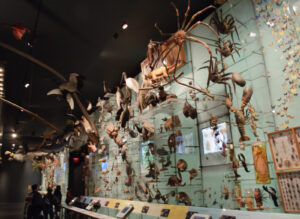
Conserving the planet’s biodiversity in nature, and not only in museums, will be a major undertaking in coming decades. (photo: Wikimedia Commons)

To simultaneously lift up the most disadvantaged and vulnerable while reeling in the ceiling busters several cities across the world have implemented doughnut economics. The theory forms the basis of the C40 network’s efforts to reduce greenhouse gas emissions and climate change and has now been adopted more widely as part of the strategy pledged by mayors of the C40 Cities to “No return to business as usual” post pandemic.

By actively and consistently valuing sustainable development, biodiversity and ecosystem services that continuously supports both our lives and livelihoods there is also an economic incentive to live within the planetary boundary.

Determining the value of well-functioning biodiverse habitats is complex and includes a myriad of defined ecosystem services. Together with natural capital resources all of these factors are incorporated in the UN Biodiversity Convention and the EU Biodiversity Strategy. Is it even possible to calculate the significance of ecosystem services like pollination providing value by fertilizing fruits, berries, nuts and nightshade crops?

If pollinators vanish, would it be the price of mechanical or manual pollination we have to account for and is it per crop or should economists tally in that pollination is required for ~35% of our plant-based crops? It is these types of immensely complicated questions that the 600-page Dasgupta review seeks to answer in addition to pointing out the importance of continuous environmental education in conjunction with increased and improved management of protected areas.

One of many concerns highlighted in the review include nature being exploited and undermined to a degree that invokes instability and possibly also provokes new infectious diseases including Covid-19. Another point is the complete disconnect from nature that many people experience due to increased urbanization across the world. As a result of the pandemic lockdowns, more people turn to exploring the outdoors to experience the therapeutic effect of nature if fortunate enough to have the means.

This newfound appreciation of nature increases our collective awareness regarding the state of many natural habitats: some remain intact while too many have been disturbed. It provides an opportune incentive for all of us to rethink old habits and “needs”, transform existing norms and minimize consumerism for the benefit of our planet. This is en par with the reduce-reuse-recycle-rethink mindset of circular economy.

To implement these changes Dasgupta points out that “there is a strong rationale for quantity restrictions over pricing mechanisms”.

Dasgupta’s review has been very well received by leading economists and ecologists while critics have voiced additional or conflicting opinions. An example of valid criticism is that not everything can be (easily) capitalized, and especially not sustainable ecosystems or biodiversity. Not accounting for the immense value nature provides in the form of resources, services and natural goodwill seems unreasonable to preposterous given that economic growth is inextricably linked to natural assets while simultaneously causing loss of biodiversity.

The obvious question is what is the alternative solution given that the set standard of taking natural assets for granted is far from a feasible, and certainly not a sustainable, route. Time and again the cost of conservation has shown to be significantly lower compared to the cost of restoration akin to prevention being much less expensive compared to treatment when dealing with health.

Yet other critics argue that it is not the first report to identify these disparities given that the Biodiversity Convention, IPBES and similar major inter-governmental platforms are continuously exploring these topics. The criticism merely underlines the complexity of the matter, augments our collective awareness and hopefully pushes our policymakers to implement improved sustainable measures to benefit global society.

Ensuring that government subsidies are restructured to protect and benefit nature instead of causing harm is one of many areas that demands attention.

The Dasgupta review was commissioned before the pandemic, and Covid-19 has demonstrated innumerous times how fast we in fact can implement absolutely necessary changes when required. It will be exciting to follow how our policymakers and politicians incorporate the sustainable ideas of the biodiversity economy with the environmental parameters already implemented in C40 cities and elsewhere.

Orchestrated correctly the combined Dasgupta and Raworth recommendations can transform our existences and economies already ripe for setting new sustainable goals without compromising biodiversity and the environment. Overall these efforts can minimize unjust disparities and human environmental impact, and positively transform our planet, to a planet in equilibrium.

Subscribe to Our Newsletter

News, investigations, and analysis — our top stories every morning to start your day right.

Policy Sustainable Development
Follow on Google News Follow on X (Twitter)
Share. Facebook Twitter LinkedIn Telegram WhatsApp Email Copy Link
Previous ArticleSummers might last half a year by 2100
Next Article Research shows nature has suffered greatly from Covid-19
Eirwen Williams
  • X (Twitter)

Eirwen Williams is a New York-based journalist at Sustainability Times, covering science, climate policy, sustainable innovation, and environmental justice. With a background in journalism acquired through a specialized program in New York, he explores how cities adapt to a warming world. With a focus on people-powered change, his stories spotlight the intersection of activism, policy, and green technology. Contact : [email protected]

Keep Reading

Region Trade Bank Strengthens Governance as Sustainable Finance Places Greater Emphasis on Institutional Integrity

explore sustainable packaging options designed to reduce environmental impact and promote eco-friendly practices for a greener future.

Sustainable packaging options to reduce environmental impact

explore how circular economy models promote sustainability by reducing waste, conserving resources, and fostering eco-friendly innovation.

How circular economy models support sustainability

Add A Comment

Comments are closed.

Subscribe to Our Newsletter

News, investigations, and analysis — our top stories every morning to start your day right.

Trending
Region Trade Bank Strengthens Governance as Sustainable Finance Places Greater Emphasis on Institutional Integrity
explore sustainable packaging options designed to reduce environmental impact and promote eco-friendly practices for a greener future.
Sustainable packaging options to reduce environmental impact
How bio-LNG is transforming the maritime sector
News by category
  • Featured
  • Cities
  • Climate
  • Energy
  • Impact
  • Markets
  • Opinions
  • Policy
  • Reports
  • Research
Information
  • About Us
  • Meet the Team
  • Advertise
  • Contact Us
  • Legal Mentions
  • Privacy Policy

Subscribe to Our Newsletter

News, investigations, and analysis — our top stories every morning to start your day right.

Facebook X (Twitter) LinkedIn YouTube TikTok
© Sustainability-Times.com. All rights reserved.

Type above and press Enter to search. Press Esc to cancel.